CollegeHumor did not shut down, from the article itself:
“In words that I’m sure are as surreal to read as they are to type, I will soon become the new majority owner of CH Media,” said Reich, a longtime executive at CollegeHumor. “Of course, I can’t keep it going like you’re used to. While we were on the way to becoming profitable, we were nonetheless losing money — and I myself have no money to be able to lose.”
Dropout, its streaming service, will continue for at least the next six months while it churns out content already slated for release, Reich said. The future of CollegeHumor itself, and other humor sites run by the company, are less certain.
“In these six months, I hope to be able to save Dropout, CollegeHumor, Drawfee, Dorkly, and many of our shows,” Reich said. “Some will need to take on bold new creative directions in order to survive.”
The CH Media staff contracted from more than 100 to between five and 10 employees, according to Bloomberg News.
I don't follow. How is that not "shutting down"? It's contracted to life support in order to empty the existing pipeline to minimize losses.
Maybe this is a Ship of Theseus kind of thing. They get rid of almost all employees, empty the pipeline, and then retool. What's left of College Humor?
Can confirm. I helped run one of the largest flash animation networks in the early 2000's (FlowGo), and after we uploaded the content to YouTube after we shuttered the business it was a very nice passive stream of revenue from over 5 billion impressions between 2008-2014.
> It's contracted to life support in order to empty the existing pipeline to minimize losses.
Is it really life support? Or simply, what is always should have been?
Do you really need 100 staffs for College Humor? For the production side, sure you may need quite a bit of staff for each individual production, but once a production is done, you no longer need them, but you still have to pay them. How long you'll have to pay them will be mostly based on luck (what are the odds that you can always produce something that require each individual staff qualification...).
It makes much more sense to have a minimal team, and then hire on a contractual basis based on the production needs.
I worked at the company that owned Cracked.com prior to it selling to Conde Nast, and I was always blown away by the TINY team they had producing all that content. Granted they were supported by a much larger parent corp, but it definitely demonstrated to me that you don't need a lot to create a lot.
Seems like a dramatic announcement if this was just a big downsizing. Seems more like a shut down with a few hail Mary moves to try to turn it into a big downsizing.
> Seems like a dramatic announcement if this was just a big downsizing.
A dramatic announcement? Their announcement was a few tweets on Sam Reich personnal twitter, which ends with this sentence: Independent comedy lives on -- just now more independent (gulp) than ever before.
What's dramatic was all the interpretations from everyone else (which does makes sense to see 90% layoff as something dramatic).
This is clearly a shutdown for IAC (though seems like they kept a minority stake, so they probably still have a tiny sliver of hope), but from my interpretation, this is simply a big downsizing for Sam Reich.
They got 15m+ total subscribers over a bunch of their channels, that's enough to support a team much bigger than 10 employees (Linus Media Group can support 30 with 10 millions subscribers) and on top of that they got Dropout.
Subscribers is a weak measure because some channels produce one new video a month and some produce a video or more every day that only a portion of subscribers watch.
You got a good point there, CollegeHumor only got 2/3 of views than Linus Tech Tips and their production cost are clearly higher. Should still allow to pay for a smaller staff and hope that they can get enough out of Dropout to pay for higher production. Most of what they do can be done with minimal production cost though, so there's still cut that can be done on that part I'm sure.
I'd be surprised if many of these "employees" weren't actually contractors or part-time roles as is typical of institutions which lean heavily on college-attending employees who need to work around their class schedule or are purely entry level on their way to a more traditional career.
Most productions works like that. You create a single thing, when that thing is done, the work is done. TV shows and movies doesn't need updates or maintenance (well except Cats ;) ).
When you hire a plumber do go in your house, do you keep finding him stuff to do to keep him on the payroll?
BTW, Sam Reich also acted in a bunch of CollegeHumor videos (e.g. https://youtu.be/N0ps6HuThMs). Of any executives to have control of the company, Sam seems the most likely to preserve CollegeHumor's style.
Looking at it now, this video seems to have been particularly relevant, considering that the company went bankrupt because they trusted a bunch of silicon valley frauds i.e. Facebook..
Facebook faking viewership numbers is really an under-reported story. So many publishing companies had moderately successful business models. Then Facebook came along with their amazing viewership numbers. Everyone "pivoted to video", switched to targeting native Facebook views, and chasing those unbelievable viewership totals. The views ended up being well lower than reported which means the promising revenue never materialized like expected. By the time companies realized this, it was too late to pivot back to hosting their content on their own site because the behavior of their users had already been broken by Facebook. This destroyed countless publishers including CollegeHumor and the similar Funny or Die. It is amazing that Facebook only paid a $40m settlement for this fraud.
what I don't get is, if they saw a high number of views on FB with no actual revenue, why didn't they revert to their previous behavior of just sharing links?
Also when these companies are selling ads instead of relying on native ads, some of the moves are made in anticipation of future revenue rather than based off current revenue numbers. It is just like a startup that touts active users over any revenue numbers. Once you have people's attention, monetization was generally assumed. A company might therefore move video to Facebook as soon as they consistently see that Facebook videos get 10x the viewership numbers compared to videos on their own site only to later realize that inflated viewership number was wrong.
Do you have a better business model that has been proven to work for monetizing the kind of content CH made?
People won't pay for a subscription for that, people won't donate enough to keep the business afloat, and people don't actually want to use attention tokens/microtransactions.
A lot of people claimed that these alternatives work, but I've yet to see a business prove that they actually work.
When I saw this article, I checked out. Sadly it was a mess that made it hard to find the CH content liked (such as the messages from CEOs skits). That may have been their roku app though.
Still, since that is how I consume content, and since they already laid everyone off, I cancelled my trial.
What about licencing? Think of it like Star Wars but comes with free movie tickets and makes the money from merchandise and licensing characters/artwork etc. to businesses that actually sell things.
They're exactly the same. They sell advertising space on their own websites and get attention by giving away free content and services. Publishers also buy each others tech and advertise on each others sites.
The business models are identical, just with vastly different scales.
They are platforms and content marketplaces (where the currency is attention). This is entirely different than run of the mill publishers that can't drive attention at scale.
Google and Facebook can leverage their power to put entire industries out of business.
I am out of the loop, what were the Metrics that FB falsified? And how did they falsify them before the video was hosted on their site? Just trying to understand how their game numbers caused this post, and I can’t seem to make it connect.
FB's measure of views was dubious (3 seconds, even if the audio was off). So the #s looked great for them, but in reality the majority of views were just glimpses as people scrolled through their news feed.
When you can objectively measure results, you'll often find that the people making decisions in an organization aren't as competent as they seem. It's a bitter pill to swallow when you realize that most of the people you have to take orders from didn't get to where they are through intelligence, hard work and character.
"So, Mr. Sullivan, why don't you tell me what you think is going on here, and please speak as you might to a young child or a golden retriever. I didn't get here on my brains -- I can assure you of that."
That would have been the shrewd business move, and a sufficiently callous read of the entire situation can conclude "It's CH's fault for making a bad gamble without due diligence. Even a popular, publicly-traded company can run a scam or have a screw-up; history has examples."
What research? Facebook made $18B the year they pushed pivoting and they're a one-stop shop for eyes. Hard to make the business case under traditional principles to keep the status quo.
Talking about an interesting side-effect about videos in social media in recent times is they've learned to put text (or captions) in their videos for people (because they might have sound off) which made it far easier for deaf people to understand them! For which I am glad, but I barely use Facebook these days at all - just messenger.com
Some content creators are already doing this. I'm seeing more spinning up their own newsletters or RSS feeds, patreons, direct donations, subscriptions services (or completely independent platforms). There is an awareness of the dangers of putting your eggs in one basket, let alone the dangers of putting them in a basket as opaque and uncertain as Facebook.
CollegeHumor had a lot of hits and spawned some genuine talent that is now earning money on its own merits (Jake and Amir, Adam Conover) but overall the content was not consistent enough to have an overall draw that was worth subscribing to.
The problem with Patreon is that it's also getting quite bad for content creators (at least there were a lot of complaints about half a year ago) with the cut they take, the money transfers, and the fact that they've tried to ban adult content creators. It would have been fine if this was all stated/implemented right away but, much like many other platforms, they're doing this at a slow creep. There are alternatives but they're coming up against a well-known name and stifling competition, same problem as with Facebook, just on a smaller scale.
>It would have been fine if this was all stated/implemented right away but, much like many other platforms, they're doing this at a slow creep
I think this is a consequence of the nature of the tech industry. It is acceptable to lure customers in with ultra favorable terms, operate at a loss until your consumers are captive, potentially destroying competitors in the process, then gradually exploit your increasingly unhappy userbase.
I imagine we have had anti-anticompetitive laws against at least some of these practices for decades, but the old farts responsible for legislation and justice are slow to catch up to tech's tricks.
(Not literal cash in most cases - postal money order or personal check. Most banks will cut and mail a paper check as part of online bill pay for free. The unbanked and anyonmous can send cash.)
Many people might mail cash once, but how many will remember to mail cash on a regular schedule? Without that regularity, you're going to have a lot of creators worrying about whether or not they'll be able to pay their rent/mortgage next month.
Patreon taking a cut and not allowing adult content.
Payment processing and facilitating has tangible expenses (cost) and payment processors do not want to get involved with any companies involved with sordid industries (higher fraud).
Patreon adopting crypto cuts out the middleman processor and solves both problems.
But crypto ia too user-unfriendly at the moment, so usage would be very limited.
> Patreon taking a cut and not allowing adult content.
That's an issue with the payment manager, not the currency used for payment.
> Payment processing and facilitating has tangible expenses (cost) and payment processors do not want to get involved with any companies involved with sordid industries (higher fraud).
I agree completely.
> Patreon adopting crypto cuts out the middleman processor and solves both problems.
I disagree here. Presumably, the assessment that adult content is higher risk is valid, and Patreon would just assume that risk themselves if they didn't involve a third party payment processor, regardless of the currency used for payment.
Is your claim that fraud would be reduced because there's no real way to reverse a crypto transaction at the moment? If so, my stance is that accepting crypto would just open them up to other issues associated with fraud, and wouldn't be worth the effort.
> But crypto ia too user-unfriendly at the moment, so usage would be very limited.
I agree with this as well, which is another reason crypto isn't the solution here.
From my experience with setting up payment processing for white, grey, and very grey (legal) projects, processing fees are a given. They're actually very reasonable for anything white, and downright -- pun intended -- criminal if you want anything more discrete.
You will have fees no matter the payment processor, but crypto has the lowest if you don't need speed. Cutting out the processor achieves this first aim, even though fees are still necessary to run Patreon. Whether or not they're too high after this is another matter.
Adult content is primarily high risk because of credit card charge backs -- it's very rampant. Being illegal operations is another matter that concerns wire fraud and may cause uneccesary burden on the payment processor were it invovled in a criminal investigation.
The chargebacks, higher risk, and threat of investigation are all priced into more "lax" payment processor's fees. Crypto doesn't need to price this in because: it's practically non-reversible and there is no centralized body fronting the risk, i.e decentralized operations.
The blockchain network fronts the risk for wire fraud, so that no other entity, f.e Patreon or PayPal, need to.
I have no stance or argument, these are just some musings I wrote from my observations in the "industry."
Crypto is the preferred payment processor of high risk businesses. Everything else that caters to it is downright garbage in comparison.
> but crypto has the lowest if you don't need speed
Fees are a moot discussion when the underlying crypto is unstable. I'd much rather have higher fees than an unpredictable "currency" like bitcoin that could be worth 50% less one month than when it was collected.
A more approachable solution (for the general public, at least) would be a payment processing service that takes the risk of working with adult content creators. But that seems like a tall ask, especially for a problem that's pretty niche. Porn makes a lot of money, but not for the people who're just handling the payments. Or, rather, it might make them a good amount but it's probably the same as the profit from other industries, except with added risk.
The problem is that when Patreon allows high risk activities, those activities poison the well, and all "legit" processors must stop offering their services. Thereby, Patreon is now left with using more high-risk-tolerant processors, but paying the same high fees for all activities regardless of its actual risk.
I'm still miffed that Firefox (et al) nuked the RSS feed button in the URL bar. RSS has a lot of problems, but we could have improved it instead of just giving up entirely in the face of shitty closed platforms like FB, Twitter, etc.
> This isn't the first time Facebook killed culture
You know, I never really thought about it this way, but the way you worded it is perfect.
I talk about the "good old days" of the Internet, and it always comes down to Facebook ruining everything. I'd pin it around 2012. You're spot on though - Facebook outright murders internet culture. God, I despise that company and what it stands for so much.
One of the things I miss that Facebook killed is... Facebook.
Prior to its attempt to dominate media sharing on the internet, most of the content I saw on Facebook was created by people I know, about their personal lives. People share far less content of that sort now, and the algorithm doesn't prioritize it when they do. Personal updates from people I actually know are probably reduced by an order of magnitude from a decade ago.
If I want to see funny stuff, cat videos, news, political memes, pictures of food, or anything else of that sort, reddit serves much better than Facebook. Nothing has come along to fill the gap for many-to-many personal updates though, and I miss that. There's a startup opportunity here. The hard part isn't technical - something resembling the Facebook of a decade ago wouldn't be hard to build - but attracting a critical mass of users would be a significant challenge.
Oh definitely, FB was the most amazing thing that I have ever seen for a few years. Instagram or any other social network never gave me the kick that FB used to give. It was like a new ability to browse the lives of the people you know.
I don't know what happen, maybe there's no money in this service maybe people simply got bored with each other's ordinary life.
I know what happened: Facebook decided to emphasize published content instead. There's evidently more money in that.
As a result, the algorithm is less likely to show my friends if I post a picture of my lunch, we're less likely to have a conversation in the comments about recipes or restaurants, and I'm less likely to bother posting the next one.
Any central gathering point seems to lead to homogenisation.
I've joked a lot about "YouTube Voice" (I didn't invent the idea) where people often seem to talk with a similar cadence and you can see the shift over time in their videos the longer they spend on the platform.
Platform giveth, platform taketh away. There used to be a time where you actually had to go to collegehumor.com to watch the videos. Once everyone turned into sharecroppers on FB, Youtube or whatever, this was the risk they took.
Anyone who worked at Zynga in 2013-14 could share some fine stories about what it's like to bet everything on the prospect of lots of good Facebook traffic for the indefinite future.
All or nothing partnerships between startups and giant companies have been toxic/fatal in many cases since the days of vacuum tubes. They can work nicely. But supreme due diligence and even suspicion are necessary along the way.
If they were selling ads themselves that might make sense. But since they were planning to rely on the platform for ad revenue, I'd think they'd want to know others revenue experiences first.
Ad revenue and eyeballs don't correlate well across different platforms, as some are better at selling ads than others.
It didn't work out that way. The vast majority of these publishers were chasing views without any increase in monetization from their direct-sold campaigns. Add in the increasing cost to promote video on FB itself and they were constantly losing more money.
Eh. I think that's a bit of oversimplification. I work in computer graphics. All of the "old school" companies (been around for 30+ years; Pixar, Blue Sky, DreamWorks) wrote their own renderer/compositor and other tools because they had to. Today most of those companies have shed (or spun off) most all of their proprietary core software. A very few companies (Sony and Disney) have developed newer generations of rendering software--but both of those have been in business for 20 years.
I was never privy to the numbers, but I know carrying the salaries is a huge burden. As a user, proprietary software will often lag off the shelf features by many years because the teams are smaller and they're focusing on things off-the-shelf doesn't do. That's assuming it's well managed.
On the user side of video content: I'm not the biggest fan of YouTube, but bespoke websites can often lack features that keep me from sharing content (wont work on phone, preroll gets stuck, can't link to timestamp). SNL used to only host clips on NBC.com which I could never get to work. They started serving them on Hulu, which was only slightly better. YouTube has been significantly better.
The focus is always spending time/money on the unique thing your company can provide. In addition, like you're saying, be aware of owning as much as possible of your stack--but spreading yourself too thin or trying to run your business the same way you did 10 years ago can bankrupt you, too.
I remember watching videos on CollegeHumor.com back in 2008 or so, well before Facebook video. The videos worked fine then. They made the leap to FB because they saw their traffic disappearing as aggregators (FB, Twitter, Reddit) started creating a walled-garden UX discouraging users from leaving their site.
Beyond a couple of viral videos, I don't think I've ever watched anything else from them, so I can't say I know what their competitive position was. I do know that the quality of their video platform was not the issue.
But the web isn't static. Viral videos used to be emailed around and show up on sitcoms. There are a lot of sites that worked well on a desktop, but are frustrating or unusable on mobile. That's especially problematic if your audience moves to the walled garden of Facebook.
Right around that same time (2008) we were using Linux and YouTube stopped working because we had trouble getting a 64-bit Flash plugin--which is/was heavily used for reference. I remember reading up on the inconsistent video format support between browsers. Flash never worked on iPhones yet YouTube had an app on day one.
I'm sure they were pulled to Facebook because of the fake numbers, but I imagine the burden of maintaining their own platform might have pushed them as well. I'm a bit curious if the recent push away from YouTube and building your own platforms will be successful now that a lot of that tech has settled and infrastructure like CDNs and compute is more commoditized.
I worked developing Facebook Games for a little bit. Don't build your business on (Facebooks) platforms and their currently promised functionality because it will completely change in the next 6-18 months. As in a 100-1000x difference in exposure to players.
I'm extremely torn between "This is an outrage" and "Buyer beware."
Nobody forced College Humor, Funny or Die, or any of the other companies that shifted resources to believe Facebook. They took a calculated market risk and the gamble didn't pay off (and they don't have enough reserve capital to survive a failed gamble). In an ideal market, the back-stop on this behavior would be "Nobody trusts Facebook's self-reported numbers moving forward."
Is that a sufficient back-stop, or should there be (further) government intervention?
Nope nobody forced them to compete on FB. They would've been quite silly had they not at least tried to capture the FB market - but I think the false reporting of views is something that really shocked the folks trying to balance the books - their videos still seemed to be performing great while the revenue was slowing down. FB isn't responsible for tempting CH over (and CH made the right choice giving it a try) but FB is responsible for viewership reporting that borders on fraudulent as they try to boost their own overall numbers.
We should put responsibility where it lies: Facebook and YouTube aren't causing video view numbers to decrease; users are choosing to stay in the FB / YT ecosystems rather than seek out some third-party website.
Having seen both the performance and ad-blast of Cracked's website, I can understand why. FB and YT are a better user experience.
Nobody forced College Humor, Funny or Die, or any of the other companies that shifted resources to believe Facebook.
Yep. Their mistake was they believed the hype. A bunch of publishers did. "Facebook is the future!" and 90% of newsrooms started pushing their original content to Facebook, sacrificing their own ad views.
Fortunately, most of the big J players have seen the folly in this already and reversed course. Usually they build their own platform because they have many media properties. But I see a lot of small market and independent publishers still stuck in the "Facebook is king" mentality because of middle managers who are still stuck in the old echo chamber.
> CollegeHumor is blaming this on Facebook for faking viewership numbers.
This is fraud and Facebook employees should feel threatened about going to jail. This was not a sleazy sales pitch. This was outright fraud to convince content producers that they were making more money than they actually were.
Even then, it's not like they've been doing that well on YouTube... I mean, you can only do the same tired millennial jokes so many times, as much as I like bashing millennial culture, it's tired and played out.
Aside: If Google Was a Guy series is one of the funniest things online.
A lot of their efforts just don't land very well. Compare this to say RoosterTeeth (Red vs. Blue, RWBY and others) has done very well in terms of adapting overall, including a couple movie releases (not huge, but out there).
This is going more toward critiquing the content rather than the business which I think is less interesting to discuss on HN, but I wanted to voice that they've put out a lot of interesting stuff - a quite high quality RPG series in Dimension20 along with both short form videos (like A message from the CEO of _____) and longer form vignettes like their summercamp series - I have been pretty appreciative with just how experimental they've gotten lately and I would disagree strongly that they painted themselves into a single formula.
>CollegeHumor is blaming this on Facebook for faking viewership numbers.
Facebook should certainly be held responsible for their part, but let's not let CollegeHumor of the hook. In the end, they are responsible for their business, and moving to an unproven platform is very risky no matter what promises FB sales people tell you.
I'm not saying you don't hold FB responsible for lying. If they made false promises they should be sued and the courts should make a proper judgement.
Having said that, if you're CollegeHumor, what you can't do is abrogate responsibility for your business decisions, one of which is risking your entire business on an unproven video platform based on the promises of FB salespeople. You still have a responsibility to validate the platform and not just be a fully trusting stooge. It's like a pedestrian crossing the street when the light is green. The pedestrian should still look both ways, even if they are in the right because it's no consolation to be dead and correct.
Facebook was found responsible for lying. They were sued, and the courts did make a judgment--not sure if it was exactly proper or not. They simply paid a $40m fine.
I am sure CH had some serious numbers people watching FB as they initially tried it out and then over the longer term - the issue is that FB outright lied about numbers in a very misleading manner that has been found to have been fraudulent. It's quite possible CH could discover this via revenue attribution but you need to be paranoid enough to do a deep dive into the numbers to actually confirm that and, TBH, it's generally irresponsible for businesses to invest that heavily into revenue auditing when they don't have strong suspicions about their revenue stability.
It's likely that CH specifically erred in acting overly bullish on early numbers back from FB, seeing the view trend they wanted to capitalize on what seemed to be a very strong market and be an early entrant - FB vastly inflated their numbers but even without that aiming to dominate an early market is always quite risky due to the lack of proof around the long term stability of the market... that sort of over-investment would usually result in a contraction to appropriate size along with a loss of fluidity for a company, it's only game ending when the market is committing outright fraud.
There are so many ways to make money without going near Facebook that this is a terrible excuse. If you have good content that brings in viewers there will be a way to monetize. Nobody is driving good content off the internet, collegehumor simply didn't keep up with what people wanted.
CollegeHumor had same damn well written, well produced comedic satire. I hope all of their material is archived.
One thing to watch out for is if this posted under their Geuite account to YouTube, when the gsuite bill isn’t paid, all the YouTube videos will get deleted, leaving a cultural hole.
Of all the Google crimes, this one is accidental but the most damaging to society.
While I agree that content archival is important, I would strongly argue that lost content is not on the same level as for example anti-competitive practices, even in terms of cultural impact.
For the content creator, Google's Takeout service will give you an archive of your videos, so if you know you're shutting down, you can get them before then.
This is a misleading title based on even the article. CH still has an owner (Sam Reich) and still has content that they are still airing (D20 with the McElroy family among other things) through Dropout. Basically they went to being an externally funded company to turning into a startup that has to bootstrap, but still has an entire video subscription streaming infrastructure built out with Dropout and some content to stay afloat.
Title isn't completely accurate - WP article says that the site was sold to Sam Reich, one of their execs, and some servicess will continue for a while as he works on retooling the site.
Presumably Sam now owns the rights to all the content. He could shop it around to Netflix/Hulu/Amazon. I’ll bet one of them would pick it up and maybe even give him a budget to hire some of the writers back and make new content again.
Their parent company, IAC, has been trying to sell CH for months now. I'm sure they tried shopping around Netflix/Hulu/Amazon. I'm skeptical that Sam on his own will be able to accomplish a more desirable deal than what IAC would've been able to get. (Skeptical, but hopeful.)
Seems like a better business model than ads. And Netflix is worldwide. So really it’s a question of do you want to pay for the content with money or with your personal data.
CH used to run a facebook competitor called "Campus Hook". I met who would later become my wife there in the early 2000s. Online dating was yet to become mainstream, so we made up a story about how we met lest we look like weirdos. Now that app dating is a thing, we can just tell the story as it happened.
That's amazing! We started Campus Hook in 2002 (I think) but the timing was bad for a few reasons:
1. A few years early in terms of college student adoption of internet
2. A few years later in terms of founders' ages (we were seniors and didn't really care about campus dating anymore)
So happy to hear you met on there, and, apparently, are still married! Perhaps it wasn't a failure after all :)
I remember when CH was just a site where people uploaded funny pics, and once in a while they had a well-written article. How far they came - sad to see them shut down.
Connected Ventures, the company that owned CollegeHumor and Bustedtees was acquired by IAC. At the time Vimeo was a side project of Jake Lodwick and was part of the Connected Ventures business, but it wasn't making any money and didn't impact the IAC acquisition price. Long story short, Vimeo's cost to operate became very expensive and started to impact Connected Ventures core business (CollegeHumor and Bustedtees). So Vimeo was spun out of Connected Ventures and made its own division in IAC.
"You have to learn how to stay in a good mood as you overthrow the sour, puckered hallucination that is mistakenly referred to as reality." - Rob Brezsny
Unrelated... but on the Washington Post I clicked through to the page that sells subscriptions, only to find that they hijack you back button and do not allow you to go back in your browser history.
What a joke. Makes me want to never visit their site again. That is unacceptable.
Wow. I didn't know even half that list. Excellent for usability and, unfortunately, more fingerprinting. I'm hoping all of these are covered by existing whitelisting/blacklisting.
That wasn't my experience (on Firefox, at least). It just opened in a new tab. The only history in that tab is the subscription page, so the back button doesn't work.
> “In order to beat YouTube, Facebook faked incredible viewership numbers, so [CollegeHumor] pivoted to FB,” former CollegeHumor writer Adam Conover presciently tweeted last October. “So did Funny or Die, many others. The result: A once-thriving online comedy industry was decimated."
I don't understand this. Did they abandon Youtube for Facebook? They could have easily managed their followers in Facebook while continuing to upload to Youtube as usual.
A large problem is content stealers. They'll post the entire video without attribution. Also Facebook for a very long time didn't do anything to prevent content stealing even with takedown notices there were too many. FB didn't have an automated system.
College humour was basically forced to put their entire video just to retain views.
Not sure why I was flagged, @fatjewish was popular on twitter/ig/etc. and was nearly given a comedy central show until comedians complained that he stole jokes.
Robert Evans (from Behind the Bastards podcast) mentioned in one of his episodes what happened at Cracked when FB's falsified lure led to a strong content pivot to FB.
This, obviously, didn't pan out according to what was advertised. The way I understand it, management trusted FB more than they should've, overhauling the way they approached content, which resulted in all the eggs being in one dropped basket.
Before they started posting native video on Facebook, their Facebook page consisted of links to stuff posted on the CollegeHumor website. Fans would share CollegeHumor posts to their own timeline, and their friends would click on the links and go to CollegeHumor's site and partake in the community, and if they liked it enough, they'd bookmark the website and just go there.
But with native video, you don't get that. What happens on Facebook stays on Facebook. People who watch a video on Facebook might like the video or even leave a comment, but they won't follow through and go to CollegeHumor's website. When they're done with the video, they'll just continue scrolling through their feed.
What’s interesting is there’ve been a couple threads recently on HN talking about this with medium. Bloggers who’ve lost a significant amount of self referral traffic by relying on medium for it’s traffic spikes.
Seems to be a common pattern unintentionally trading your long tail for initial spike traffic. I’d be surprised if this is ever sustainable.
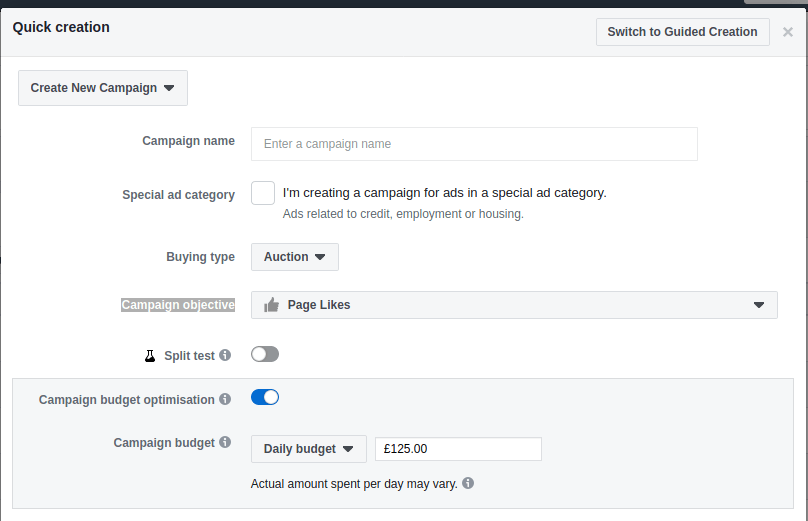
> Page likes ads help you reach people who may like your Page. If your goal is to increase awareness of your business, these ads are a way to promote your Page to people who are interested in your content or businesses like yours.
> To help drive more views and subscribers to your channel, you can pay to run an ad campaign for your videos on YouTube through Google Ads. You can create an ad that appears before a video starts, or alongside a video on its watch page on YouTube.
Both ban purchasing fake followers, but they'll happily take money to put your page/channel in front of potential genuine subscribers.
To my understanding, what Facebook tried to present to online producers was that publishing native video directly on Facebook was insanely lucrative, not just that they should have a Facebook page.
Would there be significant disadvantages in using both platforms at the same time? Or does "pivoted to FB" also imply that the content was adjusted to FB audience?
Using, no, but at some point there will have been meetings about where to use the marketing budget.
"We can buy Facebook likes, or YouTube subscribers."
"Engagement's so much better on Facebook, let's buy likes."
Facebook's incorrect (dramatically so - as high as 900% inflated) stats made buying a like look way more cost effective, so that's where the budgets went.
They allegedly fell victim to the whole "pivot to facebook video" craze caused by Facebook misreporting their video engagement figures.
Whether some business unit inside Facebook did this intentionally or not, it's a big reason why I think media companies have turned against Facebook as they feel like they got ratfucked.
Maybe this has already happened, but wouldn't this be grounds for a lawsuit? If businesses are going bankrupt because of outright lies or negligence on a company's part, I would think you have grounds for damages and class-action lawsuit.
I'm speaking out of my butt here, I'm not a lawyer.
This is kind of depressing; I suspect that $40 million is barely a blip in Facebook's advertising budget, so the sad part is that this probably had almost-literally no effect on them.
I guess it's not a new thing for corporations to own the world, but it's always sad when I'm reminded of it.
It is completely intentional, and a company-wide initiative. I have been to several digital marketing conferences and at the big ones there is always a FB speaker/panelist that's there for no other reason than to shill for "video marketing" on FB.
Why does the article start with a false premise that "internet used to be fun" and "bygone era". Come on, if you don't want to follow Twitter drama just go to some other place. Ugh.
I miss the indie internet, before big corps and big tech started taking over.
I miss IRC and forums and personal websites. I miss the time when Digg was new and hadn't taken over, and memes weren't the most upvoted content. When websites weren't all Javascript and Google wasn't Yahoo.
MySpace and LiveJournal and Xanga were never as sterile as Facebook and Instagram.
The internet that appealed to the Technorati got put on dopamine-fueled monetization rails and turned into a bulk commodity that maximizes engagement over the population.
When I was growing up, I played on MUD games, which were text-based massively multiplayer games 100% free to play, with no ads or any other kind of monetization, with full staffs of admins, programmers (!!), level designers, and moderators, all 100% volunteers.
Reading that now, it sounds like I'm describing some kind of crazy sci-fi utopia that couldn't even get published because it's too unbelievable.
Realms Of Despair (http://www.smaug.org/) is still running - last major update 2002, last update at all 2010 :P
`nc realmsofdespair.com 4000`
A CLI interface with no readline support; an MMO where you need to manually save your game to avoid losing progress whenever the network glitches for a second; very nostalgic :D
Ah, that's one of the main MUDs I played. I even built an area there. I did tons of runs there (even participated in successful runs on Hastur and Divine Retribution) until I got balzhur'd for cheating :P (I was just a high school kid back then).
The early 2000s had so much promise. The rise of reasonably easy to use blogging platforms, RSS, and web companies that were interested in playing in that world of distributed independent communication. Even Google was a different beast back then. It was the perfect balance: faster paced and more interactive than the days of manually editing files on GeoCities, but still mostly driven by indies doing things because they enjoyed it...instead of the cynical, marketing driven hellscape centered on siloed social media sites.
My pet hypothesis is that we had another Eternal September with the rise of the smartphone. Some of that amazing stuff is still out there, but it's drowned out by the firehose of corporatism and "normal" people. You can even see it with the shift in web sites aiming to be primarily consumed on a phone screen instead of a regular computer.
> Some of that amazing stuff is still out there, but it's drowned out by the firehose of corporatism and "normal" people.
The good stuff is much harder to discover than it used to be.
Even before Google, if you were persistent enough you would eventually find what you were looking for deep in the Lycos / Alta Vista search results. I have tried doing that a few times recently with both Duck Duck Go (Bing?) and Google, and past page 2 the results seem to devolve into an unstructured morass (no matching terms - but it might be relevant... somehow?) in ways that were much more depressing than searches of old.
I have to be honest; I think a lot of this rhetoric (not just from this poster, but in general) smells like "I miss being in charge of a wonky system that was hard for people who didn't specialize in understanding it to use."
IRC didn't go anywhere. LiveJournal is still there. JavaScript-free pages still exist. What has changed is the network of users has found them wanting and left those spaces ghost towns because they don't feel as good to use, or they're too complicated, or they haven't received any UX love beyond "Bare minimum viable product."
I don't miss that. I don't miss a system that excludes users.
I do. Not every community needs to be inclusive. Meritocratic communities with onboarding rails that are non-discriminatory are important in many places.
Do immunologists appreciate armchair antivaxers? Social media has given everyone a soap box to perpetuate damaging memes, and it makes our work harder.
And those places still exist. The various networks reachable with an IRC client are in that category. Hacker News is in that category. But they are never going to grow as big as Facebook or Reddit specifically because they do ask their participants to put effort in. And they are no longer the only game in town.
I don't think it's necessarily true that places like that went away in the large. Certainly some have shriveled up. And discoverability for them is about as challenging as it always has been---major search engines aren't going to index them at the top of most queries because major search engines are targeting what the average user is searching for and most popular results. But many simply didn't grow larger while the rest of the internet exploded with some billion new people.
You miss the old system that was exclusive to others because the inclusion of all these people has had the effect of excluding from participating to the extent that you used to?
I was on a neighborhood association board in an arts/music community. Whenever we talked about a new business coming there was a core group that constantly complained about how they wanted the neighborhood to go back to the way it was. After a while, I realized what they really wanted was for their lives to go back to the way it was. So much of their identity was attached to the neighborhood that any change was an attack on them personally. I feel the Internet is that way for many.
There was a chart posted a while back about how consumer Internet traffic has changed in the past decade or so. Today, the majority of traffic flows through FB, Google or Netflix properties. 10 years ago, it was much more diverse.
With that loss of diversity comes loss of communities and cultures. CollegeHumor used to have all its videos on its own site. If you liked the site, you created an account and interacted with the community, which had its own culture as you wouldn't behave as you normally would on FB or Twitter.
With the pivot to FB, that's gone. Now, it's no longer a friendly conversation between people who have CH in common, it's a free-for-all comments section featuring everyone from spambots, trolls and random users who stumbled across the video and just have to add their 2c.
Numerous other forums and blogs, all with their own communities have suffered this fate. That is why the Internet isn't fun anymore.
I think I agree with you somewhat, but I think you can't argue that noise floor raised. Either way one must remember Sturgeon's law: 90% of everything is crap.
Oh yes. I’m not contesting that. And I agree with the fact that the “good stuff” (from a geek’s point of view) is harder to find. I just don’t want to blame everybody for not sharing my interests and enjoying the Internet how they like.
Missed that by almost a decade. I just feel that there is a lot of nostalgia for the old times whereas nothing is actually preventing people from doing what was done before.
Replying a bit transversally here, but I was on IRC 18 years ago and still am every day. Any game you have played before can be played now, easier than before, heck we are just organizing Worms I tournament. Youtube is still full of funny stuff and reddit communities exist, RSS didn't go anywhere and there are many many hobbyists blogs out there still.
Sure stuff got piled on top of all that but nowadays it's easier, cheaper and more accessible to do what we were doing "back then".
Search engines are preventing what was done before.
Yahoo search would bring up sites on geocities, or small indy sites, for pretty much any topic.
For instance, in the mid 90's you could search for the band "Green Day" on yahoo, and get all sorts of personal fan pages. Now it's 100% corporate crap results.
Independent users no longer have the 'reach' as the corporate users do. We used to share cool things via word of mouth on IRC or AIM or ICQ. Now people just share memes on facebook.
The overarching issue with the modern internet is how "serious" it's become. It used to be a wasteland for the tech savvy. It didn't have to be grand or important. It turned a hang out at high school lunch into a white tablecloth business meeting because "someone might see this later that won't hire you." And of course the fact that most people spend the whole time on one single website (Facebook) means that independent communities are dead, and all communities worth a damn now (because of, you know, people actually using them) are sterilized and controlled by a handful of Tech Lords.
I ran a website and accompanying forum from early highschool to well into college, about 8 years or so. It was mostly a large circle of friends but it organically attracted randoms from all walks of life. Once Reddit and Facebook took over, that was that - no one used it anymore, and certainly no one stumbled upon it.
It's not just growing up that changed the thinking on this (ie. "the good old days"), because I think the internet was still awesome in 2012, and I was well into my 20s at that time. That was only 8 years ago - it's not nostalgia speaking here.
Sounds like modern search engines know the score. I'm kind of kidding.. only kind of. If you search for non-corporate content you get more non-corporate results, although admittedly less than in the past.
Than you know the internet used to be fun. Social drama isn’t what made the internet fun, it was the unique corners and pockets you could explore. IRC especially so.
My whole point is that none of the fun that was there before died. It got overshadowed by popular stuff but IRC, Forums and personal blogs are still out there. I know because I use all of them daily.
When Jake and Amir was canceled I was quite disappointed, When they made an awful soulless return in the form of an anti-trump video, my fury was immense.
they held out for quite a while making original content and as of recently once in a blue moon they made something interesting but the company became very corporate, and their main product was incompatible with that, compatibility is a feat I think only Adult Swim can manage today...
Really? You’re just butthurt over the Trump Jake and Amir video? It wasn’t even that bit of a deal. It was also mocking people in general as much as Trump.


“In words that I’m sure are as surreal to read as they are to type, I will soon become the new majority owner of CH Media,” said Reich, a longtime executive at CollegeHumor. “Of course, I can’t keep it going like you’re used to. While we were on the way to becoming profitable, we were nonetheless losing money — and I myself have no money to be able to lose.”
Dropout, its streaming service, will continue for at least the next six months while it churns out content already slated for release, Reich said. The future of CollegeHumor itself, and other humor sites run by the company, are less certain.
“In these six months, I hope to be able to save Dropout, CollegeHumor, Drawfee, Dorkly, and many of our shows,” Reich said. “Some will need to take on bold new creative directions in order to survive.”
The CH Media staff contracted from more than 100 to between five and 10 employees, according to Bloomberg News.