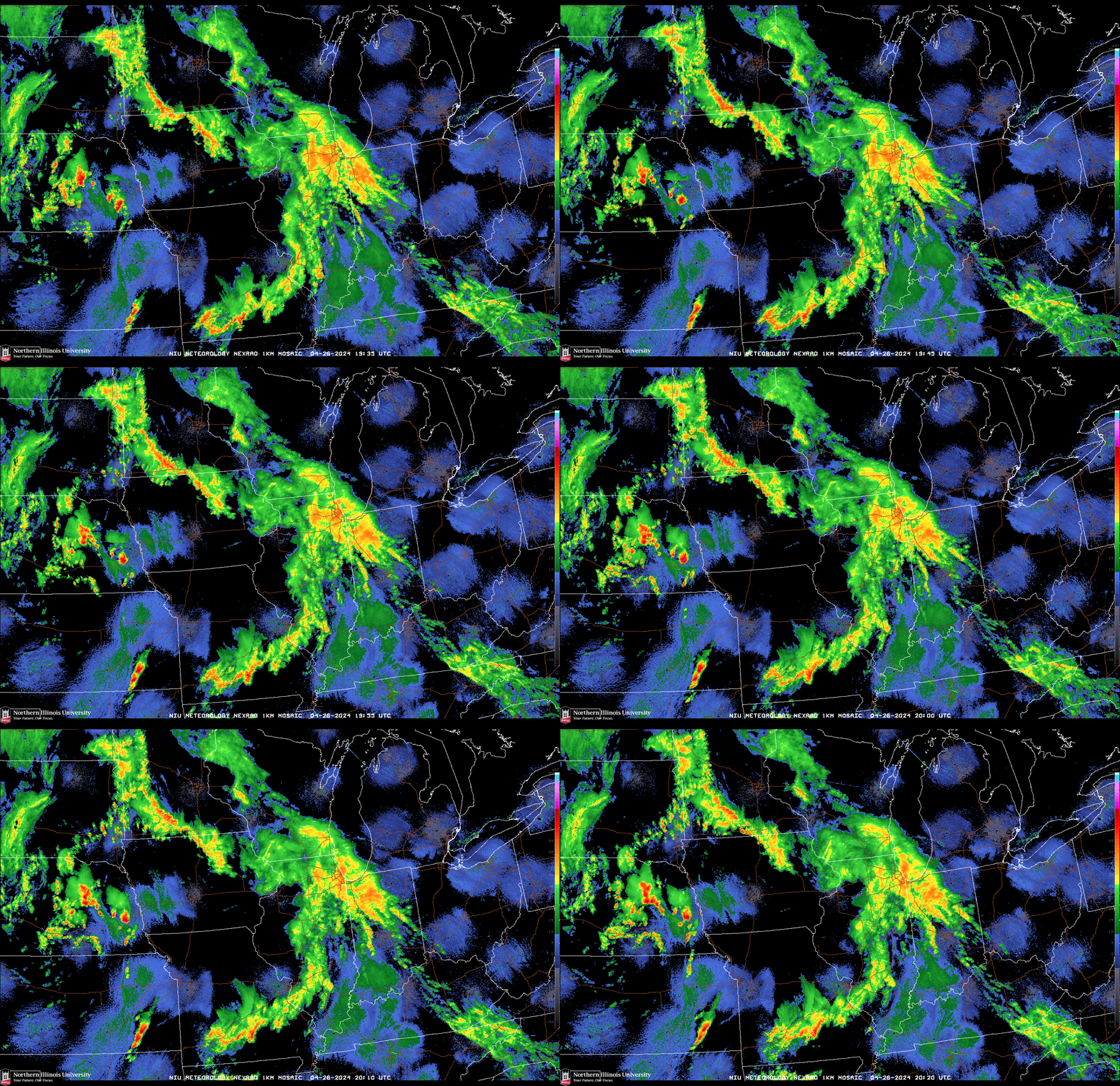
The NEXRAD weather radar system has multiple modes of operation (Volumetric Coverage Patterns) configurable for each antenna site. Each of these is optimized for different weather conditions. The light-blue returns represent humidity in the air (not quite rain or fog) and is usually tuned below the “noise floor”.
I haven't seen enough history to know if that's normal or not, but I can tell you that the center of each of those blue "clouds" is a nexrad radar station. It's view is a wide cone from the ground upwards (technically a set of cones from each of the radar's tilt angles).
It's quite possible there is some lower altitude fog/precipitation/something that is only visible to the radar at it's lower tilt angles. But that's just speculation.
One of my weird hobbies is radar chasing storms, and all of that stuff is completely normal. NEXRAD is very sensitive, especially when it's in clear air mode (it has different modes depending on if it's raining in the area) and can pick up things like dust, birds, bats, and insects. There's also ground clutter from things like buildings, wind farms, and even cars.
These are base reflectivity images. Composite reflectivity products reduce the noise from around the radar stations. The old NWS Java site used to let you select between them. Raw base images seem to be unavailable on the modern moving maps.
The line between concern (GUYS WEATHER RADAR IS SHOWING END TIMES) and curiosity (check out this neat radar image I saw) can be pretty thin in technical spaces.
Creative minds in the community are very good at filling in the blanks, no matter the accuracy.
Radars uniformly set on high sensitivity. You're looking at the noise floor within [x] miles of the radar. The sudden smaller size of a couple was a manual dbm adjustment. They seem more common these days, I think because when you saw sharp cutoffs it was usually a threshold cutoff setting some human had to twiddle and humans don't bother anymore. This stuff drives some Boomers crazy and sets them to babbling about HAARP, especially the pacman shapes that represent a metallic obstruction near the center of the radar.


Current operating modes: https://www.roc.noaa.gov/branches/operations-branch/current-...