There was a good (?) video on the subject the other day, it was mainly about Volkswagen / VAG but highlighted the software problem.
Cars are / were basically Frankenstein monsters under the hood, with dozens of onboard computers / chips all needing to work independently yet collaboratively and talk to each other. VW set up a new subsidiary and hired 3000 people to build the car software system of the future, reducing the 70-odd computers to 3 or so.
But we all know software, it uh, didn't go as planned.
Anyway, iirc Toyota or Mazda, one of them, was at the forefront of bringing regular buttons back to cars. And I hope there's going to be new car companies that iterate on the thing again and build simpler cars again. It should be a lot cheaper too, because it feels like they bolt on more and more electronic features to try and upsell the car. Building a car with the features and numbers of 30, 40 years ago should be doable at a fraction of the cost. And that development is coming actually, but it's coming from the likes of China and India. It's not profitable to bring them to the west though.
Auto programming is the prime example of Conway's law.
Like, you have 10s of critical applications that you want to keep simple and not crashing or bugging out. So, just give them each a computer.
No way for the shitty wiper department's buggy ECU to ruin your day in the brake ECU by blocking all the hydraulic lines. You can even put them on different CAN buses!
I'm afraid a lot of the tech is either necessary by law or necessary to get a decent safety rating these days, so you can't make the simple cars from yesteryear.
Now, screens aren't required by law or safety ratings, but there's no getting around having a lot of software in there, and thus a screen to configure all that stuff.
Should front facing cameras be required by law (in USA) too? The bonnet height of USA vehicles appears to be adult shoulder height. If you're 5ft/150cm tall or under they're lethal.
I have a 22 Miata with all options, which is about shortest hood you can get in the us.
The vehicle HAS A front facing camera, it takes up a huge portion of the front windscreen. There's no way to see an image from the front camera.
Is it there to....To tell me if i'm...about to crash? it has no automatic cruise or anything. Absolutely puzzling.
Another gripe about this car; "car play" works about half the time. Maybe. 20 percent of the other half, whole display freezes until I restart the car. Mazda can't figure it out and what am I gonna do, lemon it?
mye 15 year old other mazda hatchback connects to bluetooth instantly as soon as i turn the car on and begins to play music.
I have a ‘21 Miata with the same gripes. The CarPlay situation got slightly better with an OS upgrade last year – now it only crashes about 10% of the time, and 75% of those recover on their own without needing a power-cycle.
The lack of adaptive cruise is baffling. We test drove a ‘15 CX-something-or-other in 2014 and it had the ability to brake automatically (dealer was very interested in demoing this feature). I assume it also had adaptive cruise, so it’s wild that a 6 years newer sports car wouldn’t have that feature.
Probably. Could have two classes for forward visibility, one that didn't and one that did.
I wouldn't make the camera a free for all though, it makes sense for pretty good direct visibility to be a design priority (so the camera would be required on cars that had okay but not great forward visibility and it wouldn't be allowed to build anything else).
Sure, but a screen, even a touchscreen, is not mutually exclusive with buttons. My Toyota has both, and after setting up the navigation, I can go the whole way and do everything without touching the screen.
What are they even counting as a 'computer' to get to 70?
I know that in the door there's going to be a microcontroller, to connect the buttons, the lock and the window motor to the CAN bus (or whatever it is they use these days). Is that a computer? Are they proposing to get rid of it?
It's ridiculous that any of these things need microcontrollers. My first car's door had a little joystick that physically moved the mirror around, presumably using pushrods or something. The door lock was a physical device you moved up and down, and had a motor connected (power door locks were fancy). It also had cranked window controls, not so nice. But power windows didn't need a computer either.
We keep taking things that worked fine without a computer, adding a computer, and ending up with all the problems of a computer but with little extra benefit to the user.
No, there genuinely used to be purely mechanical mirror controls. You'd twiddle the little joystick and it would more or less adjust the mirror, in a way that at least in my experience was slightly imprecise and rubbish, but definitely didn't demand any electronics.
> What are they even counting as a 'computer' to get to 70?
When I worked in the industry, we had four different CPUs of different architectures on one small (fit in your hand) circuit board, each running its own software and communicating with each other via buses on the board. This was for controlling one single function in the car.
Strictly speaking, I would say that single circuit board was 4 separate computers. It quickly adds up.
Ideally yes because if the microcontrollers can be replaced by a central macro-controller computer you can then update it all more easily. You make the whole thing more software defined.
Which is the problem. A lot of separate micro controllers will probably never need an update. We have now had microcontrollers in cars for decades, and they almost all worked fine without updates. Its only recently, with the more software defined systems, that we have needed updates.
I'm not in a position to know but from reading around a lot I think the VW ID3/4 ended up having a nightmare update scenario because early hardware was buggy.
I know from working at a phone company that hardware absolutely has bugs and it's only reliable as long as you're changing very little. If you start having a system where you're trying to optimise everything e.g. to save power when not in use and allow lots of customer choices in how things work then you're going to choose new microcontroller hardware and software and it will have bugs that have not been ironed out over the years.
The stories I read about ID3 updates going wrong were about certain controllers not successfully acknowledging their firmware updates. So I can see a strong temptation to make it all vertical - to have control over everything so you can ensure it works before you order 200k of them. Instead of having 60 suppliers all providing their interpretation of your bus protocol, each with unique bugs you take the whole thing into a single design.
I can also see it being far more conducive to have a smaller number of bigger and more homogeneous microcontrollers each of which might not be perfect for every job but since they're all the same you only have to provide 1 software update solution and you can test the shit out of it.
To add, I recall a fair proportion of ARM's sales (as per annual report) were for automotive use, so we a lot of this were processors that compared well to what you would have run a desktop on a decade earlier so reasonably sophisticated systems potentially, just kept simple by being single purpose.
In the name of $DEITY: WHY?
I would pick without thinking the car without the child tablet attached to it, too.
We will be forced to switch to this kind of stupid cars by regulation, or planned obsolescence, not by choice.
Not entirely regulation and planned obsolescence but because cost.
Coding in the climate controls on the touch screen has a fixed cost that doesn't really increase with each car built. Adding multiple physical buttons, does. Even if each button costs cents to make.


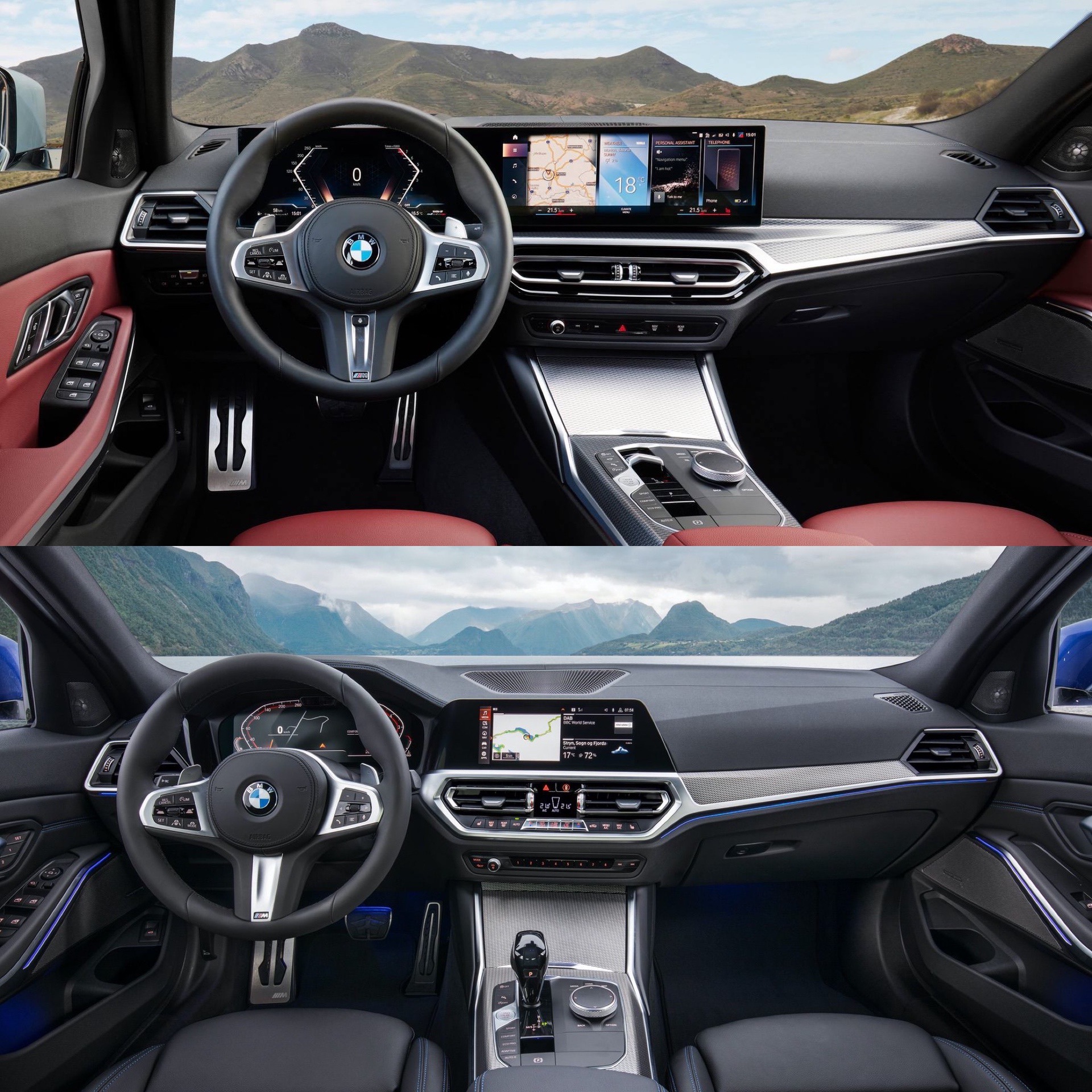
Cars are / were basically Frankenstein monsters under the hood, with dozens of onboard computers / chips all needing to work independently yet collaboratively and talk to each other. VW set up a new subsidiary and hired 3000 people to build the car software system of the future, reducing the 70-odd computers to 3 or so.
But we all know software, it uh, didn't go as planned.
Anyway, iirc Toyota or Mazda, one of them, was at the forefront of bringing regular buttons back to cars. And I hope there's going to be new car companies that iterate on the thing again and build simpler cars again. It should be a lot cheaper too, because it feels like they bolt on more and more electronic features to try and upsell the car. Building a car with the features and numbers of 30, 40 years ago should be doable at a fraction of the cost. And that development is coming actually, but it's coming from the likes of China and India. It's not profitable to bring them to the west though.