If you find yourself writing a "tl;dr", consider just writing a clean, full English sentence instead.
For example, INSTEAD OF....
"tl;dr Trying to draw attention to the importance of lifecycle marketing. I build up the case, talk about where lifecycle marketing makes sense, show an amateur first attempt at it, then proceed to layout a grand idea for a lifecycle email marketing service I want to see someone build. Please share this post."
...write THIS INSTEAD:
"I want this essay to draw attention to the underappreciated art of 'lifecycle marketing.' In the paragraphs below, I'll define the term, show an amateur first attempt at it, talk about where the practice makes sense, and then outline a comprehensive lifecycle marketing service I hope someone else will build."
A formally declared "tl;dr" with sentences that are super concise, to the point of being ungrammatical, is better than no summary at all. But good writers can gracefully communicate to readers the essence of material to come using nothing more than plain words. Doing so does far more to encourage the reading and sharing of your entire essay than an explicit "please share this post."
I use tl;dr more of for use of being a comedic instrument. It goes in hand very well the the meme pictures throughout my post. I could have written it much more adult like but that's the voice I decided to use in this post. :)
In the Real World™, a tl;dr is called an "Executive Summary." It's a nice way of saying "Here's what this writeup means if you don't have time to read it or aren't bright enough to understand it fully."
If you want to communicate your meaning to people who do not have time to read your entire text, the solution is to put a clear, short summary first within said text, in proper English.
A cryptically brief, ungrammatical special section is hugely suboptimal, and a labeled intro section is wholly unnecessary in a 10 page essay like this. Simply write. If you have not clearly communicated the essence of your article in the first few paragraphs, rewrite until you have.
> put a clear, short summary first within said text [emphasis mine]
If I see a big block of text that I don't want to read—or don't have time to read—I'm not even going to read the first sentence.† I'm going to stick it in my ReadItLater queue and forget about it. If you don't want to say "tl;dr" specifically, fine, but do distinguish it from the text following it in some way.
Saying "Executive summary: X" is great: it'll be appreciated by the people who want it, and everyone else will just find it perhaps a bit dry in style, rather than actually insulting or offensive. Plus, the people who—based on your summary of the text to follow—turn out to not care to read any further, will have more time to do other things. (This is also what Email Subject lines are for. We use those for even the shortest of emails, don't we?)
† Note that I have this form of "wall-of-text disgust" because so few people write well enough to make reading the first few paragraphs a valid way to extract a summary of the text. Usually all I can pull from the first three paragraphs or so of an essay about, say, "how we solved the X problem," is a very detailed description of the X problem. It's a lot easier to convince people to write a one-sentence summary after the fact, than it is to teach them proper essay-writing style and convince them to rework everything they write to imbue it.
If you're afraid of turning people away with a "wall of text" or a "big block of text," avoid walls and big blocks.
Keep your introductory paragraphs short. In the rest of the text, put plenty of whitespace, and add internal headers and/or graphical elements where appropriate.
A web in which every essay begins with "executive summary" or "tl;dr" is a web with a lot of noise. These are needless terms from the worlds of MBAs and tech commenter communities, respectively. If you seek out people who have distinguished themselves at writing — for example, Paul Graham, Joel Spolsky, Steve Yegge, or Clark Shirky in the tech world — you'll notice that not one uses "tl;dr", "executive summary," etc. They simply put the information they want you to read first, FIRST.
These explicit summary headers, typically added as an afterthought, are tics of inexperienced writers. They're fine! They're not evil or anything. But they are ultimately less elegant and reader friendly than truly good, considered, well constructed and ordered paragraphs. Putting "executive summary" in front of the summary is like putting a comment like "#HERE WE LOOP OVER THE USER OBJECTS" in front of a simple loop: If something that simple wasn't obvious from the structure of the text (variable name, loop operator) then you're doing something wrong( users.foreach{|user| whatever} is self documenting whereas for(kljk=0;kljk < x.length;kljk++){foo = x[kljk];whatever} is not)
I'm not suggesting any of this isn't good advice. Yes, blending an introduction seamlessly into your writing will make you a better writer. But you're thinking as a producer of content here.
As a consumer of content, I can't hold myself to the standard of only reading things written by "people who have distinguished themselves at writing." If you're the only person who has written about X, and I'm researching X, I'm going to have to look at your article—at least to tell if I can safely not look at your article without having missed something important.
And good writing is hard: you're basically giving the creative equivalent to the obligatory advice of "eat less and exercise more." Yes, reworking and redrafting to achieve flow in your writing is a "good thing." It's something to strive for. But that doesn't mean that you can expect anyone to follow that advice just because they read a few paragraphs about it online. If they write much, they've likely already given it some thought—and it's a lack of willpower, not a lack of skill, that prevents them from editing their work as much as is necessary to get a result easily consumable by others.
An explicit "executive summary" line is a quick fix. It's something an amateur writer—one who doesn't practice writing as a craft, and has no desire to redraft—can use to make their writing less painful. It's asking much less of people—it's just a sentence, written after the fact, explaining what you just said—so it's probably something people would implement after seeing a conversation about it online and saying "oh, that could work."
Certainly, it's not as readable as good writing. But, for most people, it is more readable than whatever they had before, at much less cost.
(Also, I wouldn't mind if experienced writers included a call-out of some sort as well—not because it helps their prose at all, but rather just because I don't know if someone is an experienced writer until I actually dive into the body text, and by then I've already made my decision whether to read or not. Give me metadata.)
That's a good point. Originally tl;dr was written by other people who were summarizing an overly long post. Now people preemptively tl;dr their own overly long posts.
Write more concisely and make a point instead of tl;dr'ing yourself.
I prefer 'Summary' or 'Abstract'. 'Executive Summary' _forces_ me to think of gentlemen in suits as if only their time would matter. Its used in business contexts, where it rightly belongs (where person reading the paper will make some decisions based on it, ie. will execute.) Abstracts are abstractions (makes sense for scientific papers). Summaries... well... summarize.
Plus... calling Summary a 'tl;dr' is somehow informal and ok, me thinks.
FWIW: Even the dumbest possible implementation of this, which is "Send someone an email 1 day after signup and 6 days after signup, with both goals just trying to use the service again" prints money in my experience.
This may seem like nitpicking, but I am always worried when I look at a website and the blog hasn't been updated for months. Even a short "Hey guys! We're working on stuff!" would assuage my fears that you've turned into a zombiecorp. =)
Whoops! Thanks for the feedback! That's an old page that was supposed to be replaced on our latest redesign.
The simplest explanation is pattern matching: we analyze customer and transactional data to understand how different customers behave. Using this understanding we can make predictions for how each user will behave in the future.
We use all of that analysis to power actions - take actions on the right user at the right time, optimizing for CLV.
That says a little bit more. Do you treat it as a reinforcement learning (RL) problem, or as a classification problem? It seems like a sequential decision making problem, so RL is appropriate but AFAIK there is no RL algorithm that generalises over states while still retaining some error bounds. I suppose you could brute-force a Bayesian solution via MCMC.
There are two big problems that we deal with. First is estimation of customer lifetime value. We use a latent attrition model, which is the 'pattern matching'
The second is figuring out which promotions/emails go to which people. This is a supervised learning problem. We train the model with users past responses to discounts and their past behavioral states (which are the posterior probabilities from the latent attrition model). Then we use this to predict how users in those states will respond to similar promotions in the future.
To do more than 99.9% of the companies out there it would be enough to just send generic follow up autoresponders based on sign up date. Email them on day 0, 1, 3, 7, 11, 14 ... etc.
You can do this with AWeber, Mailchimp, Getresponse and a dozen other services.
Just tell the customer what he can do with your service and
ask a lot of questions: "Have you tried this?", "Did you know you can...", "How can we help?". Use the feedback you already have to come up with ideas for content. Point them to a lot of your help and learning resources. In each email tell them you are really interested in their feedback and give an easy option to contact you. Then read the feedback as it comes in - like manually reading, with your eyes ;-) - and respond promptly and indvidually.
Setting his up takes a day or two - and mostly consists of coming up with ideas for the content. After having this running for a few weeks you might come to the conclusion that you don't need a complicated machine learning, metrics based system :-)
We're offering this service at Custora. You upload as many creatives as you would like, and then our product figures out who and when to send them.
Say you have emails suggesting TASK X, TASK Y. You upload the four creatives, and we can tell you that TASK X worked for new users and inactive users, and TASK Y worked for active users. We also close the loop and look at the effect of the email actual actions (sign-ins or purchases depending on the business) rather than just email opens.
The goal is to send fewer, but more relevant emails. Rather than emailing everybody every week, just send emails to the customers when the become inactive.
Sounds like an useful service. Though, I'm not sure whether email bombarding is a good idea. You used the example of AppSumo but I unsubscribed after 3 emails sent too close together. Most people don't unsubscribe but rather just ignore the email.
I don't need an email every time a small feature is released, or pushing me to come back... there's a reason I don't revisit, and it's not because I forgot. What I like are emails that give me something of value whether it's free content, a story, a free tip, etc. Teach me something new.
It definitely sounds like a lot of emails in my article. But let's say you never engage with the service. You might receive 2 in 2 months and then never hear again. Smart, not abusive.
While I mentioned reminders often as it's easiest to describe, "Teach me something new." is exactly right. Engaging mailers should offer help, tips and such.
I would agree with AznHisoka. Periodic mails are like shouting in the room to gain attention. When everyone else is quiet, it works like a charm. The others pick up this trick. Soon no-one can hear anything, and those who do not want to be disturbed, wear earplugs ;-)
That's precisely what I did with my Gmail account when it became near-unusable after I used for several signups for startup services which I eventually was not interested in - just signed up to try out. Someone send me an email that does not pay me back with something useful for the minute of the attention I spend reading it - I create a filter to send it to 'adware' folder, which rarely, if ever, gets read.
This is of course my personal behavior, which may or may not be more typical.
Why ? I've already paid with my attention to the mails that I did not need.
But more than that - in more than one case my attempt to unsubscribe gave zero results. Once I even had an exchange with a human person, who promised "oh of course we will remove me". And that did not happen. So why would I invest my time into further attempts ? I'll just use the solution that works.
Awesome post Paul. We've been thinking quite a bit about this at Mailgun.
As usual, we default to giving developers more tools to help build this. We are rolling out some exciting stuff early in the new year to make this a lot easier.
Your theory that the current state of a user's account and their past usage patterns should determine which mailers and communications the user receives essentially refers to the techniques outlined in Seth Godin's book "Permission Marketing". Check out Seth's book - I would imagine your readers and users could also use a summary or refresher of the principles behind "Permission Marketing" - it's powerful stuff!
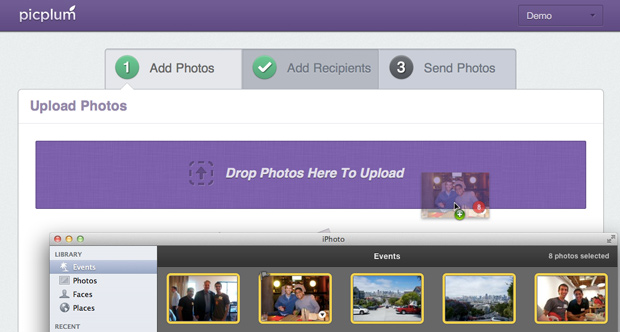
My startup, Apptegic, www.apptegic.com is building a "user retention as a service" service. On a per-user basis, we can track events, patterns of events, and business usage (like # of photo batches sent). We can combine these to score engagement and we can segment and filter groups of users based on these combinations.
There are lots of other ways our Beta customers are using this info already. But many have asked for the ability to do targeted emails based on usage and engagement. We don't have email system integration into MailChimp, Constant Contact, and others like Paul described yet but we are working toward it.
Do you have suggestions on what a a minimal viable email system integration would be? Let people script a download of the list of emails that fit a criteria and script upload that into their mail system of choice?
If you have suggestions please comment below or contact me at kwirth at apptegic dot com.
Great article, but URAAS isn't exactly the best acronym. :)
With regards to your article, I remember an article - which was probably submitted to HN - whose author had a great method for engaging (loyal) early users. Instead of using scripts that sent the users tailored messages, he had scripts sending him alerts on important days like, say, birthdays or registration anniversaries.
This allowed him to give the first hundred users who had stuck with the site some personal e-mails that weren't computed by scripts, but himself.
This obviously is intended for early-stage start-ups, but it is important never to go full Google and use robots, AI, and whatnot to face the users instead of human beings, or what sounds like it.
I don't think Disqus would have got the traction and success it had, if Daniel Ha's insane user engagement weren't there to humanize the transition to a new comment system, especially for the people who don't know anything about programming and web services.
Perhaps ironically, it's obvious that Disqus use analytical tools now to alert them whenever someone is having problems with the service or saying bad things about them, and the automation and ambiguous motivation for the Twitter response tends to dehumanize the service, even though they may use the alerts with the best of intents. Daniel Ha also didn't do the best job of giving users a sense of participation in making feedback; he kept using a phrase along the lines of "it is on my list - we will get to it eventually", although many never came to fruition. This was back when Disqus had its own "forum" at disqus.disqus.com (as I recall), which created a small, tightly-knitted community that had to go, as the site picked up its pace.
There are some incredibly important good and bad things to be learnt about Disqus, but I honestly believe that the core business model of Disqus had more to do with the user engagement than it had to the service and its efficacy itself. People simple weren't allowed to be antsy about trying the service, if Daniel Ha could help it.
What would you say to someone that refuses to email users at all and even rejects the idea of collecting email addresses at signup? They think asking for email addresses and using them for anything is only for spammers. Sadly they also have a retention problem.
Funny, I just did an "Ask HN" about something similar yesterday and didn't receive any feedback [0].
I recently launched LetterPush, a basic email newsletter service [1]. I've been thinking of focusing on adding lots of developer features (robust API, webhooks, etc) to help automate marketing and transactional email processes.
I think that most businesses stop at MailChimp email blasts and "Welcome" emails on user sign up. Having a service that marries MailGun to your CRM/CMS tools would be absolutely brilliant (and quite profitable, I imagine).
I'm not sure if I'm in the majority but I'd find this annoying. If I dropped out of your 12 step sign-up process at step 4, don't bug me with emails about it, make your damn process simpler.
Further, I basically don't even open unsolicited email unless it's from a person (person, not company) I know. It's like ads on a web page, it hardly even registers. If I get enough of it from one sender to take notice, it's more likely than not that I'm not going to be happy.
Great post and I couldn't agree more on how important retention is for web businesses. Our product, Nurture (http://www.nurturehq.com), addresses this need in a flexible fashion and is being used for exactly this requirement (User Lifecycle Marketing for improving engagement) by a few customers.
It's a neat idea, but it sounds like what you're proposing is a subset of marketing automation, which has not been mentioned almost at all in this post.
I would recommend doing a bit more research about what marketing people are already using, what other products your product may interact with yours, and how it would fit in the arsenal of marketing tools.
HubSpot has a lot of this functionality as well. You can send out automated "personalized" emails that are triggered on certain events. Their software is usually used for inbound marketing before the user activated (aarrr), but I'm sure you could use it for after a user is signed up.
Hubspot does this, they acquired Performable which was doing this before and its now integrated into the Hubspot product offering. Other companies do this stuff too but not so much selling to startups and more to the enterprise (e.g. Marketo)
Yeah I want to see more companies do this that aren't enterprisey. I remember Performable and even went through some video tutorial they had long ago but it definitely seemed to be more oriented towards ecommerce/shopping cart applications?
I'm not familiar with any of the mentioned companies but I'm curious, what exactly does make products such as Marketo "enterprisey"? Just more features that you don't need right now?
For one, I can't even find out how to sign up for Marketo. I don't want to chat with a sales specialist, I want to start setting up and importing events, and making filters/campaign triggers. They have way too many products -- it makes me wonder if they even spent enough time working on the lifecycle marketing product of theirs. I want a company that just works on that one thing and does it amazingly well.
Happy birthday James! You're the reason I blogged about this. Your email asking me to blog about the email template stuff got me thinking about this too haha.
Like a few others - we're working on a similar idea, and in fact applied for the last YC batch with it. But yeah there are a couple of companies already focusing on it... But could be alot better...



For example, INSTEAD OF....
"tl;dr Trying to draw attention to the importance of lifecycle marketing. I build up the case, talk about where lifecycle marketing makes sense, show an amateur first attempt at it, then proceed to layout a grand idea for a lifecycle email marketing service I want to see someone build. Please share this post."
...write THIS INSTEAD:
"I want this essay to draw attention to the underappreciated art of 'lifecycle marketing.' In the paragraphs below, I'll define the term, show an amateur first attempt at it, talk about where the practice makes sense, and then outline a comprehensive lifecycle marketing service I hope someone else will build."
A formally declared "tl;dr" with sentences that are super concise, to the point of being ungrammatical, is better than no summary at all. But good writers can gracefully communicate to readers the essence of material to come using nothing more than plain words. Doing so does far more to encourage the reading and sharing of your entire essay than an explicit "please share this post."
(Apologies for veering a bit off topic.)