For the record, anyone working in the HW sector will tell you, Chinese suppliers will often try to scam you by delivering you parts that are faulty or lower spec than originally agreed and see if you notice. If you don't notice, then it's fair game and more money for them. They don't consider this swap as doing anything illegal or wrong if you don't notice, so you really need to have solid QA in house to keep your suppliers accountable, as this is a constant struggle. It's sad, but this is how business is done in this racket. Russia is now stuck between a rock and a hard place, with very little choice of suppliers and Chinese businesses know it and are taking this practice to the next level (beggars can't be choosers).
I can't find the comment now, but one HN member told a story here on how their POS credit card readers they sent for production to China, were being tampered with by malicious employees on the supplier side who were shaving internal parts of the case assembly to plant skimmers inside that would beam the credit card data. They were going so far as to match the weight of the tampered device to meet the spec by the milligram to avoid weight detection countermeasures. Insane.
This isn't just a China and chips thing, it's a general supplier thing. My mom ran a small cafe once, and complained that the wholesaler would regularly try to foist out of date coffee on them.
It's something I keep arguing: there's a price associated with policing, keeping, people honest. If there is intense competition, the pressure to cheat is also intense, and what you gain from competition may well be eaten up by the cost of policing. So competition isn't a panacea, it has rapidly diminishing returns.
(My mom's wholesaler, though, were pretty much a monopoly, who did this sort of thing just because they could. A different failure case!)
This is really a short, useful book for anyone getting stuff remotely manufactured in China. Some examples of what went wrong from someone who lived there (so things shouldn't have gone wrong).
A good example of a problem: supplier underbids to get the business; first and second shipment are fine, then the third has an unauthorized change because now the factory wants to cut their costs to make a profit. In the author's case IIRC it was shampoo: he ordered a set in different scents (lilac, almond, coconut perhaps?). Suddenly all he got was almond because I suppose the factory got a better deal if they bought more.
Also remember that Apple gets the quality they do by having a lot of their own personnel on site to stay on top of everything that is going on. You can't afford that.
You get what you pay for, especially in China. Many vendors are completely upfront with this, and you have to pay extra for "good" good parts. Just like you can pay for a test certificate, but you have to pay extra if you want them to actually test your stuff - I would have expected it to be the other way around to be honest.
Even paying extra for the good "good" part is no guarantee of honesty and quality. Unless you're a juggernaut like Apple, after a while they'll start shoving in sub-par components in the shipments to test your QA and see if they can squeeze more money out of you. It's just how they do business.
There are plenty! The trouble is finding them. Once you do, hold on to them – they can be very valuable.
A good place to start is making sure you're paying a fair price for whatever it is you're buying. Anything too cheap is definitely trouble. (And, of course, this condition is necessary, not sufficient.)
The more trustworthy Chinese companies are also refusing to do business with Russia so that they don't get sanctioned and lose business with the rest of the world. That leaves Russia with the worst of the worst.
I know a electronics company in Europe and the US owners of a big customer requested production in China.
The choice was between having a commission ( and starting it there) or lose the customer.
After everything was running, all components broke within a year. The Chinese company secretely replaced an important electronic piece with a cheaper one.
They now have all the customers business back. But probably within 3 years there's going to be a new board, who will try something similar ( again).
They are now simply treating Russia with the same lack of dignity they have treated private customers in Europe and USA with for over a decade. A substantial amount of what's sold to western customers on e.g. AliExpress, BangGood, GearBest etc. are product lots that didn't pass QA. They are dumping e-waste on us, and we pay for it. A fantastic trade trick.
It's basically making a deal, and them replacing the components until you notice, then making you pay more for more expensive components, even though the more expensive ones were in the original deal. Sometimes also replacing key components, because someone from the factory tought that they were 'better' (=cheaper for the company)
They learned that from outsourcing companies. Replacing people with less-experienced ones until you notice, then let you pay for additional people, or QA, or project management.
Yep, plus additional tactics, like waiting for the importer (of chinese goods to eg. USA) to get a huge deal, and then raising the price, because the importer has to deliver the goods in a relatively short term, and there's no time to change the supplier.
Also (in the case from the book - cosmetics) a lot of questionable health/hygine practices.
I've ordered considerable amounts of stuff rom AliExpress and while it's true that you need to exercise some caution I wouldn't call issues substantial.
Also this isn't really about dumping e-waste on foreigners, China's business culture, in particular informal markets always play fast and loose, including domestically. Gotta have a little bit of an instinct who you can buy from.
>... and while it's true that you need to exercise some caution I wouldn't call issues substantial.
If it wasn't substantial you wouldn't need to exercise caution. I, too, have bought considerable amounts of stuff from DX, AliX, from Chinese vendors on eBay etc., and it's almost always a gamble, in particular when it comes to electronics and electronic components.
> in particular when it comes to electronics and electronic components.
I have the opposite stance. I buy components nearly entirely on Aliexpress, as it turns out that on Amazon you get the exact same stuff, with the difference that the shipping might be faster (but not always) and the price is much higher.
For some things AliExpress can hardly be beat, and when a small cheap part bought there repairs a much more complex appliance here, it can, counter-intuitively, even be the most sustainable thing to do.
It does take some getting used to the platform.
> […] including domestically.
That's the key thing to understand. This isn't about dumping e-waste on foreigners specifically, it's just capitalism at its most unregulated and the same crap you can buy from AliExpress the Chinese can buy too on Taobao.
That's not always right, I did get a lot of things from Amazon thinking it's quality stuff that turn out to be just the same thing AliExpress sell with a nice white label and more markups.
For example, i got a couple of Anker USB-C hubs, but recently story here show that many hubs are made by same manufacturer who offer whitelabeling
It's been several years that the stuff from AliExpress is sold on Amazon and eBay; sometimes you can tell straight away, sometimes you need to go deeper. I'd say it's quite difficult to buy quality stuff from Amazon today. I bookmarked a few sellers I bought things from in the past but as for new sellers it's a lottery.
>They are dumping e-waste on us, and we pay for it. A fantastic trade trick.
To be fair, western corporations were the ones who made the big move of offshoring all goods manufacturing to China in the first place and turn them into e-waste in a constant race to the bottom of lower and lower costs and higher and higher margins along with insane executive pay for their genius move. Hardly China's fault. Hate the game, not the player, and this game was made by the west, and China has just gotten really good at playing it.
The best way to fight this is to bring back manufacturing (it's already cheaper to build certain stuff in some EU countries than in China) along with products that last longer and are more easily repaired. Western consumers would just have to stomach higher cost of goods, and western corporations would have to stomach lower margins, but it's definitely doable if desired, but it won't happen.
Lowering costs and increasing margins is the game of the business everywhere, east or west. It is largely the policies of Chinese government that made manufacturing in China especially lucrative, even considering the bad business culture.
>Lowering costs and increasing margins is the game of the business everywhere
Sure, but there is no free lunch. You're getting cheaper stuff but for that you're sacrificing your local industry and the environment by offshoring the environmental damage to places with less environmental protection laws. There is no free lunch. The right way to lower cost is by pursuing automation, not by offshoring the environmental damage and using sweatshop workers in areas with human rights violations.
Thinking about local industry and environment is a government's job I would say. Government sets the rules, and businesses optimise profits under these rules.
I would say Western governments did a poor jobs protecting their countries from unfair competition from China, but also the practices are indeed unfair, I can't agree Chinese government is not to blame.
The service company I used to work for got acquired by a much larger US based company. So the CEO flew in to to do some presentations, answer questions, etc. One thing that stuck in my head was when he was talking about price based competition: there are people flying in private jets around the globe negotiating a single penny off a dollar and that won't stop any time soon.
You are wrong in pointing your finger to the business: we the buyers are to blame! We don't buy "good", we don't buy "local", we don't buy "our farmers are fairly compensated", we don't buy "ecological": we only buy "cheap".
We lost our manufacturing jobs because we insisted on pretending Western wage but Chinese prices:
1- We discovered ourselves rich when we found out that a median Western wage could buy us much more stuff if spent half a planet away, but we never took the time to appreciate the consequences of such huge capital flows (hint: our wages made us rich up to the moment the wages were no more).
2- We stopped accepting polluted air in our cities, but did not tolerate the higher prices of those factories that installed filters. Net result: industries either outsourced or collapsed.
There is no bringing back manufacturing without ensuring that a Western and a non-Western blue collar enjoy the same quality of life.
>You are wrong in pointing your finger to the business: we the buyers are to blame!
That's a faulty logic. History has proven you can't just leave the responsibility to the profit-at-all-cost free market to run things and then blame the individual consumers for the consequences. Otherwise we'd still be buying polluting gas guzzlers while LA and other cities would still be smog filled hell holes.
Was it the fault of consumers that decided to only buy polluting cars 50 years ago? Or was it that consumers just had no say in what manufacturers were making and were stuck with an offer of only polluting cars?
The solution was, you guessed it, government regulation from the EPA and EU to fix this and forced all auto-makers and industry to be less polluting and it was a great collective success that improved the air quality in our cities.
Same with e-waste and wasteful consumerism. All this can, and should be government regulated for the sake of our environment. The reason it's not yet regulated, is because unlike with car emissions, the environmental damage has been offshored from the west to developing nations on the other side of the planet.
Consumers are voters. Ever tried to push a political program based on import taxes in order to protect the local economy? Ever tried to convince your factory comrades that Chinese people have the right to clean air and strong unions, just as we do? Ever tried to convince people to pay more for the same object, just because it was made locally?
That would be an acceptable answer if we were all wealthy within the same country, but we both know it's not the case. People buy cheap because they can't afford to buy expensive. Putting in 60 dollars in a USB hub is some privileged behavior. Many people just need those prices to be low, because they don't make much, because rent takes away most of what they have, etc. As to why they're not paid much, I'll let you circle back to said companies that keep increasing their margin with cheap chinese products, without ever redistributing that wealth.
> People buy cheap because they can't afford to buy expensive.
Not really: people bought cheap because they couldn't afford to buy expensive, and then they lost their job, and now they can't even afford cheap. When we started exploiting poor people from far away, in a moment we found out that our wages could give us a much better life than their wages, but we never wondered why, and we never got upset that they couldn't afford the same quality of life like ours (while doing exactly the same job).
The illusion was very sweet while it lasted, then outsourcing came and the illusion vanished, and we passed from being rich with a blue collar wage to not having any wage.
Not being able to buy expensive does not imply buying cheap: buying fewer things is still an option. We bought cheap because we were greedy, because we hated breathing pollution and we wanted strong unions in our factories, but we could not care less about the same issues for the "others". And we just kept illuding ourselves that we could keep up with a better life for the same job, just because.
We, the Western buyers, were greedy. And idiots. We swapped our jobs for cheap smartphones.
> Putting in 60 dollars in a USB hub is some privileged behavior.
If we want to take manufacturing back to the West, just having a USB hub must be considered a privilege.
Low-wage jobs will come back to the West when we will change our definition of a decent life to include what a low wage can provide, and not expect that each kid plays with several-hundred-dollar electronic toys.
I'd like some factual arguments because I bought plenty of stuff from there and the quality always surprised me. Dumping e-waste seems a bit of a stretch.
Why did the quality surprise you? Either you had some presumptions because everyone who ever spent money there - in particular when it comes to electronics and electronic components - know what a gamble it can be and are talking about it, or you have experienced this reality yourself but for some reason want to tone it down. Which is it?
Or maybe because you’re used to higher prices and when you find a product on a fraction of the price you obviously consider that quality might be lesser. So it’s surprising when the quality is comparable to the (sometimes much more) expensive product.
I keep hearing how terrible components from China are. High reputation sellers on the site are great, and I say this having spend around $100k in electronics for various projects.
By comparison getting the parts locally usually means having to talk to someone who bought them from the same place and is just charging you extra for having a postal address in the same country.
Because I expected nothing and I got some real value out of my purchases. Everything from decorative items to electronics. I expected nothing, but got good value out of those purchases.
I'm neither American nor a snowflake. I know the gamble, and for my personal account and expenses I'm OK with it. But I'm not OK with it being a systemic and calculated abuse.
Of course they do. To China, Russia is a cheap mafia-owned gas station. It can no longer provide any real business opportunities thanks to sanctions; see how the Russian part of Belt and Road got shut down and everything moved south to Kazakhstan.
Long term, Russia used to be a strategic problem to China, as its huge, aggressive direct neighbor. This problem has now been solved, but helping Russia develop would risk it becoming a threat again in a generation or two.
You're missing that the worst thing that could happen to China is a Russian collapse.
China wants Ukraine to end like Afghanistan: an embarrassing and gradual defeat of the US/West - leaving behind billions in cutting edge military hardware - after a decade of being financially and militarily drained, while having nothing to show for it. Russia is the Taliban that can make that possible, and while you don't necessarily want them to be too powerful, you definitely don't want them to just collapse.
Not to mention the US will get even more ideas if they "win" in Ukraine. From the Chinese perspective (and the perspective of much of the world), Russia is currently the anchor on US imperialist aspirations.
The real big loss for China, is Germany, who has chosen to obliterate its purchasing power as part of this war. That's the loss of a huge trading partner and quite unfortunate.
In reality Ukraine has become Afghanistan for Russia. Embarrassing military defeat? Check. Leaving behind billions in hardware? Check. Financially and militarily drained? Check. All things that have already happened to Russia.
Conversely other than expendable munitions hardly any of the Western capital equipment in Ukraine like M777, Caesar, MLRS, HIMARS and air defence vehicles seem to have been lost. Even if they were, the only reason those things existed is to fight Russia anyway, job done. None of them are particularly relevant to a conflict with China. That's why when the Marine Corps pivoted to focusing on the Pacific theatre they ditched all their tanks.
I don't think Russia has the same cultural attitude toward casualties and attrition that the US has, and it seems to me that their objective is more than a pure grab of territory.
> Embarrassing military defeat? Check.
The war is ongoing. I have a couple of friends who share your mentality toward it, but perhaps it's better to be doubtful of the outcome and cautious about Russia's next steps.
Petroleum-based economies operate better in high-price environments. Sanctions can be painful but with oil above $80, there's no easy way to financially drain a petrostate. They keep pumping and selling. Russia's strategic position gives it unique power to manipulate the petroleum markets by affecting supply to key markets in ways that induce price volatility. Separately, the nuclear threat is real and it's hard to imagine that a country with so substantial a destructive capability is militarily drained. It's true that some young people fled Russia due to the mobilization; I met one such man earlier this month and talking to him gave me a greater understanding of Russian public sentiment toward the war. Still, it seems unreasonable to evaluate Russia's manpower without putting it in the context of the size of the substantially smaller Ukrainian military.
> I don't think Russia has the same cultural attitude toward casualties and attrition that the US has, and it seems to me that their objective is more than a pure grab of territory.
And yet they eventually left Afghanistan. The casualties became too much, and arguably helped toward the collapse of the USSR.
Putin may be willing to accept unlimited casualties, but the Russian population isn't. Not for annexing eastern Ukraine.
> The war is ongoing. I have a couple of friends who share your mentality toward it, but perhaps it's better to be doubtful of the outcome and cautious about Russia's next steps.
And Russia lost it before it began. Nobody knows what exactly a "win" looks like for them today, but the perfect scenario for them, Ukraine folding and them installing a friendly refine is no longer possible. Even if Russia manages to win in the field with the poorly trained conscripts with museum pieces they're currently fielding, they don't have the manpower to keep the tens of millions of Ukrainian citizens that will survive under their control. And as we can all see, Ukrainians won't give up. So there is no scenario in which Russia wins. Nuking Ukraine gets them a nuclear wasteland, radiation probably impacting them, and obliterates any chance of relations and trade being restored to the status quo ante bellum with pretty much most of the world, so that's not a win.
Putin probably knows this (hopefully he hasn't become that dumb). Maybe he's stalling trying to think of a way to paint anything as a win.
One scenario that would be a clear win for Putin is forcing Ukraine to formally concede the captured territories. After that he will have some peaceful time to prepare for the next round and wage the economic war against the West, where having the largest energy producers and largest manufacturer on his side, he has decent chances to win some ground as well
On top of that, the value for R&D and marketing the real-world demonstrations of these systems provide is immense. Sales of HIMARS are gonna go through the roof, and the next generation will be based on lessons learned against Russia's own current-generation weaponry, not the shitty export versions they give to places like Syria.
The US yelled at Turkey for buying Russian air defense systems because they feared information getting back to Russia on how well they fare against F-35s. That conceptual risk is now very real, but for Russia; the West now knows how to target Russian air defenses with drones, how good Russian counter-battery fire is, etc.
China doesn't want alliances, it wants 'tribute', indebted countries, and vassal states. Russia is fooling itself if it thinks it has a strategic alliance with China. I would not be surprised if the Russian parts of Manchuria are taken back by China within the next 30-50 years.
"Over the weekend, South African President Cyril Ramaphosa, on a visit to Riyadh, said that MBS had expressed interest in joining the BRICS nations, an economic bloc of major emerging economies including Russia."
That may be a false pre-election leak, but the current U.S. policy of repelling every country on the planet and treating Europe as vassals will backfire eventually.
> That may be a false pre-election leak, but the current U.S. policy of repelling every country on the planet and treating Europe as vassals will backfire eventually.
I live in a European country. While I love to shit on the US as much as anybody else, I'm wondering what you mean by European countries being US vassals. This sounds like Kremlin bullshit.
Also, I get frustrated when people make vague, unsubstantiated claims like that.
Ties with Russia were growing until they decided to start annexing other countries. You can’t cozy up to someone who is literally annexing their neighbors. Germany is finding this out the hard way.
You know what worked even worse? Not taking the Germans seriously after WWI and trying to destabilise their country - much like what the US strategy appears to be when dealing with the world power with the largest nuclear arsenal.
The odds of Putin deciding to do a Hitler are lower than the odds of the US installing a Hitler in Russia with some sort of ill-advised regime change exercise or economic pressure campaign. The strategy that has worked multiple times is encouraging economic prosperity as soon as possible, and promoting stable government even if they aren't very good. Long lived dictators generally aren't interested in stirring up major catastrophes that will lead to them dying.
And if the US hadn't spent the last few decades marching NATO's borders towards Moscow the Russian army would probably not be in Ukraine today, following similar logic. There is no need to start fighting if there was no threat and the Ukraine government had held together through 2014.
My country, Poland, has been under Russian occupation one way or another for the past 200 years. After WWI we had to fight with them to establish our border. We managed 20 years of peace before they allied with Hitler and attacked as again.
Last Russian soldiers left Poland in 1993.
> if US hadn't spent the last few decades marching NATO's borders towards Moscow
They would be in Poland right now. Completely unwelcomed. With me at the front lines. (I was born 40km from Kaliningrad)
Also, US was not marching anywhere. We wanted to join NATO and EU.
Central and Eastern Europeans have agency and goals independent from USA.
> There is no need to start fighting if there was no threat and the Ukraine government had held together through 2014.
Russian were string trouble in split Ukraine long before that.
The biggest issue with Ukraine for Russians was neighborhood of EU and prosperous Poland.
In 1991 after collapse of Soviet Union Polish and Ukrainian economies were exactly the same size. Last year Polish economy was 3 times bigger than Ukrainians. Ukrainians are associating success of Poland with the EU membership and related reforms.
And again people, dammit, have agency. We want prosperity and security.
WE DO NOT WANT TO BE BUFFER STATES.
Also, 2014 revolution was over joining EU, not NATO. Ukrainians were not that excited about NATO in 2014 until Russia invaded them. Then they decided to put the goal of joining NATO into constitution.
> Not taking the Germans seriously after WWI and trying to destabilise their country...
Yes, it's widely regarded as a mistake to be punitive to the replacement regime after you win the war. The Marshall Plan is the new model. If the Russians throw out Putin, we should have a similar plan in place.
> The odds of Putin deciding to do a Hitler...
are a hundred percent, as he's already performed acts of genocide in Ukraine. I hope he takes Hitler's final decisions to heart, though.
> And if the US hadn't spent the last few decades marching NATO's borders towards Moscow...
Russia just triggered the most significant expansion of NATO's borders in years via their actions, and their invasion of Ukraine brings the Russian border even closer to NATO.
The idea that Russia gets to tell countries like Poland they can't make alliances is lunacy, too. Bullies love to isolate their potential victims from friends.
This is pretty much an argument against democracy, isn't it? The idea that https://en.wikipedia.org/wiki/Viktor_Yanukovych should have been left in power against the wishes of the Ukranian people because he was a convenient puppet leader for Russia.
> The odds of Putin deciding to do a Hitler
This has already happened with the level of war crimes in the occupied territories of Ukraine.
> Democracy is better than all the other forms of government, but democracy in Ukraine it isn't worth getting everyone killed for and ratcheting up nuclear tensions.
Giving in to nuclear blackmail when Russia takes a chunk of someone else's country encourages the taking of more chunks in the future. The 2022 invasion of Ukraine was motivated by the West's inaction when Russia took part of Georgia, Moldova, the Donbas, and Crimea in fairly rapid succession.
The Ukrainians don't really have the power to have a say in this situation. Sucks to be them, but he people claiming to be acting in their interests are making them suffer even more. And...
Washington Post, Washington, D.C metro area: "We asked the Ukrainians and they are 70% on board with our strategy of turning their country into a war-torn hellscape. US government, we're^^W^W^W you're great!"
I literally do not believe the WP on this topic. The US media's record on matters of war is sketchy at the best of times. We don't even know what the actual question posed in the poll was, because we do not speak the local language.
> The Ukrainians don't really have the power to have a say in this situation.
So: The US, EU, NATO, and Ukraine itself shouldn't have a say.
Your comments in this thread seem to indicate only Putin gets a say. He gets to annex chunks of several countries, while simultaneously forbidding European countries from making alliances amongst themselves.
The US shouldn't have any say over where the borders in Europe are drawn. NATZO shouldn't have any particular say on where non-NATO countries borders are, and NATO shouldn't be picking up random European countries either. Ideally Putin would also not be launching invasions.
But the response to any one actor doing something horrible is not to start walking up the escalatory spiral towards wiping out all life in the Northern hemisphere and a lot of lives in the Southern one. Escalating isn't going to make anyone better off. It shouldn't be happening, I'd quite like to see what 2025 brings.
If the EU wants to mobilise troops and stir up war they can, it'd follow a lot of stupid EU policies. It is going to make them worse off too, but at least maybe the nuclear war might stay in Europe? I'd certainly be on board with them preparing for war, but just don't do the foolish thing of fighting on the Russian border. Go have a proxy war in the middle east. Fortify Poland. Let there be some buffer states.
There is always the like-Iraq option. Let a country invade, write an angry UN letter, wait for the costs to force the occupiers out. It worked the first time the Soviets tried to control the Ukraine and with the Ukrainians using diplomacy and far less firepower.
The buffer states have clamored to join NATO because of Russian aggression elsewhere. Ukraine provides an object lesson about what happens if you don't, one Finland and Sweden are now taking to heart. The supposed problems you describe are self-inflicted by Russia.
> But the response to any one actor doing something horrible is not to start walking up the escalatory spiral towards wiping out all life in the Northern hemisphere and a lot of lives in the Southern one.
Nor can it be "give them what they want".
> It worked the first time the Soviets tried to control the Ukraine...
If you don't count the millions dead in the Holodomor, sure.
> If the options are democracy and being invaded by Russia vs diplomacy and some other form of government? Sure, jettison democracy.
Other form? Like becoming a vassal state for a failing petro-autocracy a la Belarus? Why would you ever do this if you can stand your ground and fight? Being invaded isn't as bad as conceding and experiencing ethnic cleansings.
> backed by a really, really angry population.
Once someone like Putin or Hitler captures power it doesn't matter if population is angry or lukewarm. Resources will be mobilised, propaganda will be ramped up. What matters is functioning economy and industry as they are what provides means to wage war. And hopefully this war will put an end to Russia's ability to wage war for a very long time.
But every conflict must be compared to WWII (in which we are the good guys and the other side is literally Hitler) don'tcha know?
This sort of reductive simplistic childish thinking is going to be the undoing of the Collective West, you can't wish a state of affairs into being no matter how much you desire and no matter how much you propagandize your own populous.
Fair play to you for speaking out.
===
crickets from HN about the biggest news in tech at the moment:
https://twitter.com/RnaudBertrand/status/1582646512202395648
“This is real: Masha Blackburn, Ted Cruz, Marco Rubio
and a bunch of other senators sent a letter to Biden
"demanding he act quickly to prevent Huawei building
the [PXW] semiconductor plant."
> But an even better response would have been engagement around 5-6 years ago to keep everyone calm and the armies staying home.
This is naive thinking.
Putin has been destabilising, manipulating and annexing parts of its neighbours for decades and it was always going to continue. When reclaiming former glory is your goal talking isn't going to change anything as Obama, Macron, Scholtz etc have all found out.
Yes, I do believe him. When people tell you why they are doing something they are often telling the truth, especially when it makes sense.
Political leaders have to tell their people what they are doing and why from time to time, otherwise things don't get done.
I mean, where is your quote for why you think he is trying to reclaim former glory? When I say I think it was because of NATO there are actually quite a few Russians saying variants of things like "oh no, NATO is coming, we have to start moving the army to defend ourselves". Eg I was reading this https://en.wikipedia.org/wiki/Karaganov_Doctrine while arguing with pjc upthread.
> America badly flubbed its Russia-handling strategy in the last decade with the unreasoning anti-Russia rhetoric in an attempt to get Trump.
This is motivated thinking that doesn't match the actual timeline.
Russian expansionism - taking part of Georgia in 2008, parts of Ukraine in 2014 - significantly predates Trump's candidacy. Mitt Romney was, to his credit, warning about Russia in his debates versus Obama in 2012, as well.
> There was no strategic reason we couldn't have made friends with the Russians
This would cost a lot of Ukranian lives.
> The Saudis are much worse, and they are #1 allies.
This is also a serious problem, and plays out in the same way as the problems with Russia: petro-dollars funding Western political corruption to look the other way.
The West has tried peaceful engagement with Russia many times, the reset under Obama, tacitly accepting the annexation of Ukraine, turning a blind eye to massive civilian casualties in Syria, Trump's attempts at engagement and shaking down Zelensky, but it never works. We've opted to shrug and let them do what they want over and over. Giving space to Putin is always interpreted as a sign of weakness.
The basic problem is Ukrainians didn't want to be dominated by Russia, they're fed up with it, and who can blame them. They wanted to enter the EU and join NATO. And why shouldn't they, surely that's up to them?
Turning the blind eye to Russian aggression and annexations, opting for peaceful accommodation at every turn now matter how far they pushed is one thing. The democratic desires of Ukraine to engage with the West was another. Put the two together and they're an explosive combination.
So the only option to avoid this would have been to absolutely deny Ukraine access to the EU or NATO, to ignore the desires of their citizens and abandon them to perpetual Russian domination and exploitation. I don't see any way that's morally justifiable or acceptable to the west, it's just not how we think and not the values we aspire to.
> The basic problem is Ukrainians didn't want to be dominated by Russia, they're fed up with it, and who can blame them.
That was never the problem when the US invaded someone. It isn't the basic problem this time either. The basic problem is that the Russian army is being mobilised. Much like the basic problem in the Middle East is every time the US army is mobilised.
And the way to fix this problem is to do things that might cause the Russian army to demobilise. Like negotiations and peace deals. A better option isn't available and nobody is proposing a better one that is going to be accepted.


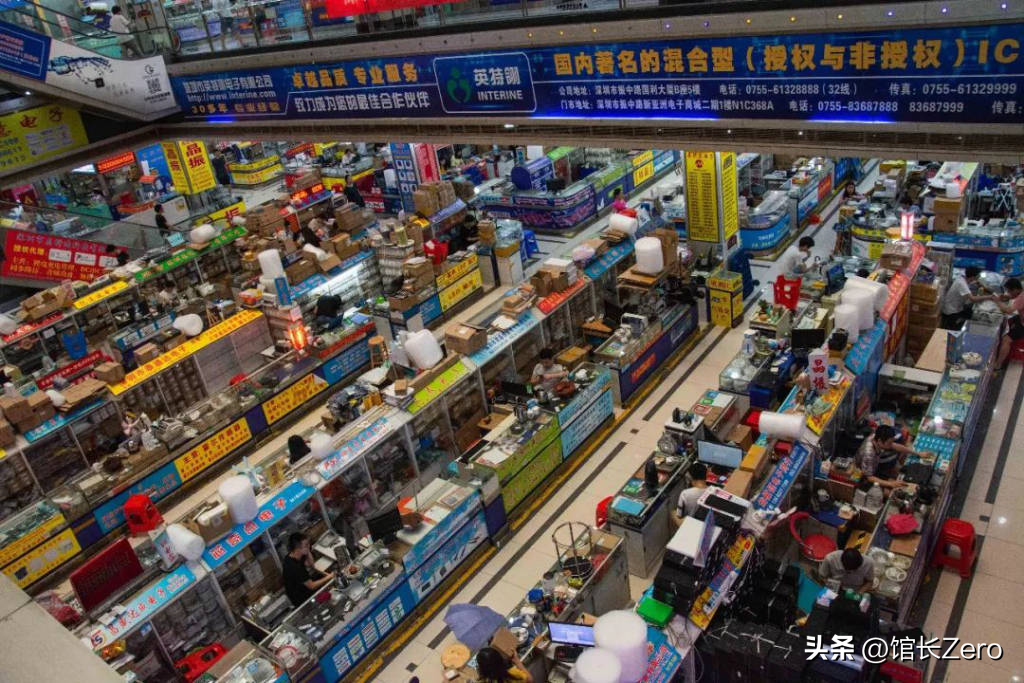
I can't find the comment now, but one HN member told a story here on how their POS credit card readers they sent for production to China, were being tampered with by malicious employees on the supplier side who were shaving internal parts of the case assembly to plant skimmers inside that would beam the credit card data. They were going so far as to match the weight of the tampered device to meet the spec by the milligram to avoid weight detection countermeasures. Insane.