What difference does it make if there were factors they had control over? I suspect grit or tendency to work hard is primarily inherited just like intelligence. So you could also say anyone who works hard is not really doing so by their own doing.
Hey Soheil! I'm actually doing really well and my life is awesome. No complaints personally.
I'm worried about the future -- my own, yours, my parents, those of the guys I worked with at the moving company, etc.
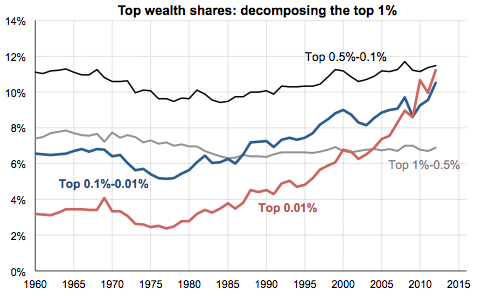
The problem when wage growth stalls for most of the population [1], but wealth grows disproportionately for the wealthy [2] is three-fold:
- The wealthy don't spend additional wealth, they invest it. This leads to lower velocity of money, which is a factor in consumer spending.
- Economic mobility stalls with decreased consumer spending and concentration of wealth. [3]
- As people lose faith in economic mobility and experience economic hardship, political instability follows. [4]
This cycle is compounding. It's about long-termism and general social welfare.
Economic competition is good. Inequality can be good. Current levels of economic inequality and mobility are concerning. Like pre-Great Depression concerning and it's only getting worse.
Right now we need people, especially wealthy people to be in-touch with how out-of-whack our economy is. The gospel of prosperity is poisonous right now. We need more people to acknowledge luck and to understand the economic suffering of others.
I guess you have to balance the harm caused by the "lower velocity of money" as a result of wealthy investing a portion of their earnings vs decreasing the incentives that allow one to become wealthy in the first place thus reducing wealth generation to flatten the inequality. Hasn't this been tried in almost every socialist country in South America?


I’m not sure what exactly you feel victim of.