I think there is a lot of mis-information floating around here.
There are 2 "flavors" of 5G per 3Gpp 1) FR1 which is 5G operating on low/mid band (below 6Ghhz) and 2) FR2 which is 5G operating above 6Ghz
If the sub 6Ghz band, 5G is basically the same as 4G LTE, similar power levers (sometimes lower depending on some technical details beyond the scope I can go into here). But there are some significant technical improvements. A lower TTI, the TTI is the interval in which the modulation and coding schemes can change. In 4G LTE the TTI is 1ms, for 5G it is 100us. Also, the sub channels can effectively be smaller. The benefit here is to capacity. Think about protocols that may have small packet sizes, eg. Votle (voice over LTE, sort of like VOIP) or TCP SYN/ACK messages. If you devote an entire resource block (TTI, ie. time slice and sub-channel allocation) to a small packet you effectively waste a lot of spectrum. These are a few very simple examples of the various improvements that 5G in the sub-6Ghz has. But none of these changes to the protocols have any effect whatsoever on the effective radiation or would change the effects to humans which, in my view has been clearly been shown to be safe.
Now, the FR2 5G which typically operates in the mm-wave bands, for example 28Ghz. All of the above features and more apply, but one very important extra feature of the small wavelength is that it makes it possible to utilize beam forming antenna arrays, specifically Phased Array Antennas or Meta-material antennas. The reason is because the antenna elements (think each antenna element as a sort of RF pixel) has to be spaced 1/2 lambda (wavelength) apart so the physical size in the low bands is simply impractical but at higher frequencies the wavelengths are short enough that these antenna arrays are small (on the order of less than 1 foot square) and can have high gains and narrow beam widths. Now, if you think about this, that means that the beams are narrow (think about it like light, RF and light are both electro-magnetic waves but at different frequencies). This ability to control the beams means that the energy can be much lower. A joke that is often made in the industry is that mm-wave cannot propagate out of a wet paper bag. This is literally true, a wet piece of paper completely stops a mm-wave beam. That means that it cannot get through a pane of glass (or it is severely attenuated) and does not penetrate human skin, much less so than the lower bands. The benefit of the mm-wave is mostly that the antennas can be smaller and there is just a lot more spectrum. The benefit of more spectrum is of course Shannon's law C ~ B*SINR that is, the capacity in bps is proportional to the amount of spectrum B times the Signal to Noise and Interference ratio. So having more spectrum is a big deal.
All of what I am explaining here I am hoping, that the highly intelligent HN readers will understand is that the sub-6Ghz (FR1) 5G is essentially no different from 4GLTE except that there are a number of protocol and other improvements that increase capacity. In fact, the radios are the same in many cases and it is simply a software upgrade (many of these radios are essentially SDR's).
The mm-wave (FR2) is what is really radically different from traditional 4GLTE (although, it has been used for other wireless use cases for a long time such as LMDS, but that is another long story, in fact, much of the mm-wave spectrum comes from older LMDS applications). But newer technologies such as PAA (phased array antennas, borrowed from DoD military) offer significant increases in capacity and bandwidth at much lower and safer energy levels than previously possible from FR1 systems.
I know this is a very long post, but this is a very high level overview of the 5G technology. There are many other aspects and exciting new applications that are far beyond the scope that could be covered here. The most important issue in my view is that the fears and the propaganda that 5G has some sort of health related issues is founded in ignorance of the physics of the technology IMHO.
You're saying that the higher bands of 5G cannot even penetrate the human skin. So this means that the human skin (and I assume at least a couple of layers of body under the skin) effectively absorbs all the energy of the signal that reaches it. This is one of the main concerns.
You're saying that signals are going to be phased and directional, but for example if you are using a cell phone or even a laptop, that phased signal will be directed at that human and at their body. This means that all of the energy that earlier was dispersing in all directions (and only a small portion of it was hitting the human skin) - is now concentrated in that beam, with huge parts of it absorbed by the skin? How is this not a health concern?
From what I understant there have been no huge human studies on this. The higher frequencies actually might have other properties than lower ones, and just because we assume that 4G and lower bands of 5G are completely safe, the further study of the higher frequencies is surely needed. What is more alarming is the rate at which many of the countries (and hardware companies making billions on this rollout and thus pushing and lobbying for a faster one) are trying to implement 5G. Shouldn't we be careul about it and implement this untested(!) technology in small areas first?
> higher bands of 5G cannot even penetrate the human skin
True
> this means that the human skin effectively absorbs all the energy that reaches it
False. Most power is reflected directly off the skin. The tiny amount of power that is not reflected off the skin contributes to warming your skin, but the power level is so low that it has no discernible effect.
> energy that earlier was dispersing in all directions is now concentrated in that beam
True
> with huge parts of it absorbed by the skin?
Nope.
> no huge human studies on this
True
> higher frequencies [..] have other properties than lower ones
True
> further study of the higher frequencies is [..] needed
Agree, depending on what you want to study.
> Shouldn't we be careful about [..] this untested(!) technology
It is not accurate to say that it is untested. There have been many investigations in the frequency ranges required for 5G and none have shown any negative health effects, nor is there a proposed mechanism for which this should occur. I gave some details in another post [1].
> The tiny amount of power that is not reflected off the skin contributes to warming your skin, but the power level is so low that it has no discernible effect.
Alright thank you, if that is the case, sounds like physics-wise we should be relatively safe. If you have any other links to actual studies besides what is in that post, please link them!
Thank you itcrowd, I am quite interested to see these studies on 5G that I did not know existed until now.
I just had a look at [4]; the authors are
Davide Colombi
"Since 2009, he has been with Ericsson Research, Stockholm, Sweden, where he has been involved in research and standardization related to radio frequency exposure from wireless communication equipment."
Björn Thors
"Since 2005, he has been with Ericsson Research, where he is currently a Senior Specialist, involved in research and standardization related to radio frequency exposure assessment of wireless equipment."
Christer Törnevik
"He joined Ericsson in 1991, and has, since 1993, been involved in research activities related to radio frequency exposure from wireless communication equipment. He is currently a Senior Expert with Ericsson Research and is responsible for electromagnetic fields and health within the Ericsson Group."
And
Quirino Balzano
No listed affiliation with Ericsson, but "His group was essential in the development of the cell phone technology."
Hmmm....
As a thought experiment: can anyone imagine these three authors, employed by Ericsson (the prominent wireless company), conceivably publishing a paper showing that wireless technology has adverse health effects?
Regarding [5] the authors are:
Theodore S. (Ted) Rappaport
"His Ph.D. study provided fundamental knowledge of indoor wireless channels and was used to create the first Wi-Fi standard (IEEE 802.11)... He co-founded the Virginia Tech Summer School and Wireless Symposium, in 1991, the Texas Wireless Summit, in 2003, and the Brooklyn 5G Summit (B5GS), in 2014...He is the Founder and the Director of NYU WIRELESS, a multidisciplinary research center focused on the future of wireless communications and applications. He conducted fundamental work that led to the first U.S. Digital cellphone standards, TDMA IS-54/IS-136 and CDMA IS-95. He and his students engineered the world’s first public Wi-Fi hotspots, and more recently, his work proved the viability of millimeter waves for mobile communications. The global wireless industry adopted his vision for fifth-generation (5G) cellphone networks."
So he is one of the "creators" of wireless, as it were. It would be rather surprising if he were to publish findings about negative health effects of his "brainchild."
Ting Wu
Affiliation
NYU WIRELESS
Brooklyn
NY 11201, USA
(Rappaport's company)
and
Christopher M. Collins
(no immediately apparent conflict of interest)
In addition, the title ("Safe for Generations to Come") would be, for me, a clear "red flag."
Regarding [3] the authors are
Ronald C. Petersen
"Until his retirement in July 2001, he managed the Wireless and Optical Technologies Safety Department (WOTS), which serves as the Lucent Technologies Inc. resource for all nonionizing radiation matters and as a resource for Lucent wireless customers on RF safety and FCC compliance issues."
and
Eleanor R. Adair
(no immediately apparent conflicts of interest)
Independently of the authors' conflicts of interest, it would be necessary to know the source of the funding for each of these research papers. As I mentioned in earlier posts, industry-funded and independently-funded studies yield quite different results. The quote from the Guarian article is worth repeating here:
"When Henry Lai, a professor of bioengineering at the University of Washington, analysed 326 safety-related studies completed between 1990 and 2006, he discovered that 44% of them found no biological effect from mobile phone radiation and 56% did; scientists apparently were split. But when Lai recategorised the studies according to their funding sources, a different picture emerged: 67% of the independently funded studies found a biological effect, while a mere 28% of the industry-funded studies did. Lai’s findings were replicated by a 2007 analysis in Environmental Health Perspectives, which concluded that industry-funded studies were two and a half times less likely than independent studies to find health effects."
[1] and [2] do not relate to 5G. Regarding pre-5G radio frequency technologies, it has already been established that the majority of (independent) studies show these technologies to have adverse health effects. To quote again from the recently-mentioned article in The Lancet:
"A recent evaluation of 2266 studies (including in-vitro and in-vivo studies in human, animal, and plant experimental systems and population studies) found that most studies (n=1546, 68·2%) have demonstrated significant biological or health effects associated with exposure to anthropogenic electromagnetic fields. We have published our preliminary data on radiofrequency electromagnetic radiation, which shows that 89% (216 of 242) of experimental studies that investigated oxidative stress endpoints showed significant effects.7 This weight of scientific evidence refutes the prominent claim that the deployment of wireless technologies poses no health risks at the currently permitted non-thermal radiofrequency exposure levels. Instead, the evidence supports the International EMF Scientist Appeal by 244 scientists from 41 countries who have published on the subject in peer-reviewed literature and collectively petitioned the WHO and the UN for immediate measures to reduce public exposure to artificial electromagnetic fields and radiation."
So after having a look at the three articles cited above that relate to 5G, I must revise what I said earlier ("No studies on 5G have been done"). In fact, it appears that no INDEPENDENT studies on 5G have been done.
They reviewed not 326 but only 59 studies with 12 funded fully by industry. The statistical power is much lower, although I agree with you that there is a worrying trend that should be properly investigated.
Additionally, the potential conflict of interest you mention in the papers is interesting. I didn't go fully into their backgrounds as you did, which is interesting. I would be hesitant to conclude "it appears that no INDEPENDENT studies on 5G have been done" because my list of references is very non-exhaustive and only the result of a cursory Google Scholar search.
Finally, the point I want to make is that in this whole discussion, I have provided scientific evidence that 5G radiation levels (<300 GHz, as planned) are not harmful. I have not seen a single scientific paper posted by you or anyone else that provides a) a mechanism to explain what would be harmful about it and b) the level of harm this mechanism should have on users.
Thank you itcrowd for your comments and your sincere and balanced approach, which I respect even though I do not at present share your viewpoint. Thank you also for looking into the Lancet and Guardian articles. Regarding the respectability of this subjournal of Lancet, that is useful information. Regarding the Guardian article: after a very brief search, I have also not been able to locate the actual academic article, though there are many references to it in other general-interest articles on the internet. The 326 number referred to Lai's study; the 59 studies refer to the separate article from Environmental Health Perspectives that you link to.
I have been following this topic for some time and in everything I have read, I have (until today) never encountered a single reference to a study on the health effects of 5G (and have encountered many statements that 5G has not yet been studied for health effects), thus my initial assertion that there haven't been any studies. What I have encountered is many government and industry spokespeople and mainstream media outlets saying that 5G is safe, without ever citing a single study to support their claim. The few studies that turned up in your brief Google Scholar search are problematic, as I pointed out, due to conflicts of interest.
Regarding your last paragraph (I will comment in two parts):
> Finally, the point I want to make is that in this whole discussion, I have provided scientific evidence that 5G radiation levels (<300 GHz, as planned) are not harmful.
I don't want to seem uncivil, but I think I missed this evidence? Thus far we have found three studies that address possible health effects from 5G, all of which have problems with conflicts of interest, correct? If there have been no other studies directly testing 5G, what is the scientific evidence (not theorizing, but actual empirical studies) that has been provided?
And:
> I have not seen a single scientific paper posted by you or anyone else that provides a) a mechanism to explain what would be harmful about it and b) the level of harm this mechanism should have on users.
Firstly, not a single scientific paper has been posted because there haven't been any, yes? (setting aside the 3 we spoke of above). One of the essential points here is that this simply hasn't been studied (apart from the aforementioned problematic studies, unless there are others that we have not found, and that the various parties assuring the public that 5G is safe are likely also unaware of given that they have never cited them either), and the technology is being deployed anyway.
Regarding our ignorance of a "mechanism to explain what would be harmful about it": I would tend to place more trust in empirical studies -- what actually happens, are any effects produced? In terms of understanding the mechanism of how it happens, scientists may not have discovered this yet. A current gap in our knowledge of some of the mechanisms of the natural world does not mean that those mechanisms, and the effects that they produce, do not exist. In the meantime (i.e. before we discover the mechanisms), it seems imperative that the empirical effects are determined.
Thanks danielst for the kind words. Huge respect for your civil responses.
That said. I did a bit of a deep-dive into the literature and may need to somewhat revise my stance.
First, let me try to summarize our common ground and our differences. Below are the points I think we agree on (let me know if not!):
1. 5G does not have ionizing radiation
2. The well-known mechanism of heating due to millimeter-wave radiation is so minimal as to be negligible. I.e. the heating itself is not the mechanism by which damage can be done. To substantiate that claim further, there is a very accessible article from 2000 [1].
3. Sources of funding and conflicts of interest are a problem.
Regarding this last point, I think you more strongly agree with the statement and are more likely to reject outcomes from industry-funded or industry-affiliated researchers. I am a little more hesitant. I think we can debate this, but I have done my best to include sources in this post which do not seem to come from industry but from government research labs (i.e. public funding) or mixed funding (public + private money).
Now, what I think we don't agree on:
4. There may be other biological mechanisms that are activated / enhanced / suppressed by millimeter-wave radiation. These must be investigated before widespread 5G rollout.
Paper [2] is not an article but a letter to the editor. No novel research.
Paper [3] warns of exposure to very short, high-power pulses (heating effect).
Paper [4] is a comment on paper [3], saying basically that a) these pulses are not used in 5G and b) new standards forbid these short high-power pulses.
We need to look further.
I somehow stumbled on [5] and [6] (don't know the search terms anymore). According to your standards, [6] should not be included since C.L. Russell works for the "Physicians for Safe Technology" that has an anti-5G stance, and cannot be considered neutral. (See: https://mdsafetech.org/problems/5g/ and https://mdsafetech.org/advisory-board/cindy-russellmd/)
That leaves [5], which I think is a good summary of many potential biological effects that millimeter waves could have (note: some of the referenced studies in [5] deal with high radiation levels, but some are with low radiation levels).
The review seems thorough, and that is where I should alter my previous statements a bit: I think there is reason to believe that 5G may have some other effects that are not well-investigated and for which the mechanism is unknown. However, I agree with the author of the study [see 7] that 5G rollout should not be stopped because of this. The situation should be monitored closely by professionals and more research should be done at the same time.
I will leave you with the part of the conclusions from [5]:
> In the respect of the WHO principle “health in all policies”, the development of new RF-EMF
communication networks should be paralleled by adequate and active involvement of public
institutions operating in the field of environmental health, by a revision of the existing exposure
limits and by policies aimed to reduce the level of risk in the exposed population.
> On the other hand, an adequate knowledge of pathophysiological mechanisms linking RF-EMF
exposure to health risk should also be useful in the current clinical practice, in particular in
consideration of evidences pointing to the role of extrinsic factors as heavy contributors to cancer
risk(Wu et al., 2016) and to the progressive epidemiological growth of noncommunicable
diseases(Pruss-Ustun et al., 2017).
[3] Neufeld and Kuster, 2018, Systematic Derivation of Safety Limits for Time-Varying 5G Radiofrequency Exposure Based on Analytical Models and Thermal Dose, https://www.ncbi.nlm.nih.gov/pubmed/30247338
[4] Foster, 2019, Comments on Neufeld and Kuster: Systematic Derivation of Safety Limits for Time-varying 5G Radiofrequency Exposure Based on Analytical Models and Thermal Dose, https://insights.ovid.com/pubmed?pmid=31135642
[7] In an interview in Italian he said the following:
The scientific evidence available on the consequences of exposure to this type of frequency, although preliminary, is worrying, because also in this case effects like genetic alterations, protein synthesis and other well-documented biological consequences have been documented. No one wants to put a limit on progress but we should associate the introduction of these technologies with careful monitoring from an environmental and health point of view, revising down the exposure limits imposed by law and taking all possible precautions. (https://www.ohga.it/esposizione-ai-campi-elettromagnetici-e-... and Google translate)
Thank you itcrowd for your thoughtful reply and for going deeper into this. I think you have spelled out our common ground in points 1-3 very well. And thank you also for digging up these other articles. I had a look at [5].
So our difference seems to be, as you mentioned, whether we believe 5G deployment (sorry, I avoid the term "rollout" since I cannot stomach this term any more, it is used so repeatedly and reflexively in practically every article dealing with the subject :) ) should be halted or slowed before more research has been done as to its health effects. I see this as a question of ethics. The technology, of course, is being rushed to deployment and by its nature will will reach everyone within range of its multitude of base stations. The people within their range will have no say as to whether or not they will be immersed in this radiofrequency radiation. At our current state of knowledge, we do not know whether the new 5G technology poses a significant threat of harm to humans, or a moderate threat, or a small threat, or no threat at all. The previous, related technology (3G, 4G, wi-fi, cell phones themselves, etc.) has been shown by the majority of the (independent) literature to pose health risks that are very much worthy of concern. The 5G technology involves a much greater number of base stations at close proximity to each other and humans, as well as a different, higher frequency whose effects on humans are unknown since apparently untested. Looking at this situation as a whole from the point of view of ethics, I think that it is very reasonable to assume that the new 5G technology could have significant health effects and that immersing the population in the radiofrequency radiation from this technology without first ruling out these plausible health effects, in the interest of not impeding the progress of the technology, is seriously problematic.
"The precautionary principle" is often cited in this connection, and I have to wholeheartedly agree with it.
Another aspect to take into account is that if the technology is studied thoroughly beforehand as to its possible health effects, it may be possible to amend the technology if necessary, or formulate precautionary measures, to minimize the health impact while still introducing the technology.
Deploying the technology before thorough testing amounts, I believe, to a crapshoot, "flying blind" as the U.S. Senator Blumenthal said in a congressional hearing in which he questioned senior members of the wireless industry. The technology is being pushed forward (for which the wireless industry and the government certainly have their own interests which do not overlap with those of the public, though one could argue that the higher download speeds (which I consider to be pretty trivial in the big picture) and other, future as-of-yet ill-defined applications of 5G (internet of things, etc.) could be of benefit to the public), and effectively we are just going to wait and watch and see if it hurts people a lot, a little, or not at all. I do not see how this can be considered in the least responsible.
I would be interested to know your thoughts and reflections on this ethical question, and of any other members of this forum who would like to chime in.
Ah, ethics. Here's my opinion. No literature this time [happy]
To keep in your cited "flying blind" analogy: I don't think we're flying blind. I think we have a good understanding of the dominant mechanisms that
could cause biological harm (i.e. ionization and heating).
I would rather say that we are flying with 98% vision. Are there some blind spots? Yes! We don't have full knowledge of all effects of millimeter-wave
radiation, but the picture gradually becomes more complete.
That's why it is important to keep researching.
However, we cannot be moving the goalposts. Let's imagine that it is shown that millimeter-wave radiation does not cause brain cancer.
Then other "sceptics" may say "well, what about skin cancer?" and later "what about alzheimer's?" or "what about lung infections?". While I don't want
to trivialize the seriousness of these diseases, I think it is fair to ask: when is 5G safety demonstrated sufficiently? Even after answering
these questions, people may come up with yet another disease to investigate. This is what I meant earlier when I said you "can't prove a negative":
you can't prove safety, you can only prove unsafety. [1]
That is why I think it is of paramount importance to identify mechanisms by which harm could occur and then investigate:
- what phenomenon (phenomena) are influenced by this mechanism?
- does this phenomenon actually occur [in the human body or animals], or is it only deep inside [the human body] where radiation doesn't penetrate?
- how harmful / beneficial is this, i.e. what is the extent of the effect?
I think we are starting to identify some biological effects that (in my opinion) are not major concerns. This is where the science is not clear-cut.
As for the "precautionary principle", yes we must be cautious about any new technology.
But how many times can the goalposts be shifted before we acknowledge its safety?
How can the industry prove or at least demonstrate an acceptable safety level?
---
> The people within their range will have no say as to whether or not they will be immersed in this radiofrequency radiation.
I think that's accurate and a reason that scientists need to clearly communicate the findings of their studies to the general public. A well-informed decision must be made. The level of discussion (other than
this one) is pathetic, to be honest. Industry claiming its safe, some interest groups saying its unsafe and the public left stuck in the middle with no
real clue of what to do. The one with the highest circulation of clickbait articles filled with fake statistics circulating on social media "wins" the discussion. Science be damned.
---
As for the purpose of 5G: I think it is completely overblown, media-hyped tech and the biggest buzzword of the last year(s). In my (academic) circles, I see 5G being
the new "quantum" in the sense that it brings in a ton of research money (public and private!) if you can somehow manage to squeeze in the word "5G" in your
powerpoint proposal for research funding. For me personally, I haven't seen any "killer application" of 5G. That's not
to say that that can't come, of course. If 5G adoption must be halted for several years because significant health implications are suspected, I am
(personally) fine with that. My opinion however, is that there is no scientific foundation for such drastic measures.
---
[1] Note the irony here, in that I am actually saying that the negative (unsafety) can be proven while the positive (safety) cannot.
> is now concentrated in that beam, with huge parts of it absorbed by the skin? How is this not a health concern?
Have you ever been outside? Felt the warmth of the sun on your skin? That warmth is (up to) 1000W/m^2 of ionizing high frequency EM waves being absorbed by your skin.
So in light of that, if you want to be consistent, you should start worrying about non-penetrating EM waves from 5G when you feel them heat your skin up.
Of course, skin-penetrating waves are another story entirely, but the point of the article is that they seemingly don't.
Sorry I wasn't around today to respond more timely, but I appreciate all the interest and thoughtful responses. After reading through them, I think I see a misunderstanding. One of the advantages of the pencil width beams is that they do not have to be on all the time. The beam will not turn on and point at you unless it sees your device advertising. As soon as that is interrupted, the beam goes elsewhere to service others within usually a few hundred microseconds. So the beam will not hit you, it is aiming at the antenna on your device, if the energy is not being absorbed into the antenna it goes away. So worse case you get a few 100us of lower level energy than the FR1 band.
Think of it like this, say you are a gNodeB (5G BTS) your job is to shine a laser pointer on a sign that hays hello. As soon as you cant see it because someone got in front of it you look for a different sign to shine it on. You don't want to waste time and energy shining it on something that is not an antenna.
So what happens when the FR2 mmwave is interreupted ? You of course fall back to FR1 which is on all the time. Remember it is the same frequencies as 4G LTE but now using 5G protocols and a new more efficient modulation scheme (5Gnr, for new radio which uses NOMA instead of OFDMA).
So really you need both. It all depends on the amount of spectrum, but typically for most of the large carriers the low band users can expect 1Gbps - 2Gbps speeds and in high bands mmwave 2Gbps - 10Gbps.
So even when it rains or you get blocked, it's still pretty darn cool !
Honestly, let's ignore the health concerns for a moment. Even though its important, lets say it's not.
What's described means these bands are unreliable. A lot of these high frequency bands require clear line of sight or a hopeful bounce off a surface that doesn't absorb it. Partly why the high frequency wifi routers are not taking the market by storm. They're slightly niche.
>You're saying that the higher bands of 5G cannot even penetrate the human skin. So this means that the human skin (and I assume at least a couple of layers of body under the skin) effectively absorbs all the energy of the signal that reaches it. This is one of the main concerns.
The top layer of skin (the epidermis) is dead skin cells. Cancer is when cells start reproducing uncontrollably, and dead cells don't reproduce anyway. Its the living cells that you need to protect
Thanks that is a detailed and interesting summary of 5G. This might be a silly question but if you have a beam, that cannot get through a wet paper bag or pane of glass, how is it used practically? Is this for localized spots like a single street?
Yes, mmWaves are made to be used with small cells and short distances. There's a lot of hype around how short or long the maximum distance. I've heard very bullish estimates of up to 1 km, and more conservative one of ~150m. The truth seem to be closer to the low end, but that depends on a lot of fine details.
The base station / small cell can have antennas with a large number of patches (32 to 256), so very narrow beams and high gain. This is used to compensate in part the very high attenuation at those frequencies. The device will have less antennas, so less gain.
Ideally, both device and cell will point their beams at each others, for maximum gain. There's a beam searching process as part of the 5G/mmWaves synchronization, and then beam tracking. All this is much easier when the device is static, for fiwed wireless access (FWA). When handling a mobile it gets trickier.
It's best to have a line of sight between the close small cell and the device, but it's also possible to have an indirect line with a bounce for example. There will be an impact on signal level, so if there's such a bounce you'll want to be closer.
For mobility, tracking a device is hard. Just turning a street corner or moving behind any object in the beam path can drop the mmWaves link. But today mmWaves for smartphones are deployed in NSA mode (non-stand alone), where it's always used in parallel with LTE in real time (dual connectivity or DC). Actually, all those device antennas consume so much that it's common to only use 5G/mmWaves in the downlink (cell to device) and stick to LTE in the uplink (device to cell). Reception is easier on the device as there's no power amplification as in the uplink. So when you drop the 5G connectivity, the LTE link is already there.
Yes, your hand can mask an antenna module (made of several basic antennas, or patches, for beam forming) and make it useless. This is why 5G phone designs have several such antenna modules spread around so that at least one of them should be usable, most of the time. IIRC it's 3 modules for current gen 5G phones. Of course in some cases it will be your body shadowing the lone 5G cell around, and in this case the phone will fall back to 4G (or 5G in lower bands, so not mmWaves).
All those additional antenna modules explain why 5G phones are on the big side.
Probably it is about the fact that water is polar and readily absorbs microwaves. Which, of course, is how microwave ovens work. (The standard 2.4 GHz frequency is actually not absorbed as well as higher freqs; this is a deliberate choice to let the radiation penetrate deeper into the food and heat it more evenly.)
Very good post, thank you for taking time to write this. One correction: radios are not SDRs. They are ASICs (and occasionally FPGAs) with all the signal processing done in dedicated hardware. The software merely configures and controls this process. The ASIC is designed to be hardware-ready to support several technologies (WCDMA/GSM/LTE/5G), via later software upgrade as you mention.
It is not exactly SDR's but getting further into the weeds here, the radio is split into two parts, this actually started with the introduction of LTE. The BBU (Baseband Unit) is centrally located or can be collocated and the RRU (Remote Radio Head) is essentially the PA/LNA radio chain (Power Amp, i.e. transmitter and the Low Noise Amp, receiver) and some other things. The connection between the two is CPRI which carries the I&Q (Phase and Amplitude) information, basically the modulation scheme is QAM. So the BBU's are generally somewhat programable but it depends on the exact type manufacturer. For 5G the BBU function will actually run in a VM instance on a server stack. The RRU is sort of "dumb". So for 5G I would say it is pretty much an SDR but depending on the vintage of 4GLTE it may or may not be. Older BBU's are not re-programmable but many of the newer ones were designed to allow an upgrade to 5G, when they were made it was anticipated that the standards would firm up and then new firmware could be uploaded into them.
To my best understanding, the BBU also uses ASIC to construct modulated symbols for RU. The necessary data throughput combined with low latency and time-critical operation while keeping low power consumption is simply not achievable in SW. As one mmWave example, the BBU has to keep track of current spatial position of UE and update the beam steering information to track UEs in motion. Most of these decisions have timings expressed at 1e-7 seconds order of magnitude, while SW used can react with 10ms precision. I would be interested in any info that shows SDR being used as part of radio.
The reason that this is absurd is that there's this popular notion that 5G is fundamentally new technology. The reality is that it is literally just radio. You know, like "the wireless" from 1905, which is the same fundamental thing as 4G, 3G, 2G, LTE, Analog, WiFi, radar, satellite, and a bazillion other things that have repeatedly and conclusively been shown to not cause harm at typical power levels. Sure, a kilowatt microwave emitter will literally cook you, but yeah... so will a gas fire! Don't put your hand in the fire you idiot and you'll be fine. Get a grip.
Meanwhile there's people frothing at the mouth and endlessly repeating "We just don't know! It could be dangerous!" is equally daft. A little-known German scientist called Einstein won a Nobel prize back in 1921 for showing that wavelengths longer than a certain cut-off (typically in the UV light range) simply do not cause ionisation, irrespective of power levels. Radio simply cannot give you cancer. It's been proven. We understand the physics. It's been tested to death.
Stop. Saying. We. Don't. know. It's YOU that doesn't know, because you're apparently blithely unaware of the last century of human progress. Catch up to the rest of us.
Meanwhile the real risk of cell phones is idiots texting and driving. That KILLS and MAIMS people. I bet 90% of the people arguing against 5G technology have done that at least a few times...
>Radio simply cannot give you cancer. It's been proven. We understand the physics. It's been tested to death.
Actually, high exposure to radio sources (2G and 3G) have recently been found to cause cancer in male rats. It's unclear yet whether this effect carries over to humans.
> To sum up the findings: a bunch of cancers that aren't statistically different from those found in the control group; a high-fatality control group; an elevated incidence of a single type of cancer, only in males, at exposures that are well above any that a human should experience.
To be fair, that's just one guy on a tech blog viewing a early draft of the findings. Here's a result of the peer review of the findings by a panel of experts:
>Panel 2 voted to recommend (8yes, 3no, 0 abstentions) the conclusion, clear evidence of carcinogenic activity of male Hsd:Sprague Dawley SD rats based on incidences of malignant schwannoma in the heart
You write: "Radio simply cannot give you cancer. It's been proven. We understand the physics. It's been tested to death."
I am not sure how to reconcile this with the two meta analyses of studies I mention in another post, the majority of which (of the independently-funded studies, that is) show that radio frequency radiation has adverse health effects.
> The reason that this is absurd is that there's this popular notion that 5G is fundamentally new technology. The reality is that it is literally just radio
This is just plain incorrect or you are being intellectually dishonest.
For example one of the obvious difference in 5G is the radio frequency, which is much higher. Different frequencies have (or likely might have) differnet properties, different absorbtion rates by the skin, different energy profiles, different resonant factors in the body. For example lower frequencies might go through the body, while other frequencies get stopped by it and energy absorbed by the body.
Just because they both use radio waves, does not mean they are the same. The gamma rays are also basically radio waves, if we would be using your logic you would say that gamma rays should be considered safe because we know 2G is safe?
And I am not saying that 5G uses gamma rays, it's obviously not the case. I am saying that different frequencies do actually differ in their effect on the body and the environment, and you can't just group them together because it's more convenient.
If you want to use science and critical thinking for real, you can't just assume that all frequencies behave the same, that's false due to basic physics.
The article talks about how higher frequencies are safer for the brain because they might get stopped by the skin and not penetrate the body as much. Sure that might be the case, but do we really want those frequencies hitting our skin all the time? What effects does it have on the skin then? Did they actually asked how many people would want this? No they did not, they just started rolling out this technology without much conversation. This is what people are upset about. And when they start asking legitimate scientific questions - if they are met with the condescending attitude that "we are scientists, you don't understand physics get out of here" - like you have in your post - and then you proceed to claim things that are actually not fully 100% valid physics-wise (because different frequencies are different, they're not "just radio") - then that is not a good argument.
Bottomline is, higher 5G frequencies might be safe or not, and there are different legitimate scientific ways of showing that. But saying that it is safe just because "it's basically radio, like 2G" - is really not one of them.
>The gamma rays are also basically radio waves, if we would be using your logic you would say that gamma rays should be considered safe because we know 2G is safe?
parent never said anything of the sort.
Are you confusing the entire electromagnetic spectrum with radiowaves? [0]
No one in this thread has yet made the assertion that all energy is the same, merely that everything within the radio spectrum has similar effects towards humans.
Parent to your comment even drove a comparison between microwave and radio, commenting on the affect of microwave towards people.
>Bottomline is, higher 5G frequencies might be safe or not, and there are different legitimate scientific ways of showing that. But saying that it is safe just because "it's basically radio, like 2G" - is really not one of them.
That's your bottom line, but you also seem to be under the understanding that this energy that hits our skin is at all times absorbed, which isn't the case in physical reality. It's mostly reflected -- the fact that the human body stops it means little with regards to it's effect on said body, or any such accumulation of effect.
As for the rat study -- I am personally going to wait for independent replicatability in human models, or something more similar to humans, before I turn to FUD.
Hell, it'd be nice to even see replicatability of the same experiment across other labs..
> That's your bottom line, but you also seem to be under the understanding that this energy that hits our skin is at all times absorbed, which isn't the case in physical reality. It's mostly reflected -- the fact that the human body stops it means little with regards to it's effect on said body, or any such accumulation of effect.
I certainly hope you are correct in this (in all possible practical situations and applications), and the ultimate things is of course, as you write, to
> wait for independent replicatability in human models, or something more similar to humans, before I turn to FUD.
But why outright disregard any doubt or questions or people that want to understand more before we implement some new somewhat untested technology? Calling them "absurd", "idiot", "frothing at the mouth", "blithely unaware of the last century of human progress", etc. - just doesn't seem helping the progress, and outright counterproductive. It's emotional reaction, a negative and attacking at that. Science has no place for emotions. It shouldn't be ok to be emotional about these things, just because you assume you are right. The other people assume exactly that about their own thoughts, and if you get emotional about it, you're just as counterproductive as the worst ones on the other side of the intellectual divide. It doesn't lead to new progress.
You are absolutely right that we should be cautious, but caution has already been taken by the scientific community. The public is not aware of the work is all, and understandably there is frustration when the only reason to hesistate is because not all the public have informed themselves.
I've never seen an issue with seemingly respectable sources making such strong conflicting claims on both sides. I've definitely seen multiple sources on here from people with seemingly more technical backgrounds than this author saying this is definitely something to worry about. I have no idea what to believe here.
It doesn't help that there are mountains of cash at stake. Suppose scientists determined that 5G networks are harmful to people's health, what then? Are people gonna stop using cellphones? Are companies like T-Mobile and Verizon gonna just fold? Will governments pass legislation to ban this equipment? If there's truth to this, it won't come out full force for decades, like it was with smoking cigarettes.
>Suppose scientists determined that 5G networks are harmful to people's health, what then? Are people gonna stop using cellphones? Are companies like T-Mobile and Verizon gonna just fold?
The scientists in Australia determined that the Adani coal mine was unsafe or at the least uncertain but their findings were ignored and discredited because it would be a huge loss of profits in one company. The company was recently exposed demanding a list of names of each of the researchers so they could trawl over their social media profiles to discredit them.
And Google could have decided to "just stay out of China" and avoid all the PR scandals.
But in the real world humans are too greedy for their own good. The first carriers to adopt 5G stand to make billions in extra revenue by charging people more for it or getting them to use more data for the same cost/GB.
You’ve got the incentives wrong here: if 5G was harmful, then telecom executives would not roll it out, because they and their families could not avoid it if they did.
This is similar to why smog and particulate air pollution got improved: because car and energy executives have to breathe air too.
You are right. This is also why the threat of global warming was nipped in the bud by thoughtful energy company executives. Their children have to live on earth too.
At least on the east coast, smog was improved considerably when the coal plants were finally allowed to update to newer tech.
The owners had wanted to update their plants for several years, but the EPA was preventing them from doing that unless they met an unrealistic target. So the plants continued to unnecessarily spew pollution because of the standoff. The EPA was finally overruled and the updates got the coal plants to about 95% of what the EPA wanted.
If I were a researcher and wanted to study this issue, I'd look at people who work in churches. Many churches with tall steeples lease space in them to wireless network providers, and those who work in churches are working under these antennas all day in close proximity. Comparing cancer rates in this population to those in the general vicinity would be an interesting study.
I'd hypothesize that there isn't a big increase in cancer rates for pastors of Baptist churches. We've all had cell phones connected to our bodies for decades now with the main side effect apparently sore thumbs and disrupted sleep patterns. If there were a correlation, I'd expect we'd see it by now.
Disclaimer: Personally I don’t think LTE and co really pose significant health risks.
But, your claim that there were no changes to public health in the last two decades seems misinformed. Eg we have an Alzheimer‘s epidemic and an obesity epidemic, and rapidly dropping fertility rates. AFAIK some cancers are more prevalent. All these could be caused by other factors, but it definitely needs to be ruled out.
Not a scientist but did some undergraduate work in biochem. The answer might be in those two observations (Alzheimer's + obesity). As I understood it in most cases of Alzheimer's there is a deficiencies in the brain- glucose pathway/efficiency and as a result (some studies think) that the brain now have to work harder at extracting the energy from pathway and spend less time on maintenance+cleaning... (plague + metabolites). Thus switching the brain to ketones(or low enough carbs) will force brain to make use of this new fuel source.(better source ?). There is definitely a link to obesity and over eating on carbs/sugar/glucose
Just interesting that the two cases might be realted (Alzheimer's and obesity)
Ppl working in churches might also be more religious and follow a spiritual/different diet... depending on church... Could be a range of reasons why ppl in working in churches are more or less ill...
The Lancet, from what I understand, is a pretty respectable journal and now I'm not sure what to make of the issue. Most of the anti-5G videos share a lot in common with antivax conspiracy theory stuff but this article seems well cited. I'm still a skeptic but wasn't sure how to respond.
> The Lancet, from what I understand, is a pretty respectable journal
Again, it's complicated. The Lancet is the name of a (good!) general medical journal, but there are also topics that are discussed in specialized sub-journals. The one you linked to is from "The Lancet Planetary Health", a relatively (2017) new journal that is not on the master journal list [1] and is therefore not seen as respectable, well-recognized, peer-reviewed scientific journal.
Thanks for the link to the article. It is worth quoting from it, I think:
"At the Oceania Radiofrequency Scientific Advisory Association, an independent scientific organisation, volunteering scientists have constructed the world's largest categorised online database of peer-reviewed studies on radiofrequency electromagnetic radiation and other man-made electromagnetic fields of lower frequencies. A recent evaluation of 2266 studies (including in-vitro and in-vivo studies in human, animal, and plant experimental systems and population studies) found that most studies (n=1546, 68·2%) have demonstrated significant biological or health effects associated with exposure to anthropogenic electromagnetic fields. We have published our preliminary data on radiofrequency electromagnetic radiation, which shows that 89% (216 of 242) of experimental studies that investigated oxidative stress endpoints showed significant effects.7 This weight of scientific evidence refutes the prominent claim that the deployment of wireless technologies poses no health risks at the currently permitted non-thermal radiofrequency exposure levels. Instead, the evidence supports the International EMF Scientist Appeal by 244 scientists from 41 countries who have published on the subject in peer-reviewed literature and collectively petitioned the WHO and the UN for immediate measures to reduce public exposure to artificial electromagnetic fields and radiation."
- Conflating all radio-frequencies
- Some of the cited articles specifically admit that the results are non-confirmed.
- Multiple instances of going lax in "correlation is not causation", specially with bees and babies.
About the babies, oh I could go on a longer rant on that one. Yes they pay way too much attention to phones to the point where some mental faculties develop in a different way. But hey, when we lived in nomadic groups of people in the African flat-lands, the kids would always have more people and critters around to catch their attention, these days it is often just two busy adults in a sprawling all-consuming house with wages to earn, mortgages to pay and baby messes to fix. In my view, our "forced" social conventions, including Christian monogamy and asphyxiating rigid sexual and familial conventions have more to do with the problem than cell-phones.
Nonetheless, I acknowledge that in the "natural" world nature had more effective ways to kill us than even the Sun's ultraviolet radiation, so it's a brave new world out there once we make it after our 30s. So who knows, probably radio-frequencies are also out to get us.
If there is any opinion about Lancet, regarding to the Wakefield story that you should get - is that you should hold Lancet in a higher regard, not lower - they retracted the study!
The study was published with fraudulent data which Lancet could not check immediately. In such a an environment a good scientific journal should publish the study regardless of how outrageous the title sounds. There are scientific truths that come out all the time that first sound outlandish. If the journals would only publish the studies which support the status quo in their area, we would never have any real vertical progress only small horizointal improvements.
Then, when it was actually shown by a due process that the Wakefield study was fraudulent - the Lancet, again, as any respectable scientific journal should, retracted the study and published the retraction. This is exactly how the scientific process should work.
So in other words, don't dicourage some study just because you don't like the outcome. Keep checking it further using the scientific method and due process, review, replication etc. If actually shows to be false, random or fraudulent - then retract it.
You should be happy there are journals like Lancet, not be more suspicious of it. That's how science works best.
This three-part article is written by an electrical engineer who approaches the subject without any preconceptions or previous bias one way or another (make sure to read all 3 parts):
Thanks. Here are my comments as I read all 3 parts:
Part 1: Re-iterates what I've said in this thread before. No safety concerns. Correctly cites scientific sources to back up claims.
Part 2: Citation [1] referenced in blog is not consistent with 5G frequencies. (Limited) measurements and simulations are performed at 380 GHz, while 5G is <300 GHz. Citation [2] in the blog doesn't make the conclusion that the blogger thinks (scientists say: "Perhaps, MMW has bactericidal and the
other actions, leading to a change in characteristics and metabolic pathways in bacteria and to their antibiotic resistance.", blogger says "study found that mmWaves altered bacteria growth". All further conclusions are based on flawed interpretations of these 2 articles.
Part 3: Opinion piece to "stop 5G until it is proven harmless". Well, that's the end of everything then. Since proving a negative is impossible we can never do anything new ...?
I always then point to the author's scientific qualifications. Clue: he's not a scientist, engineer, IT specialist, medical expert.
His qualifications:
> Paul Wagner is a 5-Time EMMY® Award Winning writer, an intuitive-empath, author of The Field Guide to Human Personalities, and creator of The Personality App and Personality Cards.
I don't like the approach of questioning credentials. It would be more useful, in my opinion, to demonstrate the factual incorrectness of the blogpost by investigating its (scientific) sources. See where the information comes from and check if it is represented well. Spoiler alert: this article does not cite scientific sources, only other self-referential blogposts.
So let's see this article.
> While it would be fair to assume that 5G technology has been tested for risks, this is simply not the case.
> 5G millimeter waves [..] naturally cause the skin to rise in temperature
So? If the rise in temperature was large, it may be a concern. However, the rise is very slight. Moving from one room to another in your house changes the temperature more. Heck, even standing up from your desk.
> Many scientists understand that the electromagnetic radiation leaking through the doors of our microwave ovens are carcinogenic, and therefore, can cause cancer.
[citation needed]. If there are so many scientists, why not name a few?
> launch of 5G will be similar to turning on your microwave, opening its door, and leaving it on for the rest of your life
Laughably false. Your microwave oven operates at the same frequency as Wi-Fi and the power required is thousands of times higher than your Wi-Fi router to be able to heat the food.
> Radiation causes cancer.
True, but misleading. Certain types of radiation (ionizing radiation, which 5G is not) are carcinogenic.
> [..] radiation does one major thing to human beings and animals – it destroys our DNA
Again, not all radiation does this. Only radiation at much higher frequencies than any of the 5G bands will do this.
I often hear this kind of thing. This is a false dilemma. You hear one story from one side and another story from another side. Both sound reasonable, but it's so complicated that you can't evaluate it. Which do you believe?
The answer is that you can choose to believe neither. True, you have to make a choice between the two, but I think it's actually critically important not to believe. If you are the decision maker, and you do not understand the issue well enough to make a decision, then you need to do a risk analysis and make your choices based on that risk analysis.
After you have done that, you then you need to make predictions. Over time, it should become more clear which side (or perhaps another result that never had a "side") is becoming the more likely good choice. You need to track that issue and keep comparing it to your predictions. If it looks like you made the wrong choice, then you should go to your recovery plan (which you did make, right?)
That's how to sanely deal with these situations. The idea that you believe one side or the other, throw your weight to that side full force and then close your eyes and hope you were right is... Hmm... how can I characterise it? ;-) Not reasonable.
I'd be keen to read some of those sources. I used to work in radio spectrum management in the past, and I haven't read anything to tell me why 5G is significantly more harmful than other sources of non-ionising radiation we use on a daily basis.
I don't know either - but that makes the choice simple. I'll stay away. This kind of dichotomy is almost always fed by financially interested parties, so I'll pick the safer choice - avoiding the possibility of harm until/unless everyone gets it sorted (by parties without financial interests in the answer) that it is definitively safe.
The difficulty is that with 5G, there is no option to stay away or pick the safer choice (save moving to some remote area), as the 5G base stations will transmit to everyone indiscriminately with no possibility of opting out.
It's one thing if you use a phone yourself, but the energy hitting you from the base stations is far less than what you get in that area of frequencies from the sun.
You can filter out a stable amount pretty easily but oops I just checked the blackbody math again and an exponent flipped when I changed one of the ranges while everything else stayed almost the same, I screwed up and ignore everything I said.
True. Most of the fight I've seen has been at the city level, debating the regulations for where the base stations can be placed, and what ROW is granted to support them. But if people fail to engage with their local government when the topic is discussed, it would be difficult to fight after the fact.
Every day it's either "duh obviously 5G is harmless it's just non-ionizing radio waves" or "5G might be giving you cancer and killing birds and disrupting weather radar and.." so all I can conclude is that there's no consensus yet.
why would I weigh one more? maybe it's harmless, maybe it has bad effects (it isn't unprecedented for non-ionizing waves to have bad effects on anything)
I believe snowwrestler is asking you to trust your gut and preconceived biases to lead you to the truth, in lieu of being an expert in the field with empirical data to examine. Ironically, going with their gut is precisely what many of the people opposed to 5G are doing, and I don't expect that's the outcome snowwrestler desires.
And that is exactly how fud like '5G might be giving you cancer and killing birds and ...' gets traction. Say it loud enough and often enough and there is too much noise for people without domain expertise to reach a conclusion. Which of course doesn't stop most of them from reaching one anyway.
I'm surprised that this article doesn't talk about a real, scientific, threat about 5G: that it occupies the same frequency spectrum as water vapor, affecting how accurate satellites that track clouds and water in the atmosphere can be.
Given that these satellites have contributed significantly to how much more accurate weather forecasts have gotten in the past 10 years, being unable to predict storms could arguably have a significant human health impact (ie. not being able to announce evacuations, sending aid to the right regions, etc)
Maybe the 5G networks can themselves be tasked with reporting ultra-local meteorological data, basically upcycling their signal strength info. The problem, then, becoming the solution.
These satellites employ what are known as passive radiometers: devices that detect how much radiation is present in a specific frequency band. This radiation comes from water molecules in the atmosphere.
The problem is that 5G might emit in the same frequency range as well. This means your detector now measures the base load of the H20 spectrum in addition to the added 5G spectrum, with no possible method of separating the two.
Your proposal will therefore not work. Any measurement will conflate the two and lead to too much noise to discern the (H2O) signal.
I’m sincerely curious. Based on all of your experiences with how tech journalism covers tech, why are you surprised that this article doesn’t address an issue unrelated to health?
I am not trolling or attacking personally- I am sincere: I’m super interested in understanding how divorced from other people’s perspective I am. I think this journalist was tasked with writing a story about how the health fears for 5g have not planned out in any reproducible study. It is obvious to me that there are powerful economic forces on both sides of this issue, and it is poisoning reporting. It seems outrageously obvious that talking about weather is not going to be addressed in this article
"You are out of touch", "Labeling people that you don’t understand", "get out of your bubble", "You are deluding yourself", and "tossing a mr. yuck sticker on people you don’t understand" are all examples of personal swipes.
GP's point - or at least a point that can be drawn from their comment - is that weather is actually more related to health than what the article is about, because weather forecasts have a measurable health and safety impact, whereas body absorption of low amounts of non-ionizing radiation doesn't.
Feigning curiosity in response to somebody feigning surprise is... interesting (...or maybe I am feigning interest to convey my incredulity that you were sincerely curious. :-)
I've often heard people say that we know that these radio waves are 100% safe because the heating effects of non-ionizing radiation at these doses is not a significant risk.
However, the article itself mentions that "novel EHF [medical] therapies" use only slightly higher (and also "non-ionizing") radio frequencies.
Per the Wikipedia article on EHF therapies, this seemingly similar radiation appears to have studied, proven biological effect: "Low intensity (usually 10 mW/cm2 or less) electromagnetic radiation of extremely high frequency may be used in human medicine for the treatment of diseases. For example, 'A brief, low-intensity MMW exposure can change cell growth and proliferation rates, activity of enzymes, state of cell genetic apparatus, function of excitable membranes and peripheral receptors.'[14] This treatment is particularly associated with the range of 40 – 70 GHz.[15]"
Can someone explain to me how we are so confident 5G is safe, if similar, 40-70 GHz radiation at 10mW/cm2 has been shown to
"change cell growth and proliferation rates, activity of enzymes, state of cell genetic apparatus, function of excitable membranes and peripheral receptors"?
Why shouldn't there be risk of similar effect at slightly lower frequencies and somewhat lower power?
(To be clear, I believe 5G to be safe with very high probability. But I wish I better knew how to reconcile this information and explain it to others who are much more skeptical.)
The Wikipedia section should probably be changed to be more critical as discussed on the talk page. EHF therapy has mostly seen study in Eastern Europe where it has been shown to be effective in a range of small studies for treating skin diseases, TB, and cancer(!) however these results have not been replicated elsewhere and the evidence for non-thermal effects from this radiation seems very flimsy.
Researchers are quite confident that 5G is safe because besides heating and ionization (see my other post in this thread), there is no known mechanism by which it could be harmful. I know, you cited Wikipedia and that has scientific references [14] and [15] in it. But, what Wikipedia doesn't tell you is that those sources are not quite uncontroversial.
I hate to bring up the same reference again, but here it goes [1].
The following paragraphs cite directly from the article [with emphasis mine]:
A number of researchers, many in Eastern Europe, have expressed interest in the therapeutic application of mmWave radiation. MmWave therapy has been widely used in Eastern Europe since the 1970s [86]. Strikingly high success rates have been reported in the treatment of gastric ulcers, cardiovascular diseases, respiratory sickness, tuberculosis, skin diseases, and even cancer [6], [87]. Typical treatments consist of daily skin exposure of 15–30 min for 5–15 days with PD levels under 10 mW/cm 2 at three common frequencies: 42.2, 53.6, and 61.2 GHz [90]. The mechanisms of mmWave therapy are not known. Nevertheless, some hypotheses have been explored in cellular and molecular levels in recent years as discussed in the “Reported Effects on Gene Expression,” “Reported Effects on Cel
lular Proliferation,” and “Reported Effects on Biologi
cal Membranes” sections. Despite the large number
of patients treated with mmWaves in Eastern Europe,
this therapeutic technique has not been accepted by
Western physicians and scientists.
It is also important to note that many of the reports
summarized in this section have not been independently
repeated and confirmed. Historically, some attempts to
repeat reported effects have been unsuccessful [8], [91].
While this is not to discount any one of the studies sum-
marized here, it is important to recognize that studies
involving biological samples inherently produce vari-
able results and (depending on the circumstances) may
have a number of uncontrolled or uncontrollable vari-
ables. For this reason, major decisions on public policy or health care should not typically be made based on
reports that were not reproduced independently.
My takeaway from your comment is that studies like [14] and [15] are very likely poorly done (like another comment describes early studies of acupuncture).
In any case, I'd expect that in within a few more years, these sorts of conflicting and controversial results should be further disproven.
The article states that 5G signal doesn't penetrate the body far enough to be able to touch the most important organs. mmWave 5G in the 28 GHz band is significantly attenuated by a window, let alone skin.
10 mw/cm2 for critical tissue doesn't happen. The power levels by the time the signal reaches important body tissue are much, much lower than that.
The linked source doesn't contain the word "5G" but it talks about radiation from 30 kilohertz to 300 gigahertz (30 kHz - 300 GHz). This encompasses 5G by a very large margin. The article makes the following conclusion about this frequency range:
> The only consistently recognized biological effect of radiofrequency radiation in humans is heating. The ability of microwave ovens to heat food is one example of this effect of radiofrequency radiation. Radiofrequency exposure from cell phone use does cause heating to the area of the body where a cell phone or other device is held (e.g., the ear and head). However, it is not sufficient to measurably increase body temperature. There are no other clearly established effects on the human body from radiofrequency radiation.
"The [WHO] Working Group classified cell phone use as “possibly carcinogenic to humans, ..."
2) You're gonna love this ... phone mfgs. test the in-use radiation pattern at 3" to 4" from your ear. In other words, exactly how people don't use a phone.
So we're a long way from proving phones are safe.
You would even be excused if you thought there was a conspiracy to cover up the risk, because nobody is trying very hard to test them as commonly used - against the ear or in your pocket next to your skin for 16 hours a day.
If cell phones caused cancer then almost everyone would have cancer, because for over a decade almost everyone has been using a cell phone.
If cell phones caused cancer then we would see increasing rates of cancer in areas most exposed to radiation from cell phones, like skin and head. What we actually see are that the deadliest cancers are lung, colorectal, breast, and pancreatic. With the possible exception of breast cancer, these are all illnesses that occur deep in the body, where they are least likely to be affected by radiation from cell phones.
At worst we can say that if cell phones cause cancer, they do so at a rate that is indistinguishable from the existing incidence of cancer.
> phone mfgs. test the in-use radiation pattern at 3" to 4" from your ear. In other words, exactly how people don't use a phone.
In most modern phones the antenna is at the bottom (or at the very least the iPhone and Samsung Galaxy line - but I think also most other). That's a few inches from the ear.
I was a bit surprised to learn this and now keep my phone right-side-up in my pocket, to keep the EM radiation source away from the balls.
It is unfortunate that the NYT is confusing 5G, which is a certain version (15?) of the LTE advanced specification, with the use of millimeter wave frequencies. Here in the U.S. at least one major carrier is deploying 5G on frequencies below 1 GHz.
As someone who currently works in wireless comms I think we can say "5G" is a pretty meaningless term. I presume, as you suggest, it originally referred to the new LTE but honestly the definition "literally any wireless tech created between about 2015 and about 2020" seems to be universally accepted!
This is PR from the 5G networks. There have been groups of scientists that have published concerns about the health risks of 5G. They did not get their information from one chart.
> At higher radio frequencies, the skin acts as a barrier, shielding the internal organs, including the brain, from exposure.
So am I to understand 5G causes merely skin cancer, not brain cancer? Or is non-ionizing radiation safe regardless of shielding? I wish they had written this article better, because as it stands, it's a mess. If it wasn't for the mention that there was no increase in cancer observed as cell-phones gained popularity (which is at frequencies lower than 5G), it would be entirely unpersuasive.
Would it be too much to ask for blasting a few thousand rats with 5G?
Edit: Skimming https://ieeexplore.ieee.org/abstract/document/7032050 linked by itcrowd, I got the vague impression that biological tests were done roughly as I'd hope. It would be nice if the Times article devoted more ink to studies showing 5G to be safe, instead of 95% focusing on how the claims that it is dangerous are shaky, and barely mentioning studies proving its safety.
Let me try to clear it up. (sorry, it got a bit long)
First, the skin (and skull and clothing .. etc.) does act as a barrier, which is why the graph that is shown in the article is flawed (this is mentioned). It shows absorption of microwave radiation in the grey matter of the brain, but it doesn't account for the skin and skull that blocks it.
There are two major effects of radiation: ionization (think X-ray imaging) and heating (think microwave oven). Ionization is irrelevant for 5G, because the frequency is way too low. Heating, on the other hand, happens at many frequencies. For example, a microwave oven is at ~2.4 GHz, just like Wi-Fi (which can also operate at 5 GHz).
That said, the heating is dependent on how much power is transmitted and how well it is absorbed by the skin. For example, a low-power source (Wi-Fi antenna) doesn't fry your skin like a microwave oven because a) the power is too low and b) it mostly reflects off the surface of the skin.
The power levels that 5G needs to operate at are quite low and the reflection off the skin is quite high. This is summarized nicely in the reference I gave in another comment here [1].
To answer your specific questions:
> So am I to understand 5G causes merely skin cancer, not brain cancer? Or is non-ionizing radiation safe regardless of shielding?
The ionization effect is not present due to low frequency (see above), the heating effect should be considered, but is minimal (see reference). The authors of [1] note specifically that the skin area is safe, but the eyes may be more vulnerable if the devices operate at large power and are close-by. So, this is not dangerous for consumers but may be dangerous for workers near antennas. However, the radiation level must be very high, and the distance very short. In my reading of the paper, it is not a danger for commercial telecom applications.
> Would it be too much to ask for blasting a few thousand rats with 5G?
"So am I to understand 5G causes merely skin cancer, not brain cancer?" was mostly meant as a critique of the article, since they use shielding by skin as a defense.
Otherwise yes, I'm aware that 5G is non-ionizing, and produces negligible heating, which doesn't leave many straight-forward ways it could affect biology (maybe EM fields adversely affect protein folding?). For those you pretty much need experimental studies, but looks like they've been conducted, and turned up nothing.
EM fields are not affecting protein folding. Moreover this is really just you reacting to something that feels incomprehensible and invisible while discounting something that seems normal - sunlight - even though it's orders of magnitude more powerful, causes more heating, and is directly linked to cancer in the right ranges.
But no one expresses concern about visible light causing damage from localised heating or the EM fields of it disrupting protein folding (hold a torch up to your hand - your body is quite translucent to visible light).
Why not? The energy needed to affect that is lower than ionization energy, so they could.
And I'm not "reacting" to anything. 60 GHz radiation is sufficiently different from sunlight that it might plausibly have a different effect on us (such as by interacting with some low-energy absorption peak of a protein that visible light does not interact with due to its higher energy, or by penetrating deeper into tissue than visible light can).
It turns out studies show it is not harmful. But they conducted actual studies to show that - they didn't dismiss it outright "because sunlight".
Surely it's a different narrow frequency range? Otherwise sunlight would act as a signal jammer, a source of noise that drowned out our wireless signals?
Indeed, the radiation coming from the sun in the visible spectrum is much larger than the microwave radiation coming off it [1]. Note: the microwave spectrum ends at ~300 GHz or 1 mm wavelength, that is 1 million nanometers, so the scale on the x-axis is wayyy too short in the image. The actual value is very, very low.
You can filter out a stable amount pretty easily but oops I just checked the blackbody math again and an exponent flipped when I changed one of the ranges while everything else stayed almost the same, I screwed up and ignore everything I said.
But, suppose the sun did interfere - how would you filter this out? Due to the black-body nature of the source, the amplitude would be stable, but the phase wouldn't be - you'd get entirely uncorrelated white noise, right? How can you filter that?
edit: to add to this, the capacity C ("throughput") of the communications channel is linear with bandwidth B (in Hertz) but only logarithmic (log_2) with noise power N. This was derived by Shannon (https://en.wikipedia.org/wiki/Shannon%E2%80%93Hartley_theore...) and in equation form:
C = B*log_2(1+S/N)
Example: signal to noise ratio is 1 (S/N = 1). Result:
C = B
Now we increase the bandwidth of our channel by a factor of 10, keeping the signal power equal. This will lead to a factor 10 more noise power (S/N = 1/10). Result:
C = 10*B*log_2(1 + 1/10) = 1.38*B
So we can improve the channel capacity by increasing the bandwidth even in a noisy channel.
I've never really looked into how the encoding is typically done on those bands. You don't need a lot of bits per Hz when you have 14GHz of space, so nothing particularly elaborate with phase is strictly necessary. But yes it would definitely hurt speeds, and you have a good point in that it's something to consider as a sanity check!
Do you know anything about protein folding or just the term? Because everything you just wrote is reactionary jibberish and not based on any possible mechanism, or even a solid understanding of how protein folding works.
Regarding: "It would be nice if the Times article devoted more ink to studies showing 5G to be safe, instead of 95% focusing on how the claims that it is dangerous are shaky, and barely mentioning studies proving its safety."
There have been no studies showing 5G to be safe, because there have been no studies on 5G.
The fact that 5G is not commercially available does not mean there have been no studies. A quick Google Scholar (or whatever) search could have cleared that up for you.
Here's the link to save you from typing it in:
https://scholar.google.com/scholar?&q=5g+safety+radiation
Very interesting, so there are a few studies! Thank you for pointing this out, I had been under the impression that there were none whatsoever. I am not sure what conclusions can be drawn from these few studies at present (I found four or five on the Google Scholar link). It would be interesting if someone with the requisite technical background could read and assess them. (And the question of funding, as discussed in the Guardian article I linked to in another post, is also relevant, as empirically speaking, industry-funded studies on the whole do lead to significantly different results from independently-funded studies).
Non-ionizing radiation causes heating. E.g., looking into a 2.4 GHz source (microwave) of enough power cooks your eyeballs inside-out, kinda like boiling eggs. It's because they absorb a lot, but have negligible cooling due to a lack of blood circulation inside of them.
Lower powers don't seem to have significant effects, and if so, likely more of a metabolic nature than of a cancer nature. Getting an inflammation seems possible, but cancer-inducing powers cause thermal sensations/damage before you get cancer.
Several years ago I interned at a company that dealt with millimeter wave equipment.
My mentor there was at great pains to train all of us in safety practices. He mentioned several times that the incidence of eye problems in telecommunication engineers who dealt with this sort of equipment was much higher.
We were trained to always cap any emitters to prevent spraying the lab.
I don't know about incidence rates (source?) but obviously lab equipment is more dangerous than a consumer product. I don't understand what point you're trying to make.
The danger to eyes is due to cooking them with high intensity radio waves. It's the same effect as using a microwave oven to cook food. Cell phones and cell towers don't emit enough power to do this.
Stop acting like the only possible way that this technology can affect human life for worse is if it causes us cancer. Do your research about the bees and return here to tell me how humanity can possibly survive for the next 100 years if we cannot even solve problems of much lower complexity. I’m sad to see clever individuals cherry picking one case in the problem set and treating what is happening like a joke. If you can’t see the bigger picture don’t even try to assume what you can’t possibly know. Our ridiculous self protection argument is frequently this one:it doesn’t affect us directly, then everything is fine. This is why our civilization is destined do collapse. See that I’m talking about us. The earth goes on.
5G is too new for that but there was a decade-long study in which they blasted mice and rats with ridiculous EM fields similar to 2G/3G technology but at much higher power, and the results were equivocal. https://www.realclearscience.com/articles/2019/04/30/is_5g_w...
It's issues like this that make me sympathetic to people who are "anti-science", or generally lack belief in the status-quo of generally accepted health safety.
There are a myriad of instances of the government and the scientific community being wrong - while many of us would like to think that we're qualified to judge the invalidity of studies like this, most of us are not. When one credentialed person disagrees with another, would it not be common sense to err on the side of safety?
Don't get me wrong, the gross disregard for science and education is VERY not good. I don't think 5G is going to give anyone cancer, vaccines are definitely good, GMO is good, etc etc. That being said, I think it's a really difficult world to navigate, especially when the internet can create a level playing field between two "experts" very easily.
I'm not sure what I'm really trying to say here, other than this sucks - hearing that people are wasting taxpayer dollars suing Portland to get wifi out of schools is too bad, and the fact that they have "legitimate" studies to show why it's a problem is all the worse.
> When one credentialed person disagrees with another, would it not be common sense to err on the side of safety?
No. Credentials are not what matters. The public should follow the scientific consensus and be prepared for the consensus to be refined over time as new evidence emerges.
There is an overwhelming evidence that non-ionizing radiation at the power level phones use is not harmful. Individual quacks questioning the consensus without evidence should not be given equal weight.
I don't know. I often wish for a browser plugin that would simply remove all paywalled content from HN. I do pay for content myself (The Economist), but I think it's ridiculous that these days to read HN links I'd need to have 5-6 subscriptions.
In other words: if it's behind a paywall, it's for subscribers only, and it has no place on the open web, thus on HN.
What I can't understand is why people are so prone to believing the fake facts that make the rounds on the internet. It is so easy to debunk them, and anyone who has studied the topic for any amount of time knows they are false. Is there a name for this phenomenon? How can so many people be so wrongly informed?
Examples [of fake facts]:
  5G is dangerous
  Earth is flat
  Climate change isn't anthropogenic
  Moon landing didn't happen
  etc.
So far it just seems to me that it is you that are making an intellectual mistake to group some things that have very little to do with each other (except for the fact that you personally might be disagreeing with all of them, or that all of them are "controversial"?)
> 5G is dangerous
> Earth is flat
> Climate change isn't anthropogenic
> Moon landing didn't happen
These are just very different topics with different ways of finding the truth, different consensus, very different people believing in all of them.
In my experience there is almost no significant connection between people believing in any of these. (Except for a small percentage that just hop onto every conspiracy? But those are not the bulk of people discussing these issues.)
It's easy to criticize certain people, especially conspiracy theorists. Yet conspiracies have actually happened and products have been recalled due to massive lies being told that cost countless lives. Thalidomide, celebrex, Bridgestone tires, asbestos, Ford fuel tanks, cigarettes, 737max, etc. What's new is peoples' ability to organize and question what is being offered to (or in this case forced on ) them.
They very well may be wrong, and a lot of their arguments are pseudoscience bunk, but it's equally ignorant to believe the good word of $GIANT_TELECOM that everything is safe. Corporations have repeatedly proven that they are perfectly fine killing us if it boosts their share price a buck or two. Maybe this is the new normal where industries have to be preemptive in getting public approval first before deploying new technology.
Look, I don't disagree with most things you say. However, especially in modern times with all academic papers being so easily accessible to anyone with an internet connection, the argument of "believ[ing] the good word of $GIANT_TELECOM" makes no sense.
Everyone, and especially (science) journalists who report on this, can look at the peer-reviewed scientific literature and accurately portray what is communicated through that channel. You don't have to swallow the science as-is, but if there is criticism, it should be on the methods or techniques; not the funding, or reasonable conclusions* drawn from the findings.
In other comments in this thread I have shown evidence that 5G is safe and highlighted flaws in other blogposts (not scientific articles, mind you) that are pretending otherwise. If people don't agree with that, that's fine but show the scientific evidence for it.
Yes, there have been scandals in the past. Does that mean every new tech is the new scandal? No.
*(conclusions not backed by evidence are fair-game)
I'm basically on board with 5G on the health front because any form of radiation exposure decreases with the square of the radius and, as you have shown, no ionizing or other adverse effects have been seen with pretty much any RF source. I have mild suspicion that directional antennas could be used as a weapon, but I think that's unlikely-to-impossible.
I was merely trying to explain why phenomena like this (suspicion, FUD against new technology) arise. People are losing their trust in what they are being told, and there are rational explanations for it.
We don't need to treat 5G like it's magical just because it has a new name. It's just radio. We have been living around radio forever. Unless there is real evidence that other radio broadcasts cause problems, there's no reason to study 5G in particular.
It's a significantly higher frequency. RF can raise body temperature slightly at high enough powers (any one who has been in an MRI for a while knows this, though that is much higher than 5G). This is a high-frequency signal with access points packed densely, which means more RF per person by an order of magnitude. Maybe it's like so many other things: fine in small to moderate doses, but harmful in large ones?
Not trying to fear-monger here, but the bottom line is we don't know. As the above comment said, I've seen experts on both sides, and really have no idea where to lean on this one.
>RF can raise body temperature slightly at high enough powers
Undetectable tissue heating; the difference you experience from going outdoors from indoors is many, many times greater than what you mentioned.
>(any one who has been in an MRI for a while knows this, though that is much higher than 5G)
Then why even bring it up? You mention at the end of your reply that you're not trying to fear monger.
>This is a high-frequency signal
But lower than the visible spectrum and ionizing radiation.
>Maybe it's like so many other things: fine in small to moderate doses, but harmful in large ones?
Mate, you're being bombarded by electromagnetic radiation every second of your life, in quantities which eclipse anything you mentioned.
>but the bottom line is we don't know
Yeah, "we" do; folks much brighter than I have spent a really long time studying this stuff and their findings are available for consumption by anyone interested to learn more.
Regarding your comment "Yeah, "we" do; folks much brighter than I have spent a really long time studying this stuff and their findings are available for consumption by anyone interested to learn more."
Firstly, 5G has never been tested with regard to its possible health effects.
Secondly, the previous, related technologies have, and the majority of independent studies show harmful health effects from these technologies.
To quote from the article:
"When Henry Lai, a professor of bioengineering at the University of Washington, analysed 326 safety-related studies completed between 1990 and 2006, he discovered that 44% of them found no biological effect from mobile phone radiation and 56% did; scientists apparently were split. But when Lai recategorised the studies according to their funding sources, a different picture emerged: 67% of the independently funded studies found a biological effect, while a mere 28% of the industry-funded studies did. Lai’s findings were replicated by a 2007 analysis in Environmental Health Perspectives, which concluded that industry-funded studies were two and a half times less likely than independent studies to find health effects."
>Firstly, 5G has never been tested with regard to its possible health effects.
Well, duh. It's not even deployed except in a few handful of countries. Should we have waited half a decade or so before using 5ghz wifi?
>Lai’s findings were replicated by a 2007 analysis in Environmental Health Perspectives, which concluded that industry-funded studies were two and a half times less likely than independent studies to find health effects."
non charitable explanation: the industry is paying off scientists[1] so they can say their technology is safe!
charitable explanation: industry funded studies have more $$$, thus can perform better controls than poorly funded studies. also, studies on both sides can be subject to publication bias.
[1] not well enough it seems, because I'd expect a rate lower than 28% if I was paying a bribe
>Firstly, 5G has never been tested with regard to its possible health effects. Well, duh. It's not even deployed except in a few handful of countries. Should we have waited half a decade or so before using 5ghz wifi?
Wouldn't it be sensible to do controlled studies of 5G in some form or other prior to deploying the technology on a large scale and immersing the population in 5G 24/7? Otherwise, as many have pointed out, we become the "guinea pigs."
>Lai’s findings were replicated by a 2007 analysis in Environmental Health Perspectives, which concluded that industry-funded studies were two and a half times less likely than independent studies to find health effects."
non charitable explanation: the industry is paying off scientists[1] so they can say their technology is safe!
I don't expect they would be directly paying off scientists. This article is worth reading:
From the article: “Everyone knows that if your research results show that radiation has effects, the funding flow dries up.” —Dariusz Leszczynski, adjunct professor of biochemistry at the University of Helsinki
charitable explanation: industry funded studies have more $$$, thus can perform better controls than poorly funded studies. also, studies on both sides can be subject to publication bias.
This is an interesting point I had not thought of, thank you for bringing it up. It would be interesting to know if the independently-funded studies were less well-funded than the industry-funded studies.
[1] not well enough it seems, because I'd expect a rate lower than 28% if I was paying a bribe
I don't expect there has been paying of bribes. The 28% in spite of the industry pressure may reflect a degree of resilience of science itself, and/or some level of integrity of the scientists despite the pressure.
So, on the one hand we need to "prove safety" of $NEW_TECH before deployment and on the other hand the $NEW_TECH industry is not allowed to fund the investigation (because suspicious!!)?
How does anything new get invented in that world?
Also, your linked article is extremely long but ends with this sentence that is just ... well I don't know... ridiculous:
"No scientist can say with certainty how many wireless-technology users are likely to contract cancer, but that is precisely the point: We simply don’t know."
> How does anything new get invented in that world?
I agree with you that the linked article reeks of FUD, but I'd urge you to consider that less caution and oversight wrt to new inventions is not free. Every time we pull a new ball out of the "urn" of possible inventions we're gambling that the pros will outweigh the cons. I can't agree with being too pro-industry and derisive of caution (see: https://nickbostrom.com/papers/vulnerable.pdf).
I am not sure it is necessary to prove a negative, as you spoke of in a previous post. New drugs are subject to very rigorous testing before being released onto the market. While such drugs, when approved, are not proven definitively and with utter certainty to be 100% safe in all regards, the rigorous prior testing serves to show that they are very likely safe enough to be used. Drugs are not simply released onto the market without any testing, with the idea that we simply wait and see what happens when millions of people take the drugs. This would be regarded as highly unethical, and I do not see why the deployment of 5G technology without prior testing is any less unethical.
I think it makes sense for a reasonable assumption of safety to be demonstrated before deploying new technology that could plausibly be unsafe, and for it to be demonstrated by independently-funded studies.
Given that 67% of independently-funded studies show that the prior, related technologies have adverse health effects, I think it is completely reasonable to hypothesize that 5G could also possibly have negative health effects.
Yes. Radiation can raise body temperature. Like the radiation from a hot sidewalk. Or the radiation from, literally, anything. Heat is nothing new. Are you calling for studies of sidewalks?
The real problem with 5G is that the access points will be mounted on every city block! There will be a lot more power to the emissions.
People living close to cellphone towers do experience effects. Some people are so sensitive they have to all together move to towns with close to zero EM waves.
You can feel sunlight on your skin btw.
And then there are the insects and other animals...
> People living close to cellphone towers do experience effects. Some people are so sensitive they have to all together move to towns with close to zero EM waves.
No they don't. Just because they believe something doesn't mean it's true. EM sensitivity does not exist, or at least every test done so far has shown no evidence of it existing. The effect is psychosomatic.


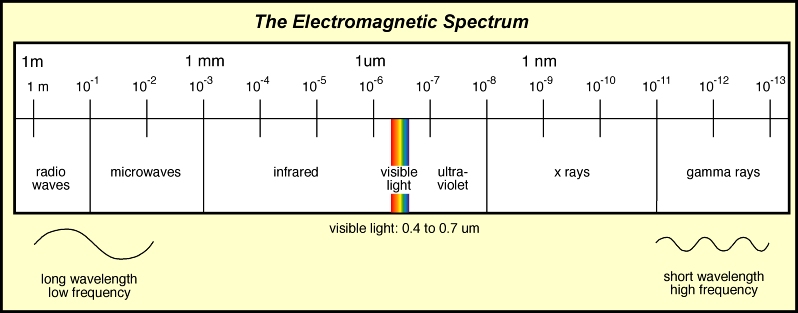
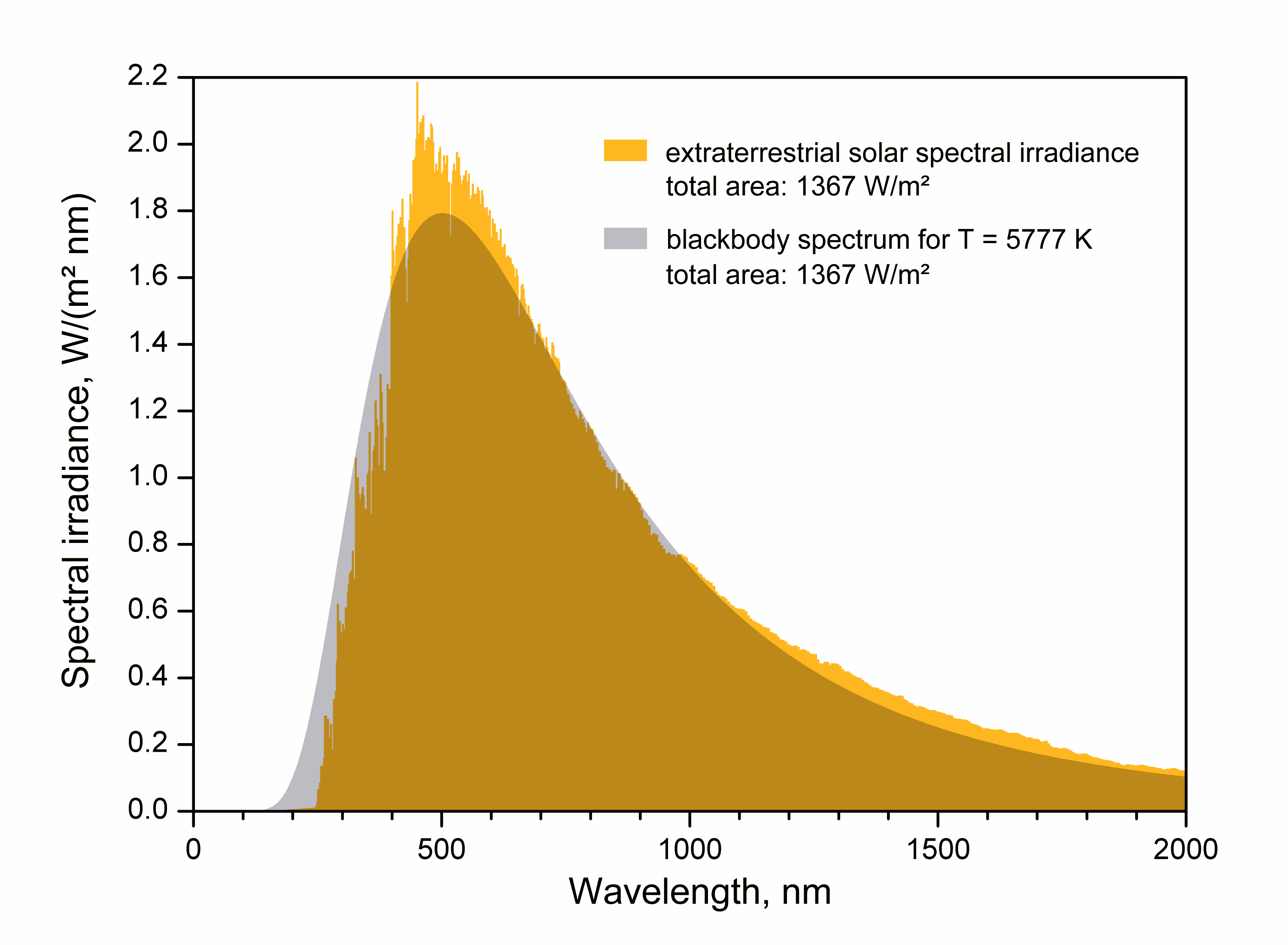
If the sub 6Ghz band, 5G is basically the same as 4G LTE, similar power levers (sometimes lower depending on some technical details beyond the scope I can go into here). But there are some significant technical improvements. A lower TTI, the TTI is the interval in which the modulation and coding schemes can change. In 4G LTE the TTI is 1ms, for 5G it is 100us. Also, the sub channels can effectively be smaller. The benefit here is to capacity. Think about protocols that may have small packet sizes, eg. Votle (voice over LTE, sort of like VOIP) or TCP SYN/ACK messages. If you devote an entire resource block (TTI, ie. time slice and sub-channel allocation) to a small packet you effectively waste a lot of spectrum. These are a few very simple examples of the various improvements that 5G in the sub-6Ghz has. But none of these changes to the protocols have any effect whatsoever on the effective radiation or would change the effects to humans which, in my view has been clearly been shown to be safe.
Now, the FR2 5G which typically operates in the mm-wave bands, for example 28Ghz. All of the above features and more apply, but one very important extra feature of the small wavelength is that it makes it possible to utilize beam forming antenna arrays, specifically Phased Array Antennas or Meta-material antennas. The reason is because the antenna elements (think each antenna element as a sort of RF pixel) has to be spaced 1/2 lambda (wavelength) apart so the physical size in the low bands is simply impractical but at higher frequencies the wavelengths are short enough that these antenna arrays are small (on the order of less than 1 foot square) and can have high gains and narrow beam widths. Now, if you think about this, that means that the beams are narrow (think about it like light, RF and light are both electro-magnetic waves but at different frequencies). This ability to control the beams means that the energy can be much lower. A joke that is often made in the industry is that mm-wave cannot propagate out of a wet paper bag. This is literally true, a wet piece of paper completely stops a mm-wave beam. That means that it cannot get through a pane of glass (or it is severely attenuated) and does not penetrate human skin, much less so than the lower bands. The benefit of the mm-wave is mostly that the antennas can be smaller and there is just a lot more spectrum. The benefit of more spectrum is of course Shannon's law C ~ B*SINR that is, the capacity in bps is proportional to the amount of spectrum B times the Signal to Noise and Interference ratio. So having more spectrum is a big deal.
All of what I am explaining here I am hoping, that the highly intelligent HN readers will understand is that the sub-6Ghz (FR1) 5G is essentially no different from 4GLTE except that there are a number of protocol and other improvements that increase capacity. In fact, the radios are the same in many cases and it is simply a software upgrade (many of these radios are essentially SDR's).
The mm-wave (FR2) is what is really radically different from traditional 4GLTE (although, it has been used for other wireless use cases for a long time such as LMDS, but that is another long story, in fact, much of the mm-wave spectrum comes from older LMDS applications). But newer technologies such as PAA (phased array antennas, borrowed from DoD military) offer significant increases in capacity and bandwidth at much lower and safer energy levels than previously possible from FR1 systems.
I know this is a very long post, but this is a very high level overview of the 5G technology. There are many other aspects and exciting new applications that are far beyond the scope that could be covered here. The most important issue in my view is that the fears and the propaganda that 5G has some sort of health related issues is founded in ignorance of the physics of the technology IMHO.