A lot of people listen to about 30 seconds of Trout Mask Replica and then immediately write off Van Vliet's music as unlistenable twaddle, just weird for the sake of being weird. And it certainly is weird music--but when you really start listening to the album you start to discover a twisted inner logic to every atonal guitar shreik and weird drum beat. It all comes together to create something pretty unique in the world of music. Captain Beefheart wasn't making rock music--he was reinventing what music could be. There are few artists today who would dare to release something so blatantly off-kilter. Love it or hate it you can't deny it's in a league of its own on the creativity scale.
For some more traditional blues jams I love his Mirror Man Sessions. Not quite as revolutionary, but it shows a different, more listenable, side of Captain Beefheart that might be a gentler introduction to his work.
You know, I've found Frank Zappa's music to have a very similar property. Namely that there's a deep creative structure that winds through Zappa's music, especially across entire his longer compositions. For example, in "Willie The Pimp", there's a massive guitar solo towards last half of the song, that gets continually teased and played with earlier in the track. There have been other examples where I've caught "teases" to guitar solos on a track early in an album, that doesn't actually show up in full maturity until later inthe album.
I can only imagine that what I recognize as a singular theme is in reality much more broad (in so much as we can even define it), given Zappa's composition ability and musical prowess. There's so much to discover that lies under the surface of result of his creative process. I think Zappa gets a lot of credit because in general his music is more approachable (but still has plenty of weirdness across his almost 100 album discography).
Anyway, where I'm going with this is that Zappa and Captain Beefheart went in together on Zappa's "Willie the Pimp", on the "Hot Rats" album which is one of my favorite albums of all time. Interestingly enough it's the only song on the entire album that features vocals, which is noteworthy on its own. The vocals are provided by none other than Captain Beefheart himself. The vocals are kind of strange and certainly provide a unique component to the track.
https://www.youtube.com/watch?v=Xr256gta2Qw (Willie The Pimp) -- if you listen to that guitar work, there's so much to unpack just in that one track. It's self referential on many levels, and I'm sure I'm missing most of it.
Well, it's fun to notice and appreciate those kinds of things, and to the analytical mind of a rational optimist, that wants to believe everything as carefully planned and premeditated, and released as profound craftsmanship and perfected design, to uncover something like that is probably profoundly enthralling.
There's an alternative reality, known to anyone who has made art for art's sake though, and especially if you've spent years making purposeless art with no consequence in the outcome of whether a work declared as "finished" actually needs to be "good."
When you sit around all day, pouring and extruding your unfiltered stream of consciousness into realized tangible forms that you can pick up and hold, or record and play back, you're left with this huge backlog of scrap left on the cutting room floor. Taken out of context, some of it is artful, and "good enough" to stand on it's own, but doesn't belong in the "finished" piece.
But when you find a couple of rhyming chunks, you can take that leftover flotsam and fold it into a subsequent piece, recycling throwaway outtakes as part of some other whole, to enrich it.
In that sense, those kinds of matching details aren't actually planned. It's just opportunistic reuse of leftovers to enrich and go along with something that was planned.
Example: sometimes you're forced to produce "things," and so due to external expectations you make a bunch of "stuff" but because you weren't motivated, 90% of it is trash. But you don't throw it away, because it still possesses recognizable style. So you throw it in a box and let it collect dust. Then weeks or months or years later, when you need filler, you dig some matching trash out of the dustbin, and cobble together some cruft to patch some holes and gaps, where the daylight is peaking through on your finished piece. Now, that illusory facade enriches your intended work all the more.
This is a technique common in "art" that impresses people who've never had a chance to make a thing for it's own sake, without said thing having to require practical utility or actually "work" in any appreciable way.
It's the art student's corollary to the academic version having to write 1000 words for a grade, and 900 of those words are rambling drivel, or having to publish N research papers a year, so you throw together a backlog of p-value hacks that seem interesting but prove nothing and indulge in pointless, speculative editorialization as science.
At the core of all the work, you either like the sum total of everything, or you don't, and in general, you're picking up what that guy is putting down overall.
But as with all disciplines, in every field, people have to make frankenstein monsters out of filler bunny all the time. Any artist worth their salt is always trying to operate from the space where they can unspool as much of their style as possible, with total freedom and unlimited resources, because they know that even on the days when they aren't hot, some of the junk they make, can still serve as decorative paper mache fodder.
I'm not very familiar with his work, but your description above reminded me of something. Back in the late 80s or early 90s, River Phoenix's band, "Allica's Attic" came to perform on the campus of the University of Miami where I was a music student at the time. My girlfriend at the time had a crush on him, so took me to see the show.
I could say something similar about their music - that it was in a league of it's own. I think because they didn't understand the rules of listenable music, they were free to try whatever they wanted. Unfortunately, it didn't work. They were awful. But it was in spite of what they were doing, not because of it, oddly enough. They really did say "F you!" to the rules and try new stuff. They just weren't very good at it. Also, Mr. Phoenix was incredibly arrogant and rude to the audience at the time, which didn't help. But it was fascinating to watch.
Mothers of Invention concerts were a lot like that. They prototypically ended with "Louie Louie", getting ever louder, until the sound system failed. Plus much insulting of the audience. On the other hand, insulting was the norm, and mutual, at Butthole Surfers concerts :)
Like probably a lot of people, my first proper introduction to him was through the song "Her eyes are a blue million miles" on the Big Lebowski soundtrack. That song - and most of the Clear Spot album it comes from - has this amazing quality where it initially comes off very well as a classic rock track, but the more you listen to it the more you realise how many musical conventions it breaks. For example the starting vocals come in in just the weirdest way, as if he's already halfway through the song.
Don Van Vliet and his bands were unique talents. Some of the music is challenging, some is surprisingly accessible. Some might even evoke the response "what's all the fuss about" - because it entered the consciousness of so many other musicians, and they reinterpreted it, and made it part of "normal". There is bluesy Beefheart, soulful Beeheart, and jazz-inspire weird Beefheart.
"Clear-Spot" and "The SpotLight Kid" are a good starting point. In the UK they can be found packaged together as a single CD.
There is a documentary floating around about Captain Beefheart. These guys and their contemporaries (just look at the list of band members and collaborators) ended up being some of the most respected folks in music.
My parents loved the music, so I got a lot of exposure as a kid. I kind of liken it to listening to a new language: some of the ideas are that different. It can be jarring, but I think anyone who loves music should just give all the albums a few listens.
Type Beefheart into youtube and you'll typically get TMR and Safe as Milk at the top (depending on your location and profile). There's 0.75 of one good track on Safe as Milk and TMR is merely a sketchbook compared to the masterpieces to come.
Let's go:
* Shiny Beast
* Lick My Decals Off, Baby
* Doc at the Radar Station
* Ice Cream For Crow
These are, unconditionally, guaranteed, the best Beefheart albums
I have a real soft spot for Autumn's Child, and I also really like Call on Me and I'm Glad; plus, you get some awesome Ry Cooder moments on Safe as Milk.
But, you've nailed my favorite Beefheart period (Shiny Beast-Ice Cream for Crow), and Shiny Beast stands apart as my favorite (The Floppy Boot Stomp, Tropical Hot Dog Night, Bat Chain Puller, Apes-Ma, etc.). During this period, his work had a balance and maturity - without sacrificing much of his quirkiness.
From 2013 at the latest. Is something new here? Or.. should I just go home, and do my washing.. (got those Smithsonian institute blues, those Smithsonian institute blues)
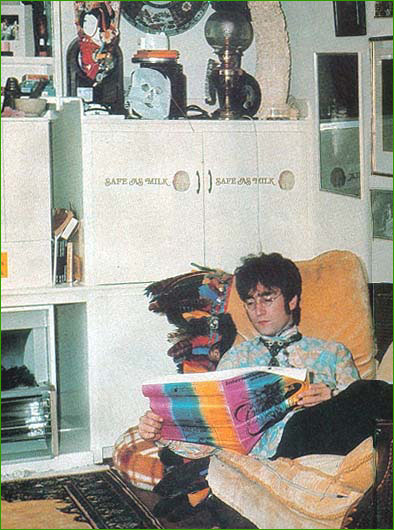
I believe it was in the liner notes for Safe as Milk that I read John Lennon had something like seven copies and that it was his favorite new album at the time of its release.
Cooder has some interesting stories about why he parted ways with Vilet.


For some more traditional blues jams I love his Mirror Man Sessions. Not quite as revolutionary, but it shows a different, more listenable, side of Captain Beefheart that might be a gentler introduction to his work.