> Migrants coming to Canada, many from countries such as China, India and Pakistan, are often relatively well-educated and ambitious to see their children get into professional careers.
> Prof Jerrim says these families have an immigrant "hunger" to succeed, and their high expectations are likely to boost school results for their children.
Speaking from personal experience as a native Canadian, this can also motivate non-immigrant children to work harder. When half of your peers have an immigrant's work ethic it can be a real positive influence.
Disclaimer: this is an anecdote, my personal experience may not generalize, etc.
Hanging out with immigrant kids in the US I would tend to agree. A few years in the Persian Gulf with mass immigrant youth mixing with a GCC citizen subset in schools as a policy requirement still provided lots of anecdotes that those GCC students care a lot less than expat kids despite pressure on the latter. They can get jobs slated for GCC nationals only with lax requirements. Many see little value out of college beyond the elite who wanted out.
Now immigrant and expat to me means overlapping national and ethnic and national backgrounds. It is an issue of the intended period of their residency.
I think govt policy was hoping for the later in institutions like the one I worked at, and it made me sad.
Requirements for immigration is difficult and if everyone had to pass the same bar my family had to then it's almost guaranteed that most immigrants are well above average. Or put another way, the average of immigrants is probably higher than the average of native born citizens.
That said, the opposite is true for refugees. The only thing you need is to somehow get inside the country. If you can convince some judge that you have a moderately believable story about why you will be in danger if you go back to your country you can get refugee status.
So there's basically two classes of immigrants. Those that are selected with very high standards, and those who just get in with almost no standards.
I'm guessing the latter group does not even send their kids to Universities.
By definition of the word refugee, a refugee is expected to restart her life from scratch. Bootstrapping like that takes years and education in many cases becomes second priority. Comparing a refugee with an immigrant is unjust. One chooses to abandon her home town, the other is either forced to leave or escapes for survival.
Immigrants also have to restart from scratch. Everything in Canada is completely different from what we're used to in our countries of origin. Often, parents who were engineers in their home countries have to work blue collar jobs to make ends meet.
I think the actual difference is in average IQ and other desirable traits like industriousness.
Immigrants tend to be at the higher end while refugees tend to be at the lower end.
>I think the actual difference is in average IQ and other desirable traits like industriousness. Immigrants tend to be at the higher end while refugees tend to be at the lower end.
Why would people fleeing war zones be on average less industrious or less intelligent? That doesn't make any sense.
I'm 42, just old enough that many of my classmates in school (in the USA on the west coast) were at the tail end of the boat people refugee exodus of ethnic Chinese from Vietnam. Well, Chinese are always smart and hard working right? It was still true, somewhat, as that was their stereotype in Vietnam as well.
However, being a refugee means going through a much more traumatic process than being an immigrant. You are literally thrown from your home with little left and have gone through a difficult process to get out and resettled in a new country. So drug abuse, gang activity, crime, not doing well in school, depression, etc...were problems for that community even though given normal circumstances they would have been similar to other Chinese immigrants.
So you basically had the same observation as I had in a totally different community.
I'm not sure about your explanation though. Chinese people are not magical people. IQ is still distributed on a bell curve in China as well. If a chunk of people from a country exhibit characteristics that indicate they might be on the lower end of the bell curve, they might just be on the lower end.
The Boat People had traumatic experiences, so why wouldn't you expect them to have issues when arriving in their new host country? War, rape, murder, starvation, that shit will screw with your head for maybe the rest of your life. There is no point in comparing refugee and non-refugee immigrant experiences.
Ethnic Chinese were successful in Vietnam, just like the rest of southeast asia, many of them were rich, college educated and so on, and still got messed up for a generation upon being kicked out during the Sino Vietnam war. We aren't talking about soso people who weren't successful in their previous countries. Heck, today, many of the refugees that make it to the west were relatively successful, or they simply wouldn't have had the resources to make it to the west.
Because of Canada's immigration policy, most of the immigrants are highly educated, they wouldn't be an immigrant if they didn't finish high school. Refugees is everyone else who couldn't immigrate and had to go the other route.
So you might have a Sudanese immigrants who are highly educated and Sudanese refugees who are more likely to be illiterate (a bit generalizing but still).
This is very different from US where you have a green card lottery and your typical immigrant is just an average population because everyone has the same chance of winning lottery, it doesn't matter if you are a farmer or aircraft engineer.
He mentioned IQ and industriousness, not level of education. There is only a weak correlation. (And you are not likely to successfully make it from Sudan to Canada if you are lazy and stupid.)
Educational attainment is correlated with lots things. For example, there is a strong correlation between your parents' wealth and your educational attainment. Your argument would make sense if IQ were the only thing correlated with educational attainment, but it isn't.
Uh, no. I immigrated to Denmark. I went with a year's worth of savings, a place to live lined up when I arrived, a job and Danish lessons organized, and a fallback plan to return home if it doesn't work out. When you have time to plan, you start lightyears ahead of those who have to leave their homes on the run and go wherever fate takes them.
If what you mean by IQ is "opportunity to access quality education before immigration", then you may be right. But in that case IQ becomes a function of wealth which is not that common among refugees. Inequality is not genetically but sociologically inherited.
The refugee system in Canada is frequently abused. I hear anecdotes from my friends about kids from rich families in safe Easter European countries, that pay thousands to immigration lawyers and apply for refugee status simply because the partied too much and didn't manage to get enough points to go through the point based system. Such "refugees" can be safely compared with immigrants.
Eh, sounds a lot like the overblown "Welfare Queen" syndrome that so many in the US worry about so much. Yes, there are most likely people who abuse the system, but most people who get assistance are genuine refugees.
> "These immigrants come and use the facilities we deserve to use".
Speaking from the perspective of an immigrant with tons of immigrant friends and whose friends around the world tend to be travelers by nature, I have noticed a lot of commonality in migrants and travelers that locals would do well to mirror if they want to succeed:
More often than not, if the immigrants didn't use the facilities, they would go unused and close and people would lose jobs, hurting the economy. Nobody would benefit from this. Indeed, frequently immigrants don't even use the facilities that you as locals are afforded. We're not allowed to claim welfare, we work hard, we pay taxes, we create jobs, we make friends, we integrate, we are neighbours, we laugh, we joke, we add richness to your lives just as you do with ours.
There is a pervasive mentality that we come over and hog your resources and take your jobs. Immigrants don't come and take anything, they come and do whatever it takes to succeed. They do the shit jobs that nobody else wants while they endlessly scour the economy for opportunities to succeed. If locals had that same hunger, they wouldn't be blaming their lot in life on external forces and they too would be successful.
Immigrants by and large are immigrants because they took charge of their situation and moved to where they can get a better life. Residents who relocate for work have the same take charge attitude, going where they can make a difference and leveraging opportunity.
People that complain about "people coming and doing or using what we deserve to use" by and large want opportunities handed to them, and when they're not blame the world around them for that.
People with a strong external locus of control tend to blame others for their problems in life. People with a strong internal locus of control tend to just get on with leveraging the opportunities they find. They are in charge of their own destiny instead of allowing their destiny to be controlled by others.
If I were to make a broad sweeping statement, which we all know are flawed for many reasons, but I will make it anyway:
Immigrants tend to have a strong internal locus of control.
People complaining about immigrants tend to have a strong external locus of control.
If you change your locus of control and be in charge of your own destiny, you'll care far less about immigrants. Indeed, you will become much more like us, you will identify with us and you too will succeed.
No it isn't admirable means its some how not the expectation.
Lack of prejudice is and should be the norm. Having prejudice should be detestable, you shouldn't get a pat on the back for not being prejudice no more than you should for being a polite normal person who treats people with common decency and respect.
Lack of prejudice is the norm in the vast majority of places in the western world, despite what the world-is-burning media says.
Residential segregation rates might not have changed much since the 1960s in the US (when there was a political push to reduce it) but I'm not convinced that's purely the result of prejudice rather than a natural human instinct to congregate in culturally homogenous groups. That doesn't mean various groups can't peacefully coexist and thrive together. Culture can still transfer across neighbourhoods and there will always be public/private places where each group mixes.
Canada is known for our multi-culturalism but cities such as Toronto are highly segregated into various ethnic enclaves. And it's a great feature of the city that I've never heard people complain about. I've only heard people say how much it contributes to a great and varied restaurant scene and plenty of unique festivals (for ex: Taste of Little Italy street fair, Chinese new year parade, etc).
Not only motivate but provide more motivated/mature peers. Most of my friends in school were immigrants for this reason.
Mind you, I also know high school graduates who never bothered to learn English. They find a way to make their living in Chinatown (which is slowly expanding across the city).
It's pretty simple, if you were born in Canada and live there, you're not an immigrant. Your parents might be. If your grandparents were immigrants but your parents weren't, you're 100% Canadian and skin color isn't part of the equation. I don't know why other commenters are implying that it is.
Because extending the logic on such an idea, all people of North America, and most of the world, are immigrants. 'I always wonder how people can call someone immigrant (and claim they are not) if they are not the mountains and the earth. When the only difference between them and these "immigrants" are one belongs to 3rd millenium CE and the other belongs to 13th millenium BCE immigrant families.'
> Because extending the logic on such an idea, all people of North America, and most of the world, are immigrants.
But isn't that the point?
Does it actually matter where one person is born? Should it?
If your country has a system that "people from outside" want to exploit, then the error lies in your system, not whether the exploiter is internal or external.
The difference of 5 centuries is quite a lot. If your family moved from Germany to French two generations ago, you are not called immigrant nor German either.
Even the people in Europe in the 15th/16th century were immigrants from previous humans in Africa.
Everyone is an immigrant from the first cell that replicated, and began life.
Saying we are all immigrants is just a feel good lie. It's a tactic to try to get everyone on the "pro-immigrant" side.
If you were born in the US or Canada or a citizen by birth, you aren't an immigrant.
Many of our ancestors were immigrants for sure. But not all of our ancestors were immigrants.
Many of our ancestors were invaders, colonizers and settlers. Those aren't immigrants.
Saying we are all immigrants is a political statement. It tries to make us identify with the immigrants and pro-immigrant policies and has the benefit of masking/absolving our invader/colonizer/settler ancestors.
If you were born in the US and you think you are an immigrant, ask yourself "where did I immigrate from"? And that assertion becomes silly. "I was born in ohio". Does that mean I immigrated to the US from Ohio? It doesn't make sense.
> If you were born in the US or Canada or a citizen by birth, you aren't an immigrant.
Yes, may be this should be the ideal definition of a non immigrant US / Canadian, but most of the time people judge you only by color/race in those area
> Many of our ancestors were immigrants for sure. But not all of our ancestors were immigrants.
Yes, true for aboriginals
> Many of our ancestors were invaders, colonizers and settlers. Those aren't immigrants.
Yes, they did all those "cool" things by coming from Europe and "Those aren't immigrants." ?
>Saying we are all immigrants is a political statement. It tries to make us identify with the immigrants and pro-immigrant policies and has the benefit of masking/absolving our invader/colonizer/settler ancestors.
I don't have any of those intentions, in fact i dont care about them at all
> If you were born in the US and you think you are an immigrant, ask yourself "where did I immigrate from"? And that assertion becomes silly. "I was born in ohio". Does that mean I immigrated to the US from Ohio? It doesn't make sense.
> Yes, may be this should be the ideal definition of a non immigrant US / Canadian, but most of the time people judge you only by color/race in those area
Really? What's your point? We are talking about the meaning of the word immigrants. Not racism.
> Yes, true for aboriginals
Not according to people like you. We are all immigrants. Right? Natives came from asia so they are immigrants too. Using your definition.
>Yes, they did all those "cool" things by coming from Europe and "Those aren't immigrants." ?
Did I say "cool" things? My point is that it is the opposite of "cool". My point is that there is a difference between immigrating and invading. Invading/colonizing/settling = bad. It is not immigrating.
> I don't have any of those intentions, in fact i dont care about them at all
Really. Your comment just reeks of agenda.
>This is so stupid
Is it? So lets say john was born in ohio and lived his entire life in ohio. He didn't even visit another state. You are claiming he is an immigrant. Right? So where did he immigrate from?
> Really? What's your point? We are talking about the meaning of the word immigrants. Not racism.
Yes, it is. I was just adding not everyone knows this definition
> Not according to people like you. We are all immigrants. Right? Natives came from asia so they are immigrants too. Using your definition.
Nope, They were the first settlers in those area just like first settlers in Europe, Africa or Asia some 30-40k years ago before they were invaded recently in 15th century and the migration wave started and guys came in 500 years back calling the current bunch immigrants
> Did I say "cool" things? My point is that it is the opposite of "cool". My point is that there is a difference between immigrating and invading. Invading/colonizing/settling = bad. It is not immigrating.
So for example, if now Germany attack Ethiopia, kill those people there are. After 500 years if the native Ethiopeans become 2% who according to you is Ethiopean?
> Nope, They were the first settlers in those area just like first settlers in Europe, Africa or Asia some 30-40k years ago before they were invaded recently in 15th century and the migration wave started and guys came in 500 years back calling the current bunch immigrants
Your comment is a bit confused. So are you saying the europeans who invaded 500 years ago are immigrants or not? Because in your previous comment, you claimed they were.
> So for example, if now Germany attack Ethiopia, kill those people there are. After 500 years if the native Ethiopeans become 2% who according to you is Ethiopean?
The ethiopians are ethiopians. And if the germans created a new state called "Germania", then the colonizers/invaders would be "GERMANIANS". Or something like that.
Just like we have native americans and people of other ethnicities in the US. What's your confusion?
You haven't answered a single question of mine and now you are taking us on a nonsensical tangent.
I asked you, someone is born in ohio. Lives his entire life in ohio. You claim he is an immigrant. Where did he immigrate from.
The fact that you refuse to answer this basic question just means that you aren't interested in discourse but to push your agenda.
> More than 45 per cent of Metro Vancouver residents are foreign born, according to the 2011 census. There are only three major cities on the globe that have a higher percentage of foreign-born residents.
And yet all these people are united in their love for Vancouver, and Canada.
Canada draws strength from diversity.
I could see an American conservative looking at this list and shudder in fear from the "loss of white culture", and how immigrants couldn't possibly love their second country as much as native-borns.
Yet we do. And Vancouver is proof. Source: Am Immigrant Vancouverite (presently living in Europe)
* Obligatory footnote acknowledging our dark past with Japanese internment, and dark past and present with dealing with social problems that affect first nations communities disproportionately.
Research shows that as diversity increases, so do political difficulties. Homogeneity is credited for a lot of policy successes in Scandinavia. Canada is simply another example of this, plus it is one of the earth's biggest petro-states.
It is less a cosmopolitain melting pot and more like Minnesota with the oil wealth of Texas. Vancouver and Toronto are admirable exceptions.
You're not wrong. I grew up in the most Conservative area of Ontario (Ottawa Valley) and can't imagine ever going back. It's one of those places where people are always pointing out that "hey not everyone is racist around here", but everyone knows a few guys who after a couple beers will go on rants about 'sending them all back'.
I now live in the most diverse part of Toronto. My building probably has speakers of a least a dozen languages. I love it here.
> plus it is one of the earth's biggest petro-states.
This is killing us economically. Ten years of Harper's policies pushing us harder into economic reliance on oil, now oil is way down in price and our economy is going with it.
This is why we need immigration and education: to build a stronger economy that isn't reliant on natural resources.
If you're going to argue against oil, at least be impartial. Justin Trudeau is essentially continuing Harper's efforts to increase oil production in the oilsands.
You're vision of "a stronger economy that isn't reliant on natural resources" is one of the main points of the Alberta Heritage Fund [0]. Even Albertans recognize that you can't rely on natural resources forever. However, it is naive to think you can't use them to help you change the future. In terms of education, the article states that Alberta as a sovereign state would be in the top 5 in science education on the PISA international test.
Also, "now oil is way down in price and our economy is going with it" is completely fallacious as the only reason why our economy could fall is because our oil industry was propping it up. Here is a nice graphic to show the parity between the two [1].
At the end of the day, it takes time to convert your entire country to clean energy sources. Even in Canada where we have 2/3 already renewable, the amount of time it would take to make that 100% is going to take decades. Until then, my main argument for the oilsands is that I'd rather have people earning honest wages in a country where the companies are held liable to environmental destruction instead of the Middle East.
I think it's easier to be laid-back about immigration here because of how diffusely populated Canada is. I think for the 'cultural mosaic' model to work the different cultures need to feel they have the space to be themselves as well as have edges and margins where they can interact. That is probably a bit easier in a country with the geographic footprint of Canada.
If you're comparing to the US, the US is still sparsely populated by any means. Sure, the metro areas might be crowded. But I've never hear "lack of space" as the reason for denying immigration.
I keep reading this "Canada draws strength from diversity" line but I've never seen anything to substantiate it. Could you please give it a shot?
Because I'm an immigrant living in Toronto. The diversity here, while "nice", seems to be a significant weakness if anything - a highly fractured, multi-cultural society simply tolerating one another's existence with no real united identity, goals or vision for Canada's future.
Canada has never had a united identity. It has always been fractured between English Canada and French Canada. That's an unstable arrangement, with two opposing poles of cultural power, and it's actually remarkable we have never gone to civil war over that divide.
Transitioning from a bi-cultural society to a multi-cultural society is actually an improvement, because it reduces the power of English and French cultures to simply strong minorities among many. It's resulted in a balance-of-power arrangement, where neither has any hope any longer of dominating the whole of Canada.
It means it's unlikely that either English Canada or French Canada will try to go to civil war with the other, because they have nothing to gain and everything to lose. That's a remarkable achievement all on its own.
The Conservative party of Canada has huge immigrant outreach and is very multicultural because it can't get elected any other way, similarly if your party doesn't work in Quebec you aren't getting elected. The multicultural vibe of Canada really kills the us vs them mentality in politics
Are you confusing "white" culture, for western culture, and yes, there are aspects of western culture that should not be sacrificed in the name of multiculturalism, like free speech, pluralism, religious freedom, etc. I don't think anyone has issues with immigration as long as the immigrant adopts the culture here, and does not try to make their new place be more like back home and imposes their old culture on the new area to in an effort to respect their heritage, when the cultural values back home are half the reason things were so bad there. America is made up of immigrants of multiple races, but at some point we all agreed to adopt the values of the nation we lived in, the issue comes with those that want to impose their conservative or traditional values from back home on the society they moved to, including their prejudices, views on the value of women, etc. They come here for all the great opportunities, but they don't want to give up the things and attitudes that are incompatible with our cultural values or possibly part of the problems they had back home to begin with.
NYC and Toronto are success stories in multiculturalism, where people come, become educated, and integrate into the local culture, but ethnic/cultural enclaves that have been forming in cities overseas are not (https://www.youtube.com/watch?v=Y9r6ZCwQxZk).
It's not quite that rosy on the guns and butter issues there. I moved to Van for grad school from the Midwest looking for opportunity, worked for two years after my degree and then moved back stateside. One makes so little money there, housing is really steep, and it's hard to responsibly start a family. But you do get to feel good about that other stuff.
I can't really speak from experience on the Canadian mid-major metros, as I only experienced 'big' Vancouver. But there is a bevy of American cities where you can actually save and have little ones (Minneapolis, Cincinnati, Sun Belt, Des Moines). Maybe it's like that in Ontario? Anyways, looking over the next twenty years of my life, the opportunity cost of living in Vancouver was huge, and not just because of the exchange rate.
And why wouldn't they? Would you move to China if you didn't like Chinese people? Yet I've noticed this phenomenon recently, in which new Canadians think it is appropriate to disparage the old ones despite their choice to move to Canada. Racism never ceases to amaze me.
Disparaging certain demographics, namely white people and men, is trendy these days and there's no shortage of self-loathing people in Canada with an apparent eagerness to provide a platform to enable and facilitate that/those trend(s).
I understand your logic, but I don't believe its an accurate paradigm. Most immigrants don't migrate for cultural reasons, its more for economic ones. Most of my immigrant friends wouldn't give a shit what color the majority people were in the country they moved to as long as it was 1) Tolerant and 2) Provided better economic opportunities and quality of life.
I'm not saying non-whites hate the whites or anything. I'm suggesting that's not the primary motivation for immigrants. For refugees... they literally just want to escape their hometown to escape death, so I think survival comes before anything else really.
The fact that the majority of refugees arriving to Europe these days seem to be pushing to get to Germany, Britain or Scandanavia despite being able to "survive" in Turkey, Greece or Italy seems to refute your point a little.
I don't see that it does, really. If Turkey gave citizenship to these refugees, and just allowed them to start their lives, they would perhaps have continued to stay there. Maybe I should have used a better word. They left their homeland to escape terrible conditions, but their conditions in camps in Turkey or Greece aren't very good either. They are trying to get back a semblance of normal life, which Germany seems to promise them.
Isn't it a little ridiculous not to expect immigrants to have favorable opinions of the host population? What you say is probably true for a great portion of immigrants in general but the tolerance must extend both ways. Being disliked by your guests is a pretty disheartening experience and likely a cause of some of the backlash we've been seeing lately.
Depends on where you are. In major cities like Vancouver[1] and Toronto[2], you have over half of the population belonging to "non caucasian". Although this doesn't directly mean all of them are immigrants, subsequent generation tend to carry (or at the very least but influenced) by their parents cultural values, like work ethic. Anecdotally, I'm a second generation Taiwanese living in Vancouver and I consider myself to have the "asian" work ethic.
Depends on the area you live in. Immigration tends to focus on certain spots (larger cities, areas where people from the same region already live, areas with international schools from that country). This effect occurs independent of the wealth of immigrants.
>The universities are reaping the benefits of the Trump effect, with record levels of applications from overseas students seeing Canada as a North American alternative to the United States.
It's been record levels since the beginning of Obama's term in 2008 and climbing every year. Reason is immigration laws since then are incredibly lax for foreign students. If you want Canadian citizenship show up here for ESL private school, a hair academy, a university, any accredited course and you can obtain a temporary work permit while attending classes (and for a period afterwards). This allows a local company to offer to sponsor you for full time employment, which eventually leads to citizenship. Vancouver is filled with Brazilian accountants who got in this way, they came here to take ESL, and went to go work for some accounting firm like KPMG with their degrees they have from Brazil.
Edit: they changed the laws in 2014 to make this a little more difficult, but temporary work permits are still available for any student esp somebody going to university/college. These always lead to full-time offer and citizenship.
The only real problem I see is that comp. levels in Canada are not as high as the US while COL in most of the major cities is similar to NYC. As a (legal) immigrant to the US, while Canada definitely sounds very attractive, I don't want to take a major hit to my quality of life just to escape Trumpland...
You're right about compensation, but cost of living in our major cities is nothing like NYC. I live in the capital and pay under $1000 for two bedrooms very close to downtown. You can get a swanky condo penthouse here for less than a one bedroom in Manhattan. Or split a nice house with two other people for $400-600 each.
Friends in Toronto pay around $2000 for two bedrooms in the middle of downtown. Haven't checked in a while but fairly certain Montreal is somewhere in between. Those same friends were paying more than $3000 for less space in the far end of Brooklyn.
Vancouver is crazy but sort of a special case especially when compared to nearby Seattle, but it's the only major city that is so close to an American metropolis.
And that's leaving out the free healthcare and abundant green space which is a huge boost to my QoL.
I don't think the COL argument works any more. Toronto is at Brooklyn levels (if not higher). Montreal was better, but got worst when Toronto passed new legislation for rentals and rental properties.
The "free" health insurance - which your taxes pay for - is great for some things but non-existent for others (e.g. routine oral care, routine optical care, physiotherapy required by something other than work, etc). Realistically, you need extended health insurance if you're not elderly, disabled, or on some sort of social care.
Now the nice thing about taxes in Canada is that you won't be taxed at anywhere near the highest bracket. As a Canadian software developer you're looking at around 50% of the salary as your US counterparts [1] which means you'll be in one of the medium tax brackets.
It isn't off the bat if the rates are very different. Which seems to be the case: 50% doesn't seem to be in the highest bracket in Canada, according to the OP.
Good points. Though I think the inflation from foreign rental/investment property ownership is semi-temporary - you can bet Montreal is going to pass similar laws soon just as Vancouver and then Toronto did.
> I don't want to take a major hit to my quality of life just to escape Trumpland
Major hit to your quality of life? I'm sorry, you may potentially have a little less money in your pocket, but you're trading direct cash for better social services (read healthcare and education).
You make it sound like we're living in a 3rd world country.
> Major hit to your quality of life? I'm sorry, you may potentially have a little less money in your pocket, but you're trading direct cash for better social services (read healthcare and education).
What if "little less money in your pocket" means 50% (or more) pay cut? For software engineers you are easily looking at a substantial reduction in salary.
I think most people are willing to take a pay cut in exchange for better social services and free healthcare & education. But there is a breaking point where the comp. is too low for the extra services to make up the difference.
> I think most people are willing to take a pay cut in exchange for better social services and free healthcare & education.
Postsecondary education is not free* in Canada. It's certainly cheaper than in the US, but nowhere near free.
I paid around $10k/year for my B.Eng program (as a domestic student in the late 00's).
Also healthcare in Canada, while covering regular doctors visits and any emergency hospitalisation, is not entirely free. You still have to pay for dental/optical (unless your employer offers additional insurance) and you still pay for prescriptions (which can add up).
* maybe this is just your phrasing and you meant "better education and free healthcare"
Yes, I meant better/cheaper education and free healthcare. I am not actually too familiar with education in Canada.
Being from Eastern Europe my education has been completely free so I assumed it's the same in Canada as it is seen as a more socialist/liberal version of US (at least that's the impression I get about Canada from here).
The argument expressed in my comment still makes sense though, actually it's even stronger since education is not free in Canada.
Twelve years of grade school and high school are free in Canada. University isn't free, but is significantly subsidized, and there are various grant programs for people who can't afford even the subsidized rates. The Ontario student aid program is called OSAP.
You want an education in computer science at the University of Waterloo? If you're a Canadian or permanent resident, that's $7,278.48 per term for a total of roughly $58K plus living costs.
$58K is crazy. How come in my home country where we have very low taxation (~20%) all of this can be paid for by taxes for everybody but in a rich liberal country like Canada you have to pay 58 grand for a degree?
And Canada doesn't even have an excuse of being the world policeman. At least US can say we have to pay tons of money for military and hundreds of our army bases around the world so there is no left over money for public education. But what's the reason for Canada?
I mean if you have rich parents who will pay it for you then you don't care but if you are normal and have to pay it yourself that means you probably need to take a loan, going into debt right at the beginning of your adult life.
That's bit unfair, you should have a clean starting slate and equal opportunity with others, not be forced to go into debt immediately.
Because in your home country, wages are lower, which makes everything cheaper than in Canada (I'm taking a guess here, since you mention some Eastern European country).
Also, I'm very much pro-environment and everything, but the reality is that regulations have a real cost. e.g. fire safety, parking space etc. Not to mention taxes for local, state and federal level... it adds up to make shit expensive.
Sure everything is cheaper but tax revenue is also proportionally cheaper.
Average salary is 12k euro per year. So if you are collecting 20% of that as income tax, that's a small amount of revenue to work with and it is still enough to cover free healthcare and education.
My point being that everything is cheaper but in proportion to that salaries and tax revenues from those salaries are also much smaller compared to a first world country like Canada.
I certainly didn't mean for it to sound that way. I don't think that is what's going on though. If I received similar compensation and had more of my income taxed to provide social services... I would be 100% OK with that. The issue though is that Canadian employers haven't caught up with the fact that they need to match the compensation offered by US companies to attract the best talent. So the gross compensation itself is pretty low already, and probably gonna taxed more. Seen from that perspective, it doesn't seem like an attractive proposition financially.
As an anecdote my friend's UVIC compsci grad class nobody stayed here and all took offers in Seattle instead because entry level salaries there are at least twice what you would make here. These US companies all directly recruit grads on campus too with large signing bonuses. It's the same story for nurses, if you have a nursing degree in Canada, US companies again directly recruit on campus and offer 3x the salary and signing bonuses, housing allowance benefits, ect.
Yes but given this discussion is on HN, there's a lot more software engineers than mechanical engineers. So you will hear this opinion a lot here and it makes sense from point of view of software engineers.
I agree. Because of its demographics, HN can sometimes turn into a bit of an echo chamber. As a mechanical engineer, I wanted to offer an alternative poerspective in case anyone was wondering why wouldn't everyone just move to the US.
Yes that's true. I think Canada would probably be an improvement in quality of life for many other professions but it's just not on a list of places a talented software engineer would want to be at.
One of the things I always ask in these discussions is "so what did that do for them" Finland is also an education super-power but what does it really do for the country?
Unless all countries are underdeveloped, education is a hygiene factor and doesn't as such provide any benefits.
In Europe, Switzerland is one of the countries with the fewest academics. Instead they focused on technical educations (starting from something akin to trade school up to university level knowledge). The results while most European countries first now a waking up the the realization that academic education isn't the only education of value and is scrambling to make their tradeschools/technical schools working better, Switzerland is one of the few countries doing very specialized production that can't be outsourced (for now)
In other words education is important but the focusing on education especially higher but also on the elementary level as some sort of indication of how well a country is fairing is not really a useful metric.
I would say a technical education is an education, but I agree, pure academia isn't for everyone - though the article doesn't distinguish this. In fact, Switzerland does very well by the OECD metric [1].
Why is education important? Can I suggest we compare two countries singled out in the article as 'could do better's - the USA and UK, and their recent democratic decisions. Compare that to Canada's cabinet, who, for example, has appointed someone with a PhD as minister for science [2], a doctor as minister for health [3] etc etc. I don't think I need to give examples of Scandinavian countries which regularly top the rankings for both wealth and pay equality.
Maybe a population where the country has valued education are less likely to say they "have had enough of experts" [4], more likely to respect the knowledge of a specialist, and more likely to have skills which are capable of transferring to the changing work market.
The problem is that investing in education has its pay-offs 20-30 years down the line, which is why, even if we believe in education, governments are reluctant to actually spend the money on it.
>the USA and UK, and their recent democratic decisions.
As long as people (especially educated liberal leaning people) keep framing recent elections as "dumb people elected Trump cause they're dumb," we're going to keep getting Trumps in the elected office. One of the loudest things communicated in the last election in America is that people who don't vote like you are tired of the patronizing, condescending and presumptuous tone. Rather than characterizing the outcome of the last election as "uneducated people elected an asshole", it might do well to understand the concerns of the people who elected him, rather than dismissing them offhand.
I hear this argument a lot. Just because something is inflammatory, doesn't mean it isn't true [1]. It also doesn't mean discussing it will cause it to happen again. It also doesn't mean that we can't also look into the causes and concerns of said people and the vote.
Improving education allows people to develop skills for a changing job market, as well as recognise that some promises [2] were suspect from the start. My opinion is that these were two contributing factors to vote result.
The thing though is that a university degree does confer some amount of critical thinking on most of its graduates. I'm rather skeptical that every college graduate is guaranteed to be a smart, critical thinking, nuances person. But I do feel comfortable in saying that most are. And even those that aren't, have been exposed to people who are, have created social networks etc.
So I don't think being a college educated Republican/Conservative is a contradiction. The difference is the college educated person is more likely to believe in facts and reasoned arguments than appeals to passion, or native tribalism. They are more likely to have more faith in institutions, including democracy.
I think its hard for someone who went to college to relate to a person who hasn't been in terms of what kind of effect college has on their lives.
Critical thinking is a talent not something you learn at the university. People of all shapes and sizes form alle parts of society has it. It starts way earlier than university too.
There is a much magical thinking going on at university level as many other places in society. Further more critical thinking is often mistaken for constructive thinking which is another rather big issue with universities. Universities are mostly about analysis not about creating which leaves a gaping hole in the real world.
I have worked with my share of academics and non-academics. There is no noticeable difference between them generally speaking. Only when it comes to subject matters do we differ in our naivety and hasty conclusions but the ability to think critical is IMO something very different.
> I have worked with my share of academics and non-academics.
Unless you have a different definition of "academics", this doesn't seem to me like you're arguing for anything. By "non-academics", are you talking about "not-gone-to-college"?
And I'm not going to continue this discussion either way, since we seem to be operating on anecdotes. Perhaps your experience has been different than mine. I would add though that I'm not asserting that a University automatically imbibes critical thinking, just that it exposes students to it, whether it be their professors or peers. A college education expands your worldview, but certainly it can be achieved in other ways (travel, reading etc.)
There is anecdotal evidence and then there are anecdotes. I am simply questioning the idea that university are somehow turning people into critical thinkers if they weren't before.
Critical thinking is a skill. You have to practice it like you practice music. And just like music simply being exposed to piano playing doesn't make you a piano player.
> Critical thinking is a skill. You have to practice it like you practice music. And just like music simply being exposed to piano playing doesn't make you a piano player.
Actually, this is a good point. Yes, I agree 100% it doesn't automatically make you a piano player. But it might make you appreciate piano music and pianists more. It might make you interested in how piano music evolved over time etc.
Sure but the world doesn't get better because everyone know a bit of history. Not until it's internalized does it truly add value (and even there it's a slippery slope)
But again I must come back to the simple thing that appointing a PHD as a minister for science means very little because politics aren't science or business for that matter. Politics are humans prioritizing various intersociety related issues and many of these prioritization are scientifically or rationally absurd but are the right solution for the collective.
The very idea that better educated people make better decisions in politics is simply wrong as far as I can see. Canada isn't benefitting anymore than Finland is. There are bigger factors that count.
> The very idea that better educated people make better decisions in politics is simply wrong as far as I can see.
"Whenever the people are well-informed, they can be trusted with their own government"
--Thomas Jefferson
But also a country that values education is more likely to value the opinion of an expert, more likely to question a promise or political sound bite.
E2E encryption is a good example of the divide between politics and the science. I'm not saying that the computer scientists have the answer here, but ignoring what they say is not the way to come to a policy that will benefit the country.
Fair point. However, being well-informed is seen to be important in being able to make a decision in other areas of life (legal system, medical treatment).
I agree though that there are cultural differences of opinion on this.
Ok I get your point, and I agree. The vote is for everyone, and everyone is able to assess how happy they are with what is going on.
I'm not sure Brexit or Trump are going to do any good for the poorly educated and poor, however. Both were protest / anti-establishment votes, which fell nicely into the hands of the privileged.[1]
They aren't going to do worse for those already in trouble. Obama didn't solve those problems neither is the EU. The challenges we are facing are structural (we need less and less people to do more and more work) making everyone PHD's will not change that.
> They aren't going to do worse for those already in trouble.
Wow, you know, I've heard a lot of "lets burn it down", "lets put an outsider in there!", "lets shake it up!" from a lot of different places, but this is basically their thinking, isn't it? They don't see any tangible differences to their own lives with either candidate, but would love to "stick it in the face of those damn liberal snowflakes".
EDIT: however, I tend to imagine if those who are suffering so much were a little bit more educated, they would proactively seek better opportunities, or at least not let their quality of life get eroded so much and just sit there.
Your arguments don't make sense. Am I not being clear? I thought I was.
I'm NOT saying that being more educated == being an academic. Getting an education trains you for more than just a career in academia. How many times do I need to say it out explicitly for you to understand this simple point?
Again there is a difference between fundamentals and then optimizations. The point i am trying to make is that it doesent matter whether you are number #1 or #30 what matters is whether your population on average is educated
In regards to your third paragraph, I would posit the opposite causality occurs as well - in a country where academia is seen as an honorable profession for morally upstanding people, people with integrity are more likely to pursue academics, and as a result there are fewer examples of dishonesty by these same experts [1]. Of course, this dynamic can cause a vicious cycle in any field, politics being a common example.
> for example, has appointed someone with a PhD as minister for science [2], a doctor as minister for health [3] etc etc.
You elect ministers in direct elections? Otherwise it's like watching prime minister in a restaurant and announcing "Democracy has decided! We are having chicken risotto tonight!"
If you accept that what really means the sentence "the good of the country" is "the good of all the people of the country" , something that, by the way, it seems we have forgotten lately, then education by itself is a desired outcome.
Education, good health and, in general, a happy life for all should be the goal, not the means.
Also, in this age, the most important asset is knowledge, because almost anything else can be compensated for with knowledge.
The point is that at some point there is diminishing returns. Findland and Canada scores top characters but aren't the top countries i.e. they don't benefit as countries more than countries with worse education. That's the point I was trying to make.
And I disagree that knowledge is important in the way you seem to talk about it. Knowledge is applying solution to problems yet many problems humans aren't capable of solving alone and thus will need to trust machines to do but that's a whole other discussion :)
I would be interested to see your source about Switzerland. Not that I am doubting the claim but it is a small country with some relatively big universities in Zurich, Geneva, Fribourg.
To ponder that assertion, I would also add that you have some of the two best ranked engineering universities in continental Europe (EPFL and ETHZ), the best hotel school in the world (EHL) and one of the best business school in the world (St-Gallen).
Highly educated immigrants could be a boon to a society. Or it could be a drag on wages of white collar workers.
Nothing is ever all good or all bad.
> In other words education is important but the focusing on education especially higher but also on the elementary level as some sort of indication of how well a country is fairing is not really a useful metric.
It isn't even a good metric for determining a nation's education status. The number of quality universities is a far better indicator.
Canada has a handful of quality universities. The US has hundreds. So how much sense does it make to call canada an education superpower?
The number of "for-profit" scum schools that have cropped up lately to stands to challenge this idea further. There is heavy foreign demand for Canadian education but not always prioritizing the good institutions.
I had a Chinese friend tell me that in China it doesn't matter which Canadian school you went to, just that you went to a Canadian school. Nice to have that reputation but it is ultimately self-destructing.
> The OECD, trying to understand Canada's success in education, described the role of the federal government as "limited and sometimes non-existent".
Actually, the federal government did make one critical mandate[1]. It effectively ensures that we are all exposed to two languages in school, and creates a much more rigorous French immersion stream in the school system.
That immersion into another culture and language, at a very early age, has paid huge dividends in my ability to travel, to assemble and work in multinational teams, and to form constructive, even loving, relationships with people who are at first very alien to me. I believe that it is also to be credited for enabling several of us, all from the French immersion stream, to begin playing with algebra somewhere around Grade 3, by deeply reinforcing our awareness of multiple representations for single concepts or entities. This then segued into my first programming language, QBasic, a year later.
If you have kids, then based on my own experience and observation of my cohorts, I strongly recommend that you find a way to ensure that they learn a second language, while they are still learning their first. Throw them in the deep end, you can always pull them out.
It is a class issue. Learning typical things in a new language one doesn't know is very difficult, so it requires more effort and potentially additional tutoring help. Wealthy families have the time and resources to deal with a heavier academic work load, but less wealthy families don't.
In practice the French immersion programs have become a sort of private school within the public system where rich people try to put their kids in it to try to give them an edge over anyone else.
A main issue is that there's seems to not be enough French teachers to expand the French immersion program to make it more accessible to everyone.
I think that is exactly what he means. The parents who put their children in French immersion programs tend to fall into one of two groups. The first group are francophones living in an Anglophone part of the country. The second group are parents who prize academic success for their children.
>The second group are parents who prize academic success for their children.
So apparently OP is finding fault with the fact that some parents care enough about their kids' education (specifically knowledge of French) to put them in a french immersion school. Given that both are public schools open to all, what are is OP actually complaining about?
In the first few years of your education, yes they are open to all. However, once a child has gone through several years of french immersion, they have the ability to choose between continuing in french, or dropping into english. A child who has done only english has a similar option, but it will require considerable extra work on their part to switch to french. So a public french immersion high school cannot be considered open to all.
>care enough about their kids' education (specifically knowledge of French)
Not specifically. Certain public schools can be more well funded, or specialize in different areas than others. A school which has a french immersion program might also have a heavier focus on academics than other schools. Once it gains a better reputation, it might become attractive even to those who aren't interested in having a better education. A french immersion program is a way of limiting such peoples access to these schools.
> A child who has done only english has a similar option, but it will require considerable extra work on their part to switch to french. So a public french immersion high school cannot be considered open to all
Yeah ... No.
Are you just looking for things to complain? If there's some school with a good reputation is it automatically 'limiting access' to those kids who don't live in that neighborhood? Jeez.
I have no links to studies but I've heard that too. If a kid would have struggled in a subject in their primary language, they will struggle more when you lay French on top of it as well.
I grew up in Canada and had the exact same thought.
I was also going to say that French Canadian culture is pretty dam similar to Anglophone culture when put on the cultural spectrum of the world. Not super exotic.
This is good news, but it doesn't tell the whole story. What's important to remember is that each Canadian province has its own education system, so mileage may greatly vary depending on where you live in Canada.
In Québec, where I live, the drop-out rate is abysmal compared to other provinces, especially in french-speaking school boards [1] (which are much more numerous in Québec):
> But the children of newly-arrived, migrant families seem to integrate rapidly enough to perform at the same high level as their classmates.
Quite the opposite, I think. I don't have the data to back it up, but it always seemed like the migrant kids excelled far more often in STEM courses (to the point where our classes were considered trivial or elementary) than their Canadian-born peers.
It seems to me like every second country is an education superpower now and feels quite special about it. What do we get if we combine this information with that most students don't feel they've learned in school the skills they needed after school, and also combine it with many scientists believing that science is not about generating knowledge anymore but about producing an endless, unchecked stream of papers?
If considered a market, I'd say these three things combined make it a likely bubble and an oportunity to start looking for what will come after.
Modern society does not have any metaphysical meaning associated with it and everything is heavily specialized and distributed using self-interest. This at the end seems to be a recipe for eventual failure. Why? One reason is that self-interests start aligning with each other forming monopolies and conglomerates which is essentially corruption manifest. The modern civilization needs an overarching metaphysics which then ties to a sense of morality of each individual serving the entire society rather than just themselves. That's the only hope we have for a future. Otherwise the aligned self-interest will destroy civilization.
If you carry this out you see its implications everywhere in the system. The food production does not serve any goals of society, instead food production is focused on optimizing for costs and yield. What this leads to is intensive farming which then leads to depletion and fragility which leads to disease. In terms of actually producing the food to eat, i.e, processed food, again self-interest produces highly addictive foods that increase profit, the cost of that is paid by the other side of the bargain.
When that self-interest of corporations aligns with academia or even the self-interest of academia itself, it then starts focusing on profit and educating students for the needs of corporations. Which then feeds into this sort of cycle of people who serve corporations, and corporations who serve themselves. And society pays the price.
I think it's important to point out that this rising tide does not lift all boats. The autonomy of individual provinces results in a divide between the provinces. While provinces like Ontario and BC rank in the top 5 globally, Prince Edward Island ranks 26th in the world. I'm from PEI, and when I arrived at university I noticed my peers from bigger provinces were simply taught more material, especially in math and science. Ideally there would be some more standardization nationally to reduce this delta.
Pay and job security are usually lumped in together but aren't quite the same. I think most people would support a relatively good wage for teachers if there was more accountability. Even in Canada it is notoriously hard to fire bad teachers.
Huh, why are you singling out France out of the blue?
I'd say that the fact that France is better than OECD average with relatively low teacher pay (though higher than the average salary in the country) seems to indicate that salary isn't everything, on the contrary.
The differences regarding immigration to Canada and France might be a far more important factor though.
I took an AP math in Canada and later graduated from CS department of U of Toronto. The schools in Toronto did at least one thing right: they didn't dumb down their courses.
I did well in my AP calculus, 98/100 or something like that, but I still felt the pressure in all the tests and exams, as there were just so many questions crammed in a single test. I had to keep writing, non stop, and barely had time to double check any of my answers. Contrast to my school experience before I went to Canada, I could usually use way less than half of the exam time to finish and double check every problem.
The same pattern continued in U of T. The class average of courses like algorithms often went below 40/100. I usually had to keep writing until the last minute to finish every single question in an exam. Assignments were usually time consuming and required lots of thinking. I still remember the tremendous satisfaction when I finally proved a theorem about universal hashing (an exercise from CLRS, IIRC). And past success on assignments and tests didn't guarantee good grades in the final exam. I was actually dumbfounded when I did poorly in my AI course, even though I did extremely well except for my final exam.
Looking back though, I am very grateful for the struggles my professors put me through. They made me. What I learned then carried me a long way, even today. Without the high standards imposed by the schools, an ordinary student like me would not be able to do as well. As I kept telling friends, schools MUST keep their students in discomfort zones to help them learn and improve - the very thing that US schools, in particular SF bay area public schools, have been failing miserably.
I'm reading Nassim Nicholas Taleb's Antifragile at the moment. His explanation of how Switzerland operates as municipalities, with little central government intervention - except collecting taxes - is strikingly similar.
In this context: Let smaller education decision making groups decide what is important for their local area. Any failure is of benefit to all, while the negative impacts of the actual failure are localised.
My father taught college in both Canada and the United States around 40 years ago. When I asked about the differences between the two countries he said they were basically the same, except that Canadian students worked harder and complained less.
This will be self-congratulatory, but teachers deserve a huge amount of the thanks for these results. We deal with increasing student complexity, bureaucratic requirements and degraded infrastructure to not only get the job done well, but to get it done to some of the highest standards in the world.
Note too that we haven't just done well on the most recent PISA tests, we've been a consistent top level finisher across the three subject tests since PISA started over a decade ago.
Something else to add ... there was an influx of draft dodgers from the Vietnam War, and a lot of those became teachers. Canada was investing in their education system at that time whereas the U.S. was trying to choke off campus protest movements. Fast forward half a century, and that investment has paid dividends.
Oh look, yet another article about a country that's doing education better than us here in the US. And the funny thing is that they all seem to do things in different ways.
You know what I think the problem is? Americans on the whole just don't care about public education. Either in terms of quality or equity.
While we've got the cynicism out, I'll do you one better. I think its that Americans on the whole just don't care about public anything.
Public education, public healthcare, public transportation, public libraries, public lands.
Decades of the Republican party screaming that government is the enemy while gutting every public institution that it can get its hands on has led to a real, tangible decline in the quality of public services.
Then from here you get into a vicious cycle of "Wow, our train system is horrible. But I'm already paying for my car; I don't want to have to pay for that chump who can't afford a car to get to work." Or "What a shame about the state of our local school. But I'm already paying for little Billy to go to Catholic school. Why should I pay for the neighbor's education as well?"
Not sure about how we get ourselves out of this mess. But I feel like just generally giving a shit about our neighbors and communities would be a good start. Seems like we're heading in the wrong direction for the time being though.
Very true. I don't think the Republicans are solely to blame though. I live in the SF Bay Area, definitely a very blue part of the country. Despite pretty steep taxes, our public transportation and public schools aren't much to look at. Better than other parts of the country, probably, but it ain't Canada. Even when there's a political will, there doesn't seem to be much know-how in how to actually provision public infrastructure and services in an efficient way.
Most public education is run by cities in the US, and controlled locally. If the "Republicans" are the problem, shouldn't we see better education results in Democrat controlled areas, of which there are clearly many in the US? Seeing as there is no such difference to my knowledge, I would suggest that your assertion is unsupported by the facts.
I attended a high school in Toronto from grades 10 to 12. The purely academical content of the science and math courses (math, physics, chemistry, and biology), can seem "laughable" but that is not all that there is to our education system. Every student is required to take elective courses from 3 different categories and students get exposed to lots of different ideas early on.
The public school I went to offered 100+ elective courses on different topics from law, and philosophy to computer science, industrial design, and even hairstyling. We had access to great teachers who took on project-based approaches to teaching that made the lessons more enjoyable. For example, when my Physics teacher wanted to teach us about vectors, he put us into groups and gave each group a sheet of vectors and a tape meter. We had to travel in the direction of each vector on the sheet until we got to a point in the school where he had hidden a sheet of paper and when we took that back to him, he would mark our assignment as completed. After that assignment, everyone in my class had a much better understanding of vector arithmetics.
Students who will attend a post-secondary in other countries will end-up redoing most of the advanced math and science they did in high school in the first-year of university anyway. For the rest of the students, those extra science and math courses will just be a waste of valuable time that they could have spent learning more useful skills.
Having gone through the Canadian education system, I would guess that Canada's high score comes from doing a good job on the lower percentiles, 1-50 or so. The system is slow and repetitive in the lower grades; its focus is getting everyone up to basic standards rather than challenging the best students. But if you're at all clever and diligent, it's boring.
Tracking happens late, at entry to high school (grade 9), where they split you up into academic, regular, and vocational tracks. From there on things move at a more respectable pace, at least in the academic track. But at that point the top-track students are already years behind their peers in other systems that moved faster and tracked sooner. I would guess the top students coming out of high school are about two years behind students in academic tracks in other countries, like the UK or Germany.
When it comes to fairness and equality. No doubt, Canada is doing wonderful job. System treats everyone the same. Any country interested to improve should certainly investigate Canadian system.
This is the kind of ideology that leads to trouble. If there is equality of opportunity, there will be equality of outcomes, at least on average. When you see inequality rising it is a serious clue that opportunities are not the same for everyone.
>If there is equality of opportunity, there will be equality of outcomes, at least on average.
No there won't. Paradoxically the opposite will happen and differences (even small differences) will be maximized. A simple example, two kids are in the same high-school, with similar marks and similar ability - fast-forward 10 years and they are in wildly different careers, possibly making wildly different incomes. Maybe one chooses to pursue their interest in a STEM field, while the other focuses on Humanities. In our world it just so happens there is an shortage of engineers and a glut of humanities majors. Plenty engineers make six figures, whereas humanities majors will struggle to hit that income milestone. So one of the kids could be in SV making $160k/year, while the other is in Minnesota working at Starbucks making $30k/year. Same opportunity, different outcomes.
>at least on average.
On average you would expect a gradient of outcomes across a possible spectrum. I suspect it would resemble a bell curve with most outcome concentrated in some standard deviation from the mean but with tails on either side.
This is nonsense. If you give 100 people the same starting point, you'll very likely end up with 100 different outcome.
Also, even if you have an "average" equality of outcome, you'll still find a small fraction of those left out screaming about inequality and how unfair the system has been to them.
The best framing is the headwind/tailwind issue. We feel the headwinds (obstacles in our way) and take our tailwinds for granted (the privileges and luck we enjoy).
There's lots of evidence that the successful in our society are largely deluded in how much they downplay the significance of their privileges and luck.
The worse-off people aren't any smarter, but when everyone is mainly aware only of headwinds and not tailwinds, those who happen to have less tailwinds inherently are aware of a greater percentage of their context.
>The best framing is the headwind/tailwind issue. We feel the headwinds (obstacles in our way) and take our tailwinds for granted (the privileges and luck we enjoy).
Is that the best framing? Are you sure it isn't a seriously flawed analogy since it is based on one factor explaining a very simple outcome? In reality, a typical person will have hundreds of factors associated with them some of which give them a competitive advantage when compared to the average and some of which will be detrimental to them in some way. A tall handsome straight white male with a crippling social anxiety will struggle in life in ways that an outgoing, short, stocky, gay black man may not. A middle-class black woman from a two person household in NY will have advantages that a poor white male from a single-parent household in rural Alabama will not. Even some specific combination of particular skills (none of which the individual excels in) can infer privilege. Being an average developer with average technical ability, with average business development instinct, average personability and people skills, and average level of leadership skills and some particular career choices - may lend you a Director or C-level executive at a technical corporation.
Leftists and more specifically, leftists that subscribe to the ideology of intersectionality, tend to only identify one or two of factors (usually sexual orientation, skin color, and/or gender) as defining success or failure. It's lazy and wrong.
>There's lots of evidence that the successful in our society are largely deluded in how much they downplay the significance of their privileges and luck.
I'll spin this around. Even if you are a victim in some way, deluding yourself that you're not is much more preferable than accepting reality. Once you internalize that your lot in life is due to factors outside of your control it really does kill your incentive to try and change it.
We seem to be typing past one another. Nothing in your comment is directly about about I wrote. It's about generalities of what other people may say.
The analogy of headwind/tailwind is merely a visceral way to recognize that privileges are typically taken for granted and unnoticed while challenges and obstacles are very much noticed.
That works both to recognize why people constantly complain about their obstacles (i.e. members of minorities focusing on their minority status and the challenges they face) and privileged folks downplaying their privilege.
The socially-anxious otherwise privileged character will give more weight and awareness to their anxiety than to all their privileges, and the outgoing minority member may give excessive weight to their minority status and how they overcame their challenges and ignore their luck in being naturally outgoing.
So, yes, this is the most useful framing.
Your understanding of intersectionality amounts to asserting that most other people get it wrong. The concept is that people are actually an intersection of all the factors, including even whether they are naturally anxious or outgoing or whatever else. Indeed, far too many people these days treat it as a limited Venn diagram sort of way to label the most and least privileged, but that simplistic approach is in opposition to the nuanced concept that intersectionality is supposed to be about. That many people are lazy and get it wrong is both true and troubling.
As to your point about delusional optimism becoming self-fulfilling, that is totally valid. And yet, it's one thing to discuss the facts about inequities and injustices in our society and another thing to talk about the attitude people should have for success.
Yes, underprivileged people focusing on their lot in life can lead to self-fulfilling pessimism and lack of ambition. But there's a balance here. If everyone remains deluded in believing that we actually all have equal opportunities, then we won't be motivated to fix the injustices.
I know it's tragically awful how the "left" has now tended to overemphasize the victim issue. It's become a boy-cried-wolf situation. It lets people like you focus on the problems with that narrative. At the same time, there are real extreme injustices and inequities happening in our world.
The starting point for the whole issue is to realize how BAD we are at being objective. We DO experience headwinds and tailwinds with a totally different degree of awareness. Recognizing this fact does not lead us directly to answers, it leads us to productive conversation.
>Nothing in your comment is directly about about I wrote.
Yes it is. I disagree with your fundamental characterization of privilege. There is no privilege, that was my point.
Here I defined two individuals to serve as a counter-example to what you argued and you still went ahead and identified one as inherently privileged solely due to their skin color - even if they struggle through life due to a social disorder. To me, that's an illustration of how not only useless your concept of 'privilege' is, it's also dangerous because of how easy it is to misuse.
>The concept is that people are actually an intersection of all the factors
Not all factors. Very specific factors are emphasized and that's the problem. A person is nothing but a set of stereotypes of specific set of identities, based on nothing more than genetics. There is no room for ideas or 'content of character'. You are your skin color, gender, and a sexual orientation.
>At the same time, there are real extreme injustices and inequities happening in our world
Inequities are a result of a free world. People make different decision which end in different outcomes. Raising a family with a spouse will produce a different outcome for your children, then raising children without a spouse. Studying to be an engineer will yield a different (and unequal) outcome versus studying History.
As for injustices - no. In the West the vast vast majority of all people don't live in the a world of extreme injustices.
>It lets people like you focus on the problems with that narrative.
When you abuse the language as a shortcut to supporting an argument you shouldn't complain when you called out on it. When you call someone a loaded word like 'privileged' without knowing anything about them other than the color of their skin expect push-back. And then when they refuse to accept your ugly characterization of them, you simply close yourself off and label them as people who simply are too privileged to see it. Thanks.
>Recognizing this fact does not lead us directly to answers, it leads us to productive conversation.
Does it? I viscerally disagree with everything you argued. Do you accept that perspective as valid? Or am I just too privileged to see my privilege?
If you literally mean that the concept of privilege doesn't show up in reality (as in how supernatural miracles are pure fiction), then you'd be just flat-out wrong.
> identified one as inherently privileged
You clearly don't understand the concept of privilege. If I happen to get a job that includes vacation pay, that is a privilege compared to the reality for many people who don't have that. It's all relative. And acknowledging that something is a privilege doesn't mean it's inherently undeserved or something you shouldn't have.
I didn't say the white character in your case was privileged and the black character wasn't. It's not black and white or even a single dimension on a continuum. You don't just have quantifiable more or less privilege. It's far more complex.
White men in our society do, in general and vast majority of situations, have some privileges over the experience they would have with darker skin or being labeled female. There are also privileges to being female or having darker skin, although there's some valid comparing where male privileges generally outweigh female privileges.
In your example, the black character has the privileges that come with being naturally outgoing.
"Privilege" is nothing more than a general term for recognizing advantages you have over others in some regard. You can enjoy the privilege of loving stable parents and loyal friends without the privilege of wealth and vice versa or you could have both or neither. Framing these things as "privileges" simply means acknowledging that these are far from universal and many others do not have them.
> Very specific factors are emphasized and that's the problem
But that's not a problem with the concept of intersectionality, it's a problem with the people (mis)use the concept in practice.
> In the West the vast vast majority of all people don't live in the a world of extreme injustices.
If you define "the West" as those places without extreme injustice, it's just circular logic. But specifically, we can be thrilled that today there are lots of systems in place to promote real justice and rule of law. "Extreme" is all relative. Of course, the folks in Flint with kids suffering major lead poisoning because of incompetent political decisions that would never have been made for richer communities… they think extreme injustice exists here.
> When you abuse the language as a shortcut to supporting an argument you shouldn't complain when you called out on it
Well, I agree completely. There's a ton of such abuse going on right now, and it's fair to call it out.
> ugly characterization of them
Are you saying that merely mentioning a concept like "white privilege" is an ugly characterization of someone?
> I viscerally disagree with everything you argued
Well, I really had no idea in this plain text conversation that I was interacting with someone who was so emotional and defensive about this situation.
> am I just too privileged to see my privilege?
I have no idea, I wasn't judging you personally. I have no idea who you are at all. My best guess is that you have the typical headwind/tailwind issue where you are viscerally aware of the headwinds (challenges) that you've faced, you've worked hard to overcome them, and you're quite aware that there are others with far more advantages that you never enjoyed. You probably have seen the absurdly ridiculous identity-politics that the "left" has gotten obsessed with and are viscerally offended at the simplistic stereotyping and political-correctness and other bullshit those folks are doing.
Let's consider an analogy. Imagine a context in which you happen to be surrounded by Scientologists. You sometimes try to argue with them about scientific reasoning and point out how exploitive and absurd their "religion" is. But they keep using illogical bullshit that their dogma teaches them. When you get out of that milieu, you commiserate with your friends who talk with you about how absurd the Scientologists are. One day, you interact with someone who happens to be into Buddhist-style meditation even though they aren't really into any supernatural claims about reincarnation or anything, but they use the Buddhist language to talk about their quest for Nirvana. Instead of having an interesting conversation, you talk to them like they are obviously a ridiculous cult-follower comparable to the Scientologists. It's an understandable reaction, but quite unfortunate.
Yeah, I get that certain online mob-mentality identity-politics young folks are making words like "privilege" toxic to many because they have an aggressive and simplistic ideology around it. But your reaction is just assuming anyone who uses the term or talks about equity and injustice as real issues are automatically those people.
You're probably not "too privileged to see my privilege", you're probably just too pissed off at some things that are understandable to be pissed off about to be open minded to reasonable discussion.
>You clearly don't understand the concept of privilege.
You're purposely equivocating on the the concept. At one end you're giving me the dictionary definition to argue the point. But then you're simply falling back on the ideological definition - the one that I actually argued against and the one that is used in practice to push policy and browbeat those who disagree with you (this includes your responses and arguments).
>If you define "the West" as those places without extreme injustice, it's just circular logic
I define the West as however it is commonly understood. What circular logic?
>White men in our society do, in general and vast majority of situations, have some privileges over the experience they would have with darker skin or being labeled female.
Like what? Asians have the highest personal and house-hold income in America. When controlled for the difference in single vs two-parent households in black and white populations, the income disparity between blacks and whites disappears as well. There are more whites in prison and in poverty than all other groups combined. Race makes for great politics, but it isn't a factor to success. Nobody gets breaks. You have to go to work, bust your ass, and pay rent. If you don't pay rent, you get evicted. Bill Gates doesn't hand out stipends because you match his skin tone.
>Are you saying that merely mentioning a concept like "white privilege" is an ugly characterization of someone?
Yes. It is a loaded, ideological term that isn't based on reality. It is exclusively used by those who want to push a particular extreme ideology and dehumanize 'THOSE OTHERS'. If I get a group of people with varying skin colors, give you no other information, and I ask you to tell me about their life, their struggles, about what they believe, and if they are a good person, or an evil person or a criminal, or intelligent - you would be able to say nothing. And yet, here we are, you tell me how much 'headwind' the whites in the group got and how much easier their life is due to all their white privilege. Urgh.
>Yeah, I get that certain online mob-mentality identity-politics young folks are making words like "privilege" toxic to many because they have an aggressive and simplistic ideology around it.
I don't know about those 'young folks', but everything you've written thus far is on about the same level of toxicity.
>Imagine a context in which you happen to be surrounded by Scientologists. You sometimes try to argue with them about scientific reasoning and point out how exploitative and absurd their "religion" is. But they keep using illogical bullshit that their dogma teaches them. When you get out of that milieu, you commiserate with your friends who talk with you about how absurd the Scientologists are. One day, you interact with someone who happens to be into Buddhist-style
Consider that you're the Scientologist in your analogy.
>But your reaction is just assuming anyone who uses the term or talks about equity and injustice as real issues are automatically those people.
> There are more whites in prison and in poverty than all other groups combined.
Come on. At least make an attempt at fair statistics. The percentage of blacks in prison and poverty is far higher than whites. That's what matters, not absolute numbers.
> Race makes for great politics, but it isn't a factor to success.
Race is totally unrelated to success in terms of causation, but it is correlated to success on a statistical basis such that it can be used to predict things with better-than-average success. In other words, we do not live in an ideal color-blind world where race isn't predictive of anything outside of basic genetics-related factors.
If you want to argue that the causation behind the correlation is something like a counter-productive victim-hood culture, that's a legitimate hypothesis to discuss. But there's no room given facts on the ground to deny the correlations between race and various factors like education, success, wealth etc.
Thankfully, we indeed live in a world with far less racism and race-based privilege than historic times, and there are definitely cases where other privileges outweigh the issues in race. But if you believe we actually are in a world where there's no privilege to being white or Asian versus being black, you really aren't making a sincere effort to study the evidence.
You can point all day to the non-straw-men who actually make ludicrous arguments about race and privilege. That doesn't disprove reasonable arguments. As an analogy, Piltdown Man was a hoax, but it doesn't disprove the facts of evolution.
> It is exclusively used by those who want to push a particular extreme ideology and dehumanize 'THOSE OTHERS'.
Well, now you're just wrong. I used the term "white privilege" and I don't believe the extreme ideology and don't aim to dehumanize anyone. I also know many others who use that term without the extreme ideology.
Your claims that I could say nothing about a group of people based on race is also wrong. I can't honestly just apply stereotypes to an individual, but you can make guesses and be statistically right more often than chance. I can guess a bunch of things about experience based on someone's race. I can guess that a black guy has experienced things like white folks crossing the street when they are out walking or other subtle things like that. I can guess that they at least know many people who have single parents and that they know people who have spent time in jail or prison. Those guesses can be wrong, but they will be right more often than chance.
> you tell me how much 'headwind' the whites in the group got and how much easier their life is due to all their white privilege
You seem to even misunderstand the terms. Having privilege is like having a tailwind. And you're putting a lot of assumptions and words-in-my-mouth that I never said. I never said anything like a claim that whites all have easier lives.
> Consider that you're the Scientologist in your analogy.
That's ludicrous. That's like saying to the Buddhist that they are a Scientologist and refusing to listen to anything they actually claim about their beliefs. You seem totally convinced that anyone who even uses the language that so viscerally offends you necessarily believes a bunch of nonsense. You're not even willing to consider the possibility that my beliefs are different from your assertions.
What you're doing is a good job of validating the crazy people's views. You're so willing to jump to conclusions about my beliefs, this conversation will be read by any of the extreme P.C. folks as proof that people like you are just racists at that core. I don't believe that. I don't really know what you think. I just am reading that you are willing to make emotionally-based and incorrect assumptions about my views, so that leads me to discount whether you might be an intellectually reasonable person generally.
> I'm just going by what you said.
No, you're going by imagining a bunch of stuff behind what I wrote that isn't there. From the beginning, you made assumptions, and you aren't (re)considering how I could write the things I did without believing the things you assume I believed.
Anyway, "social mobility" generally just means there's no caste system or effective caste system. If the inequity in the system means that a small percent of people hold most of the wealth and power, what difference does it make if anyone has a chance to join that elite?
In a zero-sum game, social mobility is better to exist than not but it isn't going to actually change anything fundamental.
Equality of opportunity is not measurable. Equality of outcome is. Given that we know some variables such as race, sex, and sexual preferences shouldn't affect outcome, we should look for equality of outcome without correlation with these variables.
>Equality of opportunity is not measurable. Equality of outcome is. Given that we know some variables such as race, sex, and sexual preferences shouldn't affect outcome, we should look for equality of outcome without correlation with these variables.
Why shouldn't these variables affect outcomes? To assert that any two groups should have identical economic outcomes, one first has to prove that those two groups are identical with regard to all preferences and genetic factors that can affect economic outcomes.
For example, sex may correlate with career choice, and career choice correlates with economic outcomes. Race has been found in some studies to correlate with results on IQ tests, which have been found to correlate with economic outcomes. To assert that such factors shouldn't affect economic outcomes, one hence first has to rule out all such potential correlations.
oh, so "being a nurse" should not correlate with "being a female", or "working in STEM" should not correlate with "being good at math and having with poor verbal/social skills".
I do believe there is something directly related to this thread. My intention was to point out the fact that the concept of "equality of outcome" is an erroneous metric. I specifically amended the second part of my comment to omit orientation of gender and focus on the personality traits.
That is, two grade A student may end up in totally different outcome, skewing statistics which would limit themselves to phenotypical attributes.
The topic is education in Canada, not equality of outcome vs. equality of opportunity. Off-topic tangents can be fine when they're concrete, but generic tangents inevitably head off in a worse direction, and generic ideological tangents are the worst.
Articles like this put me off because it is blatant propaganda.
Canada isn't an education superpower. The silly international ranking of kids' test taking abilities is meaningless.
Real education superpowers are those with top universities which in turn produce economic gains/growth/etc.
If canada was a true economic superpower, we'd see them producing Google, Facebook, Microsoft, etc.
Frankly, there is only 1 education superpower - the US. Go check a list of top 100 universities. It's almost entirely US colleges. Britain is the next far distant competitor. The only other nation who may challenge the US to become an education superpower in the future is china as they are building tons of universities. This is something we did in the US in the 1800s. Build a incredible number of universities as our economy grew. The only question is whether china will be able to match our quality because they are going to surpass our quantity by a large margin.
Also, if the BBC journalist did any bit of research, they would know that Canada's "150th anniversary" is fake propaganda itself. Canada isn't 150 years old. They gained their independence in 1983.
> Real education superpowers are those with top UNIVERSITIES which in turn produce economic gains/growth/etc.
Why is your metric considered more apt than the article's? Good student performance consistently correlates with higher-paying jobs and higher quality of life. At the nation level, this correlates to higher Human-Development Index, which is generally considered a pretty good thing to have...
> If canada was a true economic superpower, we'd see them producing Google, Facebook, Microsoft, etc.
That is utter nonsense. What does this have to do with education at all? Bill Gates, Paul Allen, Mark Zuckerberg, Sean Parker, and Steve Jobs were all college dropouts. They simply had the right idea at the right time. Their economic success has very little to do with the U.S. education system.
> Good student performance consistently correlates with higher-paying jobs and higher quality of life.
Because that's the more sensible definition for superpower?
> Good student performance consistently correlates with higher-paying jobs and higher quality of life. At the nation level, this correlates to higher Human-Development Index, which is generally considered a pretty good thing to have...
Great. I agree. Did I disagree anywhere? My issue is with the usage of the word superpower. And americans on average earn more than canadians.
> Bill Gates, Paul Allen, Mark Zuckerberg, Sean Parker, and Steve Jobs were all college dropouts.
And? They did go to college.
> They simply had the right idea at the right time.
Right.
> Their economic success has very little to do with the U.S. education system.
Ah I see. When the US education creates successes, it has nothing to do with the US education system. When canada's education system produces successes, canada is a superpower.
As I said, my only issue is with the BBC blatant propagandistic article. Their use of "superpower" and their perpetuating the lie of Canada's 150th year.
I'm for education. But canada is no more an education superpower than north korea is a nuclear superpower.
And I love your logic. Bill Gates, Zuckerburg, etc don't count. But kids taking silly tests count. Okay.
Someone hasn't had their coffee yet. We do have top-tier universities (UBC, University of Toronto, UWaterloo), who have produced outstanding research and individuals who went on to do great work abroad and developing here at home. We're home to top-tier companies like Shopify. Plus our education is much more consistent across the board, not as pay-to-win like America.
And how is 150 years of forming the Dominion of Canada not something to celebrate? "150 years ago, Quebec, Ontario, New Brunswick and Nova Scotia – united to create the Canadian Confederation, called the Dominion of Canada. On account of the British North America Act that became law July 1st 1867, these British colonies would be recognized as an independent nation."
> We do have top-tier universities (UBC, University of Toronto, UWaterloo)
I agree. I didn't deny that. Now compare how many top universities we have in the US? If the US has hundreds of top universities and Canada has a handful, how does that make canada an education superpower? If canada is an education superpower, then is north korea a nuclear superpower? Isn't the word superpower supposed to mean something?
> We're home to top-tier companies like Shopify.
Shopify is top-tier? It has revenues of $151 million/year.
> I agree. I didn't deny that. Now compare how many top universities we have in the US? If the US has hundreds of top universities and Canada has a handful, how does that make canada an education superpower?
Comparing raw numbers like that makes no sense considering Canada has a population of 35 million against the U.S.'s 323 million.
> Canada became "independent" in 1983. Canada celebrated its first Canada Day in 1983. To claim canada is 150 years old is a verifiable lie.
Only if you measure the "start" of a country as the time of its declaration of independence. It makes sense for the U.S. considering its specific history, but in fact, there are very few countries in the world for which this makes sense.
A better way to look at it would be to mark the beginning of a country as the time its formal constitution was written. For Canada, that's 1867, which a major politically significant event. By comparison, the Canada Act of 1983 was a formality.
> Comparing raw numbers like that makes no sense considering Canada has a population of 35 million against the U.S.'s 323 million.
Even on a per capita basis, we outstrip canada easily. But raw numbers doesn't count? So the US has 7000 nukes and north korea has 5. So calling the US a nuclear superpower doesn't matter? The US has an $18 trillion economy. So it's wrong to call the US an economic superpower? Using your logic, north korea is a nuclear superpower and norway is an economic superpower?
So what's your definition of the word superpower? Just use it in a way that suits your agenda regardless of raw numbers?
I can't believe anyone on HN is advocating for the rejections of numbers and data on HN.
> Only if you measure the "start" of a country as the time of its declaration of independence.
No. If you measure when a nation became independent. Canada can't claim to be independent when their laws/government/etc was controlled by britain until 1983. You can't claim to be an independent nation when the final say rested with britain.
> For Canada, that's 1867, which a major politically significant event.
You mean when britain consolidated its territory? Canada was still ruled and controlled by britain. If that is independence, then once again, we have a difference on what words mean.
> By comparison, the Canada Act of 1983 was a formality.
Oh was it? When canada finally took control over its constitution?
Hong kong is more independent from china than canada was. Under whose rule did canada fight in ww1? Oh that's right. "Independent" canada fought under british rule. But certainly canada was "independent" by ww2 right? Nope. All the canadian soldiers fought under british commanders.
Instead of accepting reality, you are just changing the definition of words to suit your agenda. If you want to make up your own definition of superpower or independence, then so be it.
Google et al are largely a consequence of the Cold War. That is government programs dumped massive amounts of money into tech programs creating the first wave of wealthy tech entrepreneurs, since that time the feedback loop has continued.
The valley would not exist without quality schools, but those schools are no better than Canada's. Evidence for that is the significant number of Canadians recruited to work in the valley. Google and others hire Canadians because their schools put out top performers.
It depends on your definition of a good university.
For you, the most important result might be economic gains/growth and for others, it might be scientific/academic achievements such as Nobel prizes, research papers, major scientific breakthroughs, etc.
If that's the case then the US is not the only education superpower.
> For you, the most important result might be economic gains/growth and for others, it might be scientific/academic achievements such as Nobel prizes, research papers, major scientific breakthroughs, etc.
I agree.
> If that's the case then the US is not the only education superpower.
> You're not taking into account the size of the US. If you look for per capita Nobel prizes the US is not even in the top 10.
Per capita doesn't matter when it comes to being a superpower.
The US is an economic superpower and norway isn't even though norway's per capita GDP is larger than the US.
People are so interested in pushing their agenda that they refuse to address my point.
My point was that canada isn't an education "SUPERPOWER". I'm not saying canada is a bad country. I'm not saying other nations don't produce nobel prize winners. My point was solely about the article's propagandistic use of term "superpower".
You can twist data/stats any way you want. Under no definition is canada a superpower of anything, let alone education.
I'm just pointing out what a absurd "article" BBC pushed out.
Canada will be the world super power in the next 5 to 10 years. By then, the USA will lose its access to cheap credit and will become a cesspool for haters of high skilled and legal immigrants
Speaking as an Indian, I think Canada is well poised to be the next big super power, replacing the USA. The only other country that looks like can pull this off is Germany.
Education together with freedom and tolerance always gives the best return for the money you invest. These days its a given that most Indian students who originally opted to go for US to do their MS degrees are now flocking to Canada. Also a whole range of working professionals are going to Canada to work, start companies and contribute to the economy of Canada.
Your economy and overall national ecosystem always benefits when you get highly trained, hard working people with a strong work ethic as immigrants. Not only do these people contribute to the economy disproportionately in return for a good life, they also impart similar values to their kids.
At the same time its sad to see US take such a protectionist and anti-immigrant stance, totally forgetting the important role immigrants have played in the rich and success journey so far.
More dangerous than all these awesome immigrants not coming to your country is they going else where. There is no infinite supply of great talent in the world, and given how priorities align not everybody can be trained to be good enough among your existing citizen-pool. The only real way of having a disproportionate set of awesome people in your country, is to create an environment where you can attract them from outside. Without these awesome people no country can last a long time in front of a competition.
The U.S. still has ten times our population. With a population of just over 35 million, Canada is the world's 38th most populous country. That's a little over two Mumbai's. Perhaps Canada will become more influential in the years to come, but a superpower?
If you were simply referring to education, again, Canada is unlikely to compete with the U.S.'s ivy league in the near future. Our universities have higher standards than U.S. universities on average, but we lack both low-end crapiversities and truly elite institutions that can generate the kind of funding a U.S. ivy league university can. If you can't make it into the ivy league than a Canadian university is a great option, but if you can...
Our government isn't investing significantly more than the U.S. on research on a per capita basis, so the bulk of grant money in North America is still in the U.S.. Also, our tech sector is sluggish and poorly paid as compared to that of the U.S.. Lots of people like the idea of moving from the U.S. to Canada... until they find out they'll be making half as much for the same work!
No, Canada isn't poised to become a superpower anytime soon. The best we can hope for is improvement. We're going to see a lot of articles like this from U.S. authors because they're really not happy with their politics right now, nor should they be. However, the reality is that Canada is still a bit of a backwater. We're North America's Sweden. A nice place to live, but too small to really make a huge impact.
Wait Canada is "too small" now? You have deserted islands bigger than my country. I bet you could fit the entire UK in a place with 0 inhabitants - without breaking it to smaller chunks! That's a ridiculously hefty country... it's infinite in any practical sense.
If someone in Canada is truly several times more productive than anyone in the U.S., some U.S. company will offer them several times more money than any Canadian company will. This is the down-side of having our economy linked so closely with that of the U.S.. They poach our best talent aggressively. If politics lets us turn the tables for a few years, that's great, but it's not going to make us a superpower.
You're assuming than a developed country can have 10x the output of another developed country, per capita. If that happens, then the second country isn't actually developed :)
The new super powers are way more likely to be China and India, as their huge populations go through the generational shift of people moving out of the lower class into the middle class.
>>The new super powers are way more likely to be China and India, as their huge populations move into the middle class.
Huge populations means nothing in the context of India. Unfortunately our politicians have repeated this tripe enough number of times to make it look like its some kind of inevitable economic dividend which we will reap.
The only known purpose masses of population have in a knowledge driven era like we live in is to compete with machine automation as meat robots, until the machine automation gets cheaper.
Beyond this having a huge population without good education, training and lack of a general progressive culture is a net negative. To sustain these people you get a huge defense bill and a range of social security spending thatlargely taxes productive people in a disproportionate way.
You also have to deal with a huge population scale with weird political and religious beliefs. Its a net negative.
At a rate of growth of 7%, from which India was not far off in the last 10 years, your economy doubles in 10 years. Let's say that it's a bit slower and it takes 12 years. This still means that India will double its economy by 2030. And unless they mess it up really badly their growth should keep going. Following more or less the Chinese model of using their huge scale to draw foreign investment.
Growth in India is a result of plucking the low hanging fruit in the immediate aftermath of going from largely a socialist centrally planned economy to a sort of free market economy.
This process has been gradually unfolding over the past two decades, as we invite foreign direct investments and do away with many pointless regulations.
This sort of a growth has a upper limit which will be breached sooner or later.
b) around the point where Mexico or Brazil are (Mexico: $10k GDP per capita, Brazil: $8k, India: $2k)
India just by reaching Brazil's level can still grow its economy 4 times or more. At that point its economy would be something like 80% of the US one, based on sheer population volume.
And this is only one scenario, one where they fall into this "middle income trap".
> I think Canada is well poised to be the next big super power, replacing the USA.
With all due respect, I think that is a very far fetched assumption. Canada is not one of the premier auto manufacturing nations like US, Germany, Japan, S. Korea. Auto manufacturing is a good indicator of a nation's industrial power imho because it requires a balanced combination of design, engineering, manufacturing, logistics, and marketing.
Also, it annoys me that US is getting so much flack for the seemingly anti-negative immigration policy. Let's not forget US has been accepting more legal AND illegal immigrants than any other nation, since 1970s. I may be wrong and would really welcome any correction on this.
In the typical sense, Canada will not become an economic superpower. However, countries can also posess cultural capital and I think Canada sets a great example by being the first country to have multiculturalism as a federal policy. The successful integration of citizens in a multicultural society will be viewed highly (and probably romanticized) by the citizens of other countries.
When I visited New York, on the way to Statue of Liberty, they made a stop to a place called 'Ellis Island'. That happens to be the place all the early European immigrants landed. So in some way US was considered a beacon and refuge to the worlds freedom loving people who wanted to make a good life for themselves.
And then there was a guide that talked about Thomas Alva Edison and how the American populace of those time felt and had a sense of pride in Edison. They couldn't match the Universities and post-Industrial revolution/renaissance intellectual capital of Europe, but they were happy that people were building the same intellectual capital in their private enterprises.
But in the mean time Germany bled away its best to the US. Ivy leagues happened in the US. The rest is known history.
The same compounding forces that can cause run away success, when applied in a negative sense, the compounding way, can cause run away destruction.
> Speaking as an Indian, I think Canada is well poised to be the next big super power, replacing the USA.
It's not poised at all in fact. It has no chance of becoming a superpower or replacing the US. That's a very, very far fetched premise (might as well say Sweden).
Canada has 36 million people with a very slow population growth rate. They've added a mere 10 million in three decades. Their GDP hasn't net expanded since 2008 in dollar terms ($1.55t in 2008; $1.53t in 2016). By comparison, since 2008, the US has added annual economic output the size of three Canadas (~$4.5 trillion).
Unless you're projecting Canada will have a one million dollar GDP per capita equivalent in the future - ~20 years out - while the US somehow completely languishes (despite there being no evidence to support such an outcome). That's what it will take for Canada to become a superpower. It's impossible.
Everything you say now about Canada, could have once been told about the US.
Superpowers are very powerful, but they are to an extent fragile. Affluence is good, but it also softens your bones and makes you believe you are the best because you are in some way special.
No doubt the US is still a very great country, with great culture and great people and there has hardly been country in Human history that has been this awesome. But its wrong to say this will last forever.
Things get reversed very quickly. Look at the middle east, look at the USSR. It takes a lot of effort to keep a super power intact. Things go down rather too quickly if you are not careful.
There has never been a country as cultural influential as the United States. The US is the only country with a military presence the spans the globe. In tech, you could combine the rest of the world and the US would still be ahead. Europe had to create a union to create a market big enough to compete with the US.
I don't think you understand the scale at which the US has to absolutely continuously fail over the next century to lose its lead.
I don't deny that US is still by the far the greatest country on earth currently. In fact I said that myself.
But there is no such thing called as a permanent super power, nor there ever will be.
Everything that you wrote about US, could have been written about any super power in History. The Romans, The Mongols, The Greeks they all were super powers with similar traits. And yet none of them are a super power today.
You underestimate how decadence works. There are a lot of Chinese and Indians who no longer want to come to US. And it takes a very few companies to change the economic momentum of the world. If past is any indication, you could even alter the very direction of the human race with a few inventions/enterprises, and you can do it quickly.
The most far fetched part isn't that the US might fail, it's that Canada would take its place out of all the other nations. The growth figures make this idea nonsensical, unless Canada somehow invents a strong A.I. or some equally implausible scenario.
Not quite. They don't have the pop. China is on the verge. Time will tell if they clear the bar, or they stall like Japan (they have the advantage of land and pop., but it's getting older). Russia, if they ever just got their economic and political house in order could again become a rival in a couple decades.
Right now the only contender is China. They have money and they have been throwing it around in Africa like nobody's business. They are also flexing in the SCS to impress their neighbors in PH, VN, MY, JP, etc.
Germany will only ever be a regional power, but not global. They don't have the reach.
Canada can be a super BRAIN powerhouse, its success in funding deep learning/reinforcement learning through its dark days, showing some really interesting perspectives of how its research system works, and it seems pretty solid and robust and have a different focus on long term goal. And I would predict, as Trump administration continues to use immigration as scapegoats to push for its agenda and its political vision turns inwards into infighting, US cannot be that techie/entrepreneur wonderland it once persuades the world it is.
However, there is no chance Canada can be a global power on all scales, as what US is now. They don't have big enough of population, not that important as a market, much of its land is not inhabitable or farmable, and it surely cannot catch up with US as regards to the military power.
Mind you that Canada have its own conservative power, it is just a different cycle, and it surely gets a lot of inspiration from Trump's takeover. So, let's be a little realistic and don't let your emotion triumphs over your rationale.
This is very disingenuous in my opinion, California is the most populous state. Most of Canada is not populated. Most Canadians live within the Quebec City-Windsor Corridor [1]. Its a fairly small (densely-populated) area compared to the total area of Canada and especially compared to California.
For example, If southern Ontario were a state then it would be the 6th most populous state [2] [3] (between Illinois and Pennsylvania in population) and also more dense than Illinois.
I feel like Americans don't really appreciate how most Canadian cities are so close to the border.
California is the most populous state. Most Americans treat Canada like it's some uninhabited wasteland, which is somewhat untrue. There are parts of Canada which are less populated but there are also densely populated parts which are comparable to the USA.
Anyway, Americans will say "How can Canada become an education superpower when California has the same population?" to which I say, that's a disingenuous comparison. How can Boston become an education superpower if China has 500x the population? To which Americans will say "MIT and Harvard", To which I will say "Waterloo, Toronto, and McGill."
Obviously I'm being slightly facetious, I'm just trying to illustrate how population != educational excellence.
They meant an actual superpower, not just an educational one. Also in this case population density is irrelevant. The mere fact that the total population is still quite small precludes the possibility of Canada becoming a superpower. It can still be a shining example and an awesome place to live in, of course.
This subthread was not about educational excellence, the message you replied to was a response to "I think Canada is well poised to be the next big super power, replacing the USA".
The size of economy of California is comparable to that of Canada . How do foresee Canada overtaking the entire USA as an economic powerhouse ? And why is china considered not a competitor for superpower while Germany is ?
I think only UK, Russia and Germany have an economy comparable to that of California.
California is a very typical example of how immigrants and why immigrants are so important. Pretty much bulk of California's riches come from start ups and companies founded by Immigrants.
Also California is an exception that so much good talent shows up every single year, year after year. Its not that hard for a state to match the economy of other powerful nations if the best students, from the best universities of every single country on earth show up with aim of doing good work. Progress happens so rapidly and at such scale because of disproportionate concentration of best of human race in a small place.
If the same goes to some other place in an another country, same results will happen there. And this can happen pretty quickly. Start ups are not that hard to do these days.
by density metric then Switzerland would be an economic powerhouse... absolute size matters and on that case Japan and China are much more powerhouses than Canada and Switzerland
Superpower only in the sense that Canada could become an influential, outward-facing country like Norway, Switzerland or Singapore with their high qualities of life and host to the headquarters of non-governmental organizations. I would also add that with climate change and global unrest throughout the world, Canada is well positioned geographically. With regard to being a place for the world's most ambitious in entertainment, sports or business, it's unclear if Canada will challenge any major country in our lifetimes.
> totally forgetting the important role immigrants have played in the rich and success journey so far.
OOTH, being an immigrant in an unbuilt country where winter will kill you in 6 month if you do not get to work 24/7 building a shelter is different that being an immigrant in a fully developed country and collect welfare (which a lot of current "refugee" are doing).


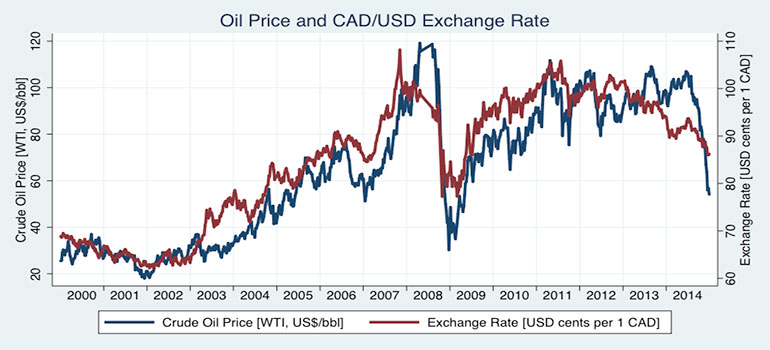

> Prof Jerrim says these families have an immigrant "hunger" to succeed, and their high expectations are likely to boost school results for their children.
Speaking from personal experience as a native Canadian, this can also motivate non-immigrant children to work harder. When half of your peers have an immigrant's work ethic it can be a real positive influence.
Disclaimer: this is an anecdote, my personal experience may not generalize, etc.