In kernel space ordinary operations like writing to a [u32] you own can have unexpected results. For example the page may not exist or the memory could point to some hardware component or be aliased. See also pornel's comment.
There are some ideas around Rust code patterns and structure for bare metal, see for example the RTFM work (now renamed). But they all do have some drawbacks such as redeuced readability and IMO too much abstraction.
Anyway, my point was that since of the guarantees Rust provides build upon certain assumptions about the environment that generally don't exist in kernel space.
That not quite correct. Sure, you will have some unsafe primitives that interact with hardware. But nothing stops you from creating abstractions on top of those.
Also, `unsafe` doesn't disable all language features or the type system, it just provides an escape hatch to use raw pointers. Which, yes is quite a big step away from "normal Rust", but that's why we abstract around them.
It sure is extra and boring work, but it's entirely possible to create ergonomic APIs around unsafe low level primitives. I mean, that's how a lot of stuff gets implemented in stdlib or even in some crates. We just don't interact with it frequently, though.
Not kernel developer myself, but I've done some embedded Rust and written drivers
That is not the norm. You won't get charged for smoking in Copenhagen, but it will put you in a high risk category for smuggling so their typical response here is to search you. They were probably under a high workload and had to prioritize heavily.
I have been searched twice crossing Øresundsbroen into Sweden, and both times I was the only one in the carriage to be searched. I have never seen them search anyone else.
They will always be under time pressure as the train needs to depart promptly.
(This is Swedish customs, nothing to do with identity checks. I don't use cannabis or socialise with people that do.)
That's essentially why people think its not-free. In essence, it pretends to give you the right to do something, but puts impossible to meet requirements so that in pracitise you cannot do the thing.
In essence, the license says you cannot use it as SASS software, but they didn't want to outright say that, so they did this instead.
You only need to do that if you operate it as a service that you sell or give away to others (rather than just running your own internal redis instance)
So yes, this basically prohibits anyone but redis from operating it as a service, unless you write your own operating system for it to run on. (Although presumably they will sell you licences or similar to operate it as a service)
That's the point! It's impossible to comply with it. If it were an open source license, it'd require every component to be released under an open source license.
Except it's not "we really don't know", it's "after looking at thousands upon thousands of cases over many decades, there do not appear to be any statistically relevant effects".
But that's not how that works? If there is no statistically significant effect, then whatever effect there might be is so small that it's part of the background noise: we have a complete enough answer to say "there is nothing that can be attributed to just this thing". And we can say that with certainty because of the statistics.
From this specific accident. However, the evidence from radiation biology in general is that there should be a certain number of cancers (and no, don't feed me anti-LNT BS.)
But, you know, probably fewer than accounted for natural variations in the background level caused by different rock types in the area or exposure to residual fly ash from thermal power plants, right?
It seems fairly obvious that if the influence of a nuclear accident on cancer rates is dominated by other factors, one should look to mitigate those other factors before worrying about the nuclear accident as a contributor.
It's rather that just because it would be statistically undetectable, we don't really know what the expected increase is. We really don't have good empirical data on the harmful effects of low amounts of radiation. Especially when the best data we could have had, happened to coincide with an empire collapse with major health impacts on the population.
Electric vehicles are heavier, which means they must spend more brake pads to stop. But they also use regenerative breaking, which reduces pad wear. So I'm not sure if they make it worse or not.
* I'm hard on brakes in general, but have over 70k miles on the original pads. Regen braking reduces brake use a LOT.
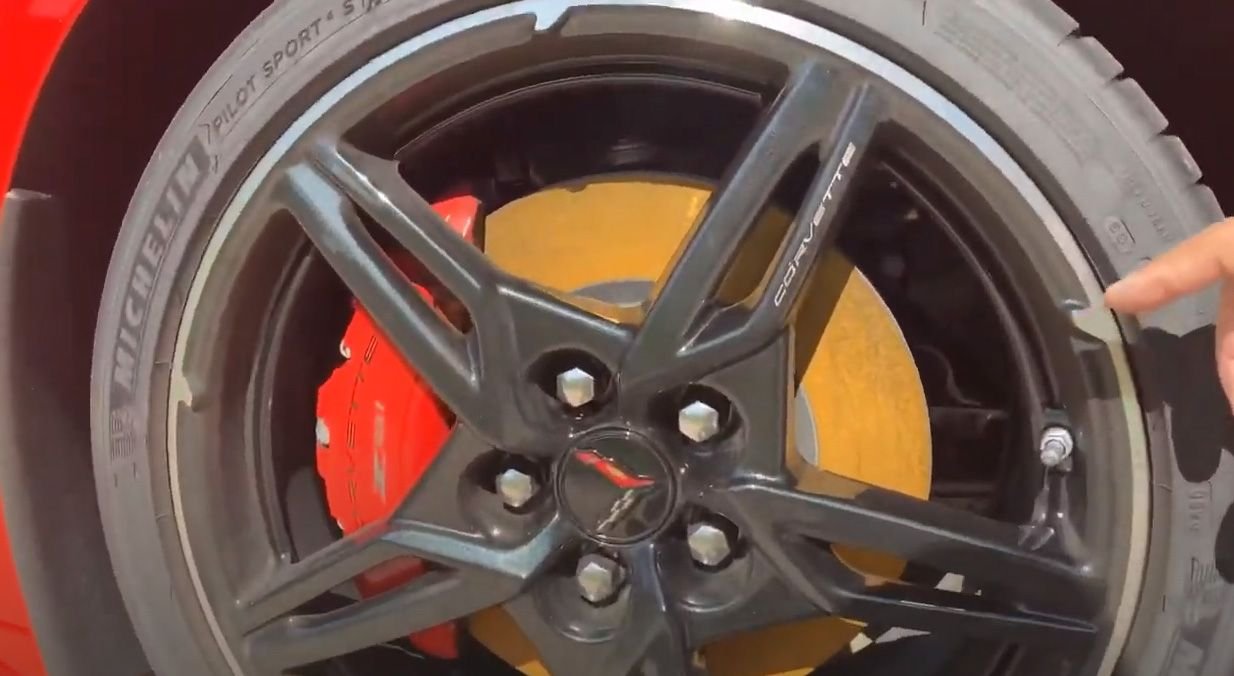
* Regen does NOT bring the car to a complete stop, the brakes are blended in below something like 5 MPH. The rotors are not going to rust away, they see action every time you drive. (Some surface rust is fine and normal, EV or no.)
* EVs can be heavier than ICE cars, and most are. There are many things I dislike about Tesla, but the Model 3 is a feather weight in the category. A comparison I like to make is to the AWS Dodge Charger, which is heavier by a couple hundred pounds. I won't even talk about trucks and SUVs.
Are you talking about the hold mode they introduced a couple years back? It will bring the car to a stop but (as compared to the previous mode where you had to press the break yourself below ~4-5 mph), but I'll be good money it's using the brakes to do so. Particularly when it's activated on an incline.
I drive an EV6, and I’m almost confident it uses (or can use) regenerative braking to come to a complete stop.
If I use the ePedal or the brake paddle, the stop is super gradual and you never feel the “grab” that you feel when using the brake. Also, I can sometimes feel/see it slightly rolling (so it’s not even truly a complete stop).
I’ve seen some people swear that the EV6 always uses friction braking at stops, but again, I’m pretty sure this just isn’t true.
> * Regen does NOT bring the car to a complete stop, the brakes are blended in below something like 5 MPH. The rotors are not going to rust away, they see action every time you drive. (Some surface rust is fine and normal, EV or no.)
A Gen2 Leaf (2018+) with "e-Pedal" mode absolutely does stop the car fully with regen.
They’ve unkilled it last I heard. I got an email a few months ago from Chevrolet saying they decided to keep making Bolts due to their popularity, and to keep an eye out for the next model in 2024 or 2025 (can’t remember which year).
Same here with my Bolt EUV. The only time I use the brakes are when I occasionally misjudge how quickly I’m coming up on a turn and one-pedal braking isn’t slowing me down fast enough; or when I first leave home, the car is fully charged, and one-pedal braking can’t regenerate the battery any further so it won’t brake for me.
Tires are somewhere near the top for distributing microplastics and heavier cars cause more tire wear, so yea we should get on that. I live next to a main road and we run filters in our house and have to wash the surfaces at least once a week to get off the oil and rubber dust. You can't just dust that stuff either, you have to wash it with soap. I almost regret buying this place, but where else would I have bought in this economy!?
I've never driven an EV. How do you approach stop signs and red lights other than braking? Is "engine braking" (regenerative braking?) strong enough to handle that big a fraction of slowing down in city traffic?
Based on my experience (electric motorbike), the regenerative breaks are super strong indeed.
You can tweak their « force », but usually, the strongest level is the most comfortable - that you eventually keep all day long.
It will cause you to full stop even on the steepest slopes.
Once you’re used to it, you dose your deceleration by focusing on how much you release the throttle.
And the only situations where you have to hit the breaks are the unexpected events - e.g., a car coming at the last moment and which you should give priority to.
You just let off the accelerator. They have tuneable deceleration curves for the regenerative braking.
Think of it like playing a console game. When you hold the right trigger, your car goes faster. When you let off of it, it naturally slows down. Unless you opt in to harder difficulties, most racing games don’t make you brake much.
Driving an EV is just like that. You only really brake for an immediate stop.
I have a Prius hybrid. It has an indicator when the brake pads are used. It's easy to slow down and stop without using the brakes about 95% of the time
It depends. On new EVs (which formally designed as EV from scratch), motors and charger are usually powerful enough to exceed brakes.
On conversed, usual practice to limit torque of motor to be less than on ICE original, because of regulations (which exactly state, electric motor should not exceed ICE torque), and this mean, they are just not powerful enough for 100% regenerative braking.
From technical view, modern electric engine could easy exceed brakes.
I'm member of Ukrainian EV activists group, and we there mostly talk about conversions. Unfortunately, conversions are not so cool as new EVs, but to be honest I don't know details of other countries regulations, they could be less restrictive.
Some EVs also tie in the same detection devices used for adaptive cruise control to adjust regenerative braking. It can be configured to 'coast' in a manner similar to old-school automatic transmissions, but will apply regen braking when other vehicles are detected ahead. This lets me drive it sort of like a regular automatic when on the highway but get the added return of wattage when traffic gets heavier.
There's also one-pedal operation, akin to driving a golf cart. Where you feather the accelerator pedal to slow, and it will engage much more aggressive regen braking if you let off the accelerator pedal. Some folks like this. I do not. I still drive other ICE vehicles and find the transition between them too jarring for my liking.
In city traffic, I rarely have to break. It's basically running the motor backwards (putting a load on it) and dumping the energy back into the batteries. It's limited by how fast the batteries can accept a change, so it doesn't always work when it's very cold out. I'll have to brake when a light catches me by surprise, and I brake when backing down my steep driveway. (The car does stop before getting into the street, but it's going faster than I'm comfortable with when approaching the sidewalk.)
The regenerative breaking is applied as you let off the "gas" pedal. It's kind of like driving a stick, but slows you down faster.
From what I know, there are several settings of regenerative braking you can choose. The higher levels will bring the vehicle to a stop, while the lower ones won't. So it's user-configurable to a degree.
Recently had to learn how to force a Prius to use the brakes, as the rotors were rusting up & starting to pit!
I could not get my partner to brake hard enough to really engage the brakes. They just would not do it, would not brake hard enough to actually use the real brakes, no matter the prompting & even knowing how critical it was that we start to de-rust these rotors.
What I found out is: if you put the car in neutral, there won't be regenerative braking, & the car will use the actual brakes. That's the only way I could get my partner to use the actual brakes.
I would have expected cars that have both conventional and regenerative brakes to keep track of how often the conventional brakes are being used and to automatically increase the use of the conventional brakes if they aren't being used enough to keep them in good shape.
The polestar 2 does the simpler thing of biasing towards mechanical brakes for a little while at the start of every trip. (I suspect this has the advantage of detecting brake failure in more controlled circumstances as well, but that's not specifically documented.)
I'm sometimes convinced Tesla's cameras identifies the stop line and stops itself exactly there. All I do is release the throttle pedal and it coasts there where it needs to be.
Generally, yes. Usually there are settings for how much regen you want, but the term 1 pedal usually inies a regenerative brake strong enough to stop at stop signs or when exiting freeways.
"1 pedal" just refers to vehicles that perform a high degree of regen when the throttle is lifted. Other designs that require the user to press the brake pedal are not necessarily engaging the brake pads when you do so, many of them are also slowing the vehicle with regen when you press the brake pedal.
When you press the brakes on an EVs or hybrid, they typically use regenerative braking up to the limits of the motor and charging system, and only apply the brake pads after those technical limits are met. There are many "two pedal" vehicles that can come to a complete stop, or close to it, with regen.
The control scheme has nothing to do with the efficiency of the car. Whether one pedal or two, it’s going to use the same power for the same acceleration/cruise/deceleration profile.
Unless you’re concerned about the energy usage in your ankle when maintaining pressure on the gas with your foot?
Controlling the car’s speed is the driver’s primary job. One pedal or two you need to use your right foot to maintain the speed you want.
Coasting with no acceleration or deceleration except that provided by rolling resistance and the road gradient is so unlikely to be the exact acceleration you actually want - there’s no particular value in privileging ‘zero motor power’ as needing to be an easy state to achieve.
There is a decent sized gap between 0 acceleration and 0 regen equal to the amount of energy required for the vehicle to maintain speed against rolling resistance and air resistance. Anywhere inside that gap, you're not using regenerative braking at all, you're just decelerating from not supplying enough power to maintain speed.
"Just letting the car roll" results in deceleration, but at a rate chosen by physics rather than you. If deceleration is not what you want, you have to continuously apply power. If it is what you want, it's still almost never going to be at the rate you want, so you still either have to apply some power or apply some braking. In the former case, you're pressing down on the pedal enough that no regenerative braking is happening. In the latter case, regenerative braking is obviously more efficient than friction braking, because the latter has 100% losses to heat.
If you’re lifting off the throttle enough to activate regen braking, you would be applying the friction brakes in a car as well. Maintaining a steady speed is more efficient than varying speed, but if you have to vary speed then one pedal driving is superior in every way.
If your one pedal driving doesn’t save power, then I would suggest a driver mod.
You don’t have to use one pedal driving to use regenerative braking in most EVs. They use regenerative braking to effect control inputs on the brake pedal too.
Are there any cars that "cruise" (by which I assume you mean maintain velocity without applying a pedal)? Non-EVs mostly sort of do so, they still slow down gradually. I'd be interested in trying a car that cruises indefinitely. Sort of an automatic, always on cruise control.
Well cursing in an EV is the equivalent of putting an ICE car in neutral. Modern ICE do that as well. To answer your question it still slows down due to wind resistance and friction.
If you put a modern ICE car in neutral while moving, you’ll use as much gas as you would while sitting in a parking lot idling.
However if you just coast in gear with the engine braking slowing you down, a modern car will turn off the fuel to the engine, so zero gas is used.
Then you trade greater pumping losses (reducing kinetic energy of the car) in exchange for lesser potential energy (gasoline) usage. It's not a free lunch.
Yes, but driving a vehicle is not a steady state problem. When a driver lifts the throttle, the next action is typically an intentional demand for a loss of potential energy (i.e. the driver is moving their foot to the brake)
On mine it's a driver preference setting - there are a couple of settings like that which I set to "make the drive more ICE-like because I still drive ICE cars occasionally and don't want to be betrayed by developing EV-specific habits" (even though EV "style" driving features, like 1-pedal, are generally more comfortable/relaxing.)
The kia I drive still roll at a couple of km/h when accelerator is fully released and will not hit 0 unless you use a paddle by the steering wheel (or use the breaks).
Good to see dozens of replies to this. Means EVs are popular.
Anyway, they're right. Brakes on EVs are normally just for emergency use. Regenerative braking (lifting up on the accelerator pedal) is all you need about 98% of the time. Traffic lights, stop signs, parking, and other such planned stops are all handled by releasing the accelerator which brings the car to a gentle stop while feeding the kinetic energy back into the battery. That's what they mean by "regenerative braking".
Regen braking in most EVs is significant enough that the brake lights come on when you lift off the throttle pedal (which is what engages the regen). Tesla has said their brake pads are potentially lifetime. And for good reason. You barely use them; so much less than a normal car it’s not even close. I have a friend with a 3 approaching 100k miles and isn’t even through half a set of pads. My EV, you couldn’t even bother me to check. I already know it’s pointless.
There is a lot of variance EV to EV. Some have strong regen, some not so much. Some use 1 pedal driving, some don’t.
For instance the Porsche taycan brake pedal is setup such that the first part of the travel uses exclusively regen braking, and as you push harder it blends in more and more friction braking too. Don’t expect this to become common though, as this primarily just benefits real performance driving. Trail braking is very hard/frustrating without this kind of feature, but driving that way on the street is certainly dumb, and probably illegal (could fall under exhibition of speed?).
Not 100%, because there are nasty emissions associated with the generation of your electricity however you charge. For the record I have an EV(model Y) and drive that preferably over my other cars.
The same thing happens to ICE vehicles while parked. It usually isn't a big deal because the area most prone to rust is the rotor surface. And modern brake pads don't usually have any issues rubbing surface rust away very quickly.
No. I do fine when I end up in a rental ICE. In my EV, I still use the brake when I need more stopping. If I zone out and forget I don't have regen, at some point, I'll notice I'm not slowing enough, and hit the brake, just like I would normally.
EVs indeed have regenerative braking. Which means they use their actual brakes so infrequently that they commonly need to be replaced because of corrosion issues on some models. If you use your brakes, the corrosion comes off in the form of brake dust. When you don't use them, it builds up and reduces the effectiveness of the brakes to the point where it becomes a safety risk.


I'm not sure what you are thinking of here. Rust memory safety doesn't care about the environment at all.