After falling in love and hacking away with Claude for a few weeks, I'm now in the hangover phase, and barely using any AI at all.
AI works well to build boilerplate code and solve easy problems, while confidently driving full-speed into the wall as soon as complexity increases.
I also noticed that it makes me subtly lazier and dumber. I started thinking like a manager, at a higher-level, believing I could ignore the details. It turns out I cannot, and details came back to bite me quickly.
So, no AI for me right now, but I'm keeping an eye out for the next gens.
Terragon is amazing. I actually ordered a second laptop to be able to work on several Claude Code PRs at the same time, but with this I don't even need the extra laptop! I've been trying it for 24 hours and it's a nice boost to my productivity, on top of Claude Code's own boost. Yeah!
If it’s cooled in an “open cycle”, it means that the water vapor is released in the atmosphere, via these huge aero refrigerators towers. It will eventually fall back down as rain or snow.
Water is not a scarce resource in Germany. Shutting down those plans was an ecological and economical disaster bordering on high treason.
Actually, water is scarce in some parts of Germany [1], it might not look like it, but there are still drought conditions in the soil of some parts of Germany [2].
nonsense. the economy didn't even notice the shutdown. and those plants were more costly to operate than renewables are, so we're enjoying cheaper electricity now.
it also wasn't an ecological disaster, in fact it didn't change anything in that regard.
I'm pro renewable build-out, and a lot of new nuclear projects seem to my layman's eyes uneconomical, at least at today's cost (maybe we'd get better at doing it cheaper again if we invested, I don't know), but your claims seem false.
> Renewables have currently offset less than half of year 2000 nuclear generation
This is simply incorrect. You cite the iea as source, which is of course incentivized to creatively present the facts. In this case, by counting created heat (instead of electricity generation) for nuclear plants, and comparing this with purely electrical output power of PV/wind energy.
Actual power from nuclear plants in Germany, year 2000: ~180TWh, Solar + Wind now: >190TWh. Note that total electricity demand has decreased. Electricity from biomass has also grown significantly (also renewable).
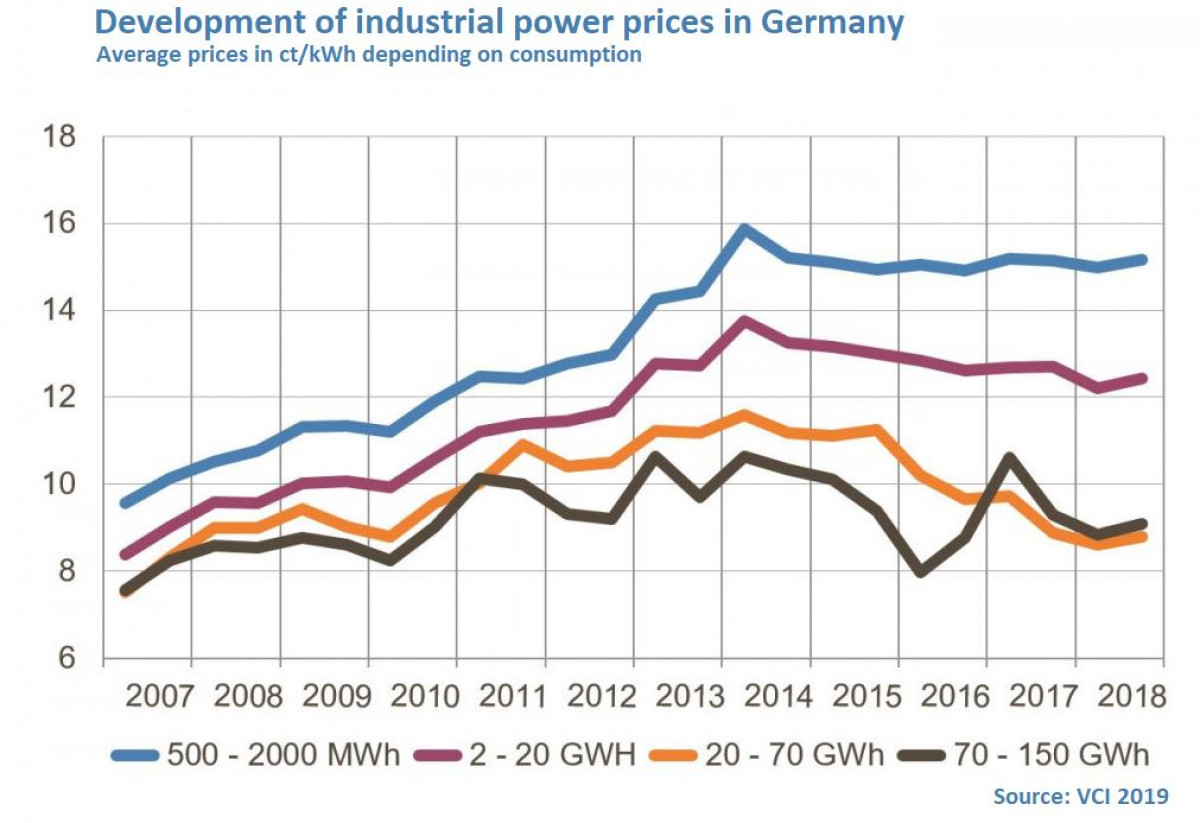
Renewables are very cheap if you only consider LCOE and not the systemic costs - which is what people like Zoadian love to do. Just ignore all those grid and backup costs. The grid fees alone have been increased substantially and Germany pays out an additional 7 cent per KWh through a fund that is not shown in the electricity bills anymore.
actually mostly coal was used to fill the energy gap, increasing pressure to expand rollout of renewables.
The media pitch making all this highly political is that fossil fuels from Russia should be / must be used instead of nuclear power, framing the choice to be either pro-Russia or pro-Nuclear (discarding renewables or potential pan-European energy coalitions).
In reality the impacts of the shutdown are foreseeable transitional pains.
Of course Germany wasn't producing a massive surplus of energy that made it seamless to switch off their nuclear power-plants, so now they need to compensate the gap and make plans to close it.
Let's hope they're not all giving up again half-way thanks to politics and revert the decision...
Did you miss the natural gas crisis? All of Europe has been scrambling to replace Russian gas with LNG. If I remember correctly Germany even decided to postpone some nuclear reactor closing because of it. European industry and especially Germany industry is facing major stress due to high gas and energy prices.
Is that why Germany is pissing and shitting itself over issue of energy from Russia, America and NS2? This is not symptomatic of a healthy and secure energy economy.
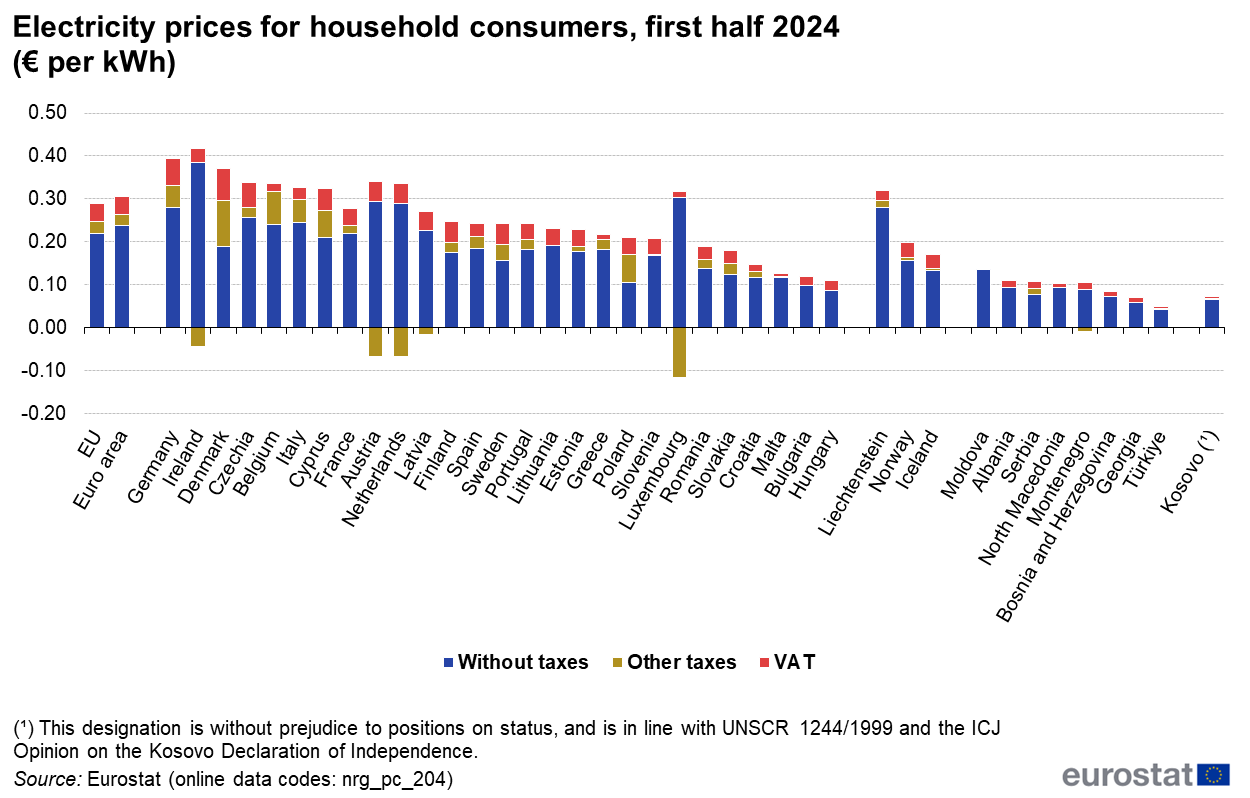
According to eurostat [1], Germany has one of the most expensive electricity (if not the most expensive due to a negative tax in Ireland) in Europe at ~0.35 to 0.40 EUR per kWh.
28.72ct/kwh is the cheapest for my location and 45.51ct/kwh if im in the Grundversorgung(if i fall out for whatever reason out of my regular contract this is the fallback)
Solar and wind cannot replace base load power. Especially not in Germany. They have to rely on peaker plants even more, and those are burning gas, emitting CO2. And they built more coal power plant units, like Datteln 4: https://en.m.wikipedia.org/wiki/Datteln_Power_Station
This is incorrect, and also completely misunderstanding how electricity pricing dynamics work.
Power grids don't need base load providers at all. They need enough dispatchable sources (and/or imports) to cover demand at all times (at least if they want to avoid rolling blackouts like in SA).
Providing base load is a privilege you get to enjoy if you have the lowest marginal price at all times (or are technically unable to regulate your output down, and would rather pay not to)-- cheap intermittent sources (solar/wind) make it very difficult for conventional plants to act as "base load provider" profitably.
It's a fair point to distinguish that baseload is just one mechanism to reduce the amount of surplus renewable capacity required to cover demand. However, what is the alternative in the face of a grid that's designed for centralised large power producers, and an environmental policy that disincentivises us from using gas?
Yes, in a hypothetical world we can just scale up storage and decentralise production, but what are the timelines and costs on that? Because my understanding is that realistically something like nuclear is the best way of making that problem tractable over the timelines that e.g. a nuclear plant can operate.
> Yes, in a hypothetical world we can just scale up storage and decentralise production, but what are the timelines and costs on that?
Why a hypothetical world? I think that current timelines, while not particularly awe-inspiring, are quite realistic (Germany: no more coal for electricity within 2038).
I also see no problem in using gas peaker plants provisionally for the next decade, and gradually phasing them out in favor of storage as batteries get even cheaper.
Newly built nuclear power is basically useless by comparison-- construction alone currently easily takes a decade (see: Olkiluoto 3 >15y, Flamanville 3 >15y, Vogtle 3/4 >10y, Shin-Hanul 1/2 >10y), local resistance is very large, costs are astronomical.
ROI for those plants is completely abysmal already and continuously getting worse, because they are completely unable to compete with solar/wind energy prices whenever those are available.
So going "full nuclear" now would mean that all the extremely expensive effort is completely useless (climate-wise) for at least a decade (until first plants finish), while spending the same on solar/wind improves the situation right now (by allowing us to rely on fossils less often), and those projects also tend to finish within years instead of decades, and they don't need astronomical sums (and guarantees) from taxpayers to get financed.
> I think that current timelines, while not particularly awe-inspiring, are quite realistic (Germany: no more coal for electricity within 2038).
I am not an expert on this, at all... but I'm not sure that's the case. c.f. Wikipedia:
> In March 2024, Federal Audit Office published a report in which it assessed the policy as not meeting goals on a number of points: the planned 80% share of renewable energy requires dispatchable sources but the assumed 10 GW in fossil gas generation is neither sufficient nor on schedule; extension of electric grid is behind the schedule by 6,000 km (3,700 mi) and 7 years; security of the supply chain is not sufficiently assessed; system costs to ensure 24/7 generation are underestimated and based on "best-case" scenarios; capacity installed in renewables is behind the schedule by 30%, whereas demand is expected to grow by 30% as result of electrification of heating and transport
As for
> ROI for those plants is completely abysmal already and continuously getting worse, because they are completely unable to compete with solar/wind energy prices whenever those are available.
That's because the pricing model is arbitrary. If we need nuclear, we can make it economically viable through reforming the way we purchase electricity. But,
> construction alone currently easily takes a decade
is the real problem. Unless SMRs actually materialise _and_ have fast build times, it's just not happening (and realistically, I think _that_ ship has already sailed).
I'm not really making a point here much beyond "it's one thing to say nuclear is no longer viable given our lack of investment" and another to say "it was a good thing to drop nuclear N years ago". You're not saying that for the record. By dropping nuclear, we have to deal with a bigger shortfall and that means gas peakers, etc.
> That's because the pricing model is arbitrary. If we need nuclear, we can make it economically viable through reforming the way we purchase electricity
I don't really agree on this. The problem is that intermittent sources (wind/solar) have become really cheap per MW. Whenever those sources are available, nuclear power just cannot compete, so you basically build nuclear plants as glorified peaker plants (even if you run them full throttle all the time, when wind/sun is available the power they provide is effectively worthless).
You can see this very effect in China, where the capacity factor of coal power plants is going down every year (and coal power is not very suitable for that).
> By dropping nuclear, we have to deal with a bigger shortfall and that means gas peakers, etc.
I completely agree on this. Having built like 30 nuclear power plants 40 years ago would be a godsend now for almost every country (=> see e.g. France, which is still reaping the benefits).
But its important to consider: The whole concept shares similar weakness with renewables (=> need additional dispatchable sources), and it also works pretty well for France because not every nation around them is doing the same thing (=> somewhat cost effective power imports, because not every neighbor needs to smooth out the exact nuclear-caused daily load profile).
Another point is that back then, there was
1) Much less local resistance (pre-Chernobyl)
2) Much cheaper labor and more economy of scale in building reactors
And it still took a lot of additional national commitment (from France) to fully nuclearize (mainly for strategic defense reasons, i.e. oil independence).
Seeing people advocate for nuclear power now is really frustrating to me, because we had that opportunity half a century ago, but now it's become unrealistic, unhelpful against climate change and insanely expensive, compared to much better alternatives (which are straightforward and just need to be executed). Arguing in favor of nuclear power now instead of wind/solar/batteries just feels stupid.
Germany relies mostly on oil, coal and gas for energy production [1]. Shutting down reactors that produces energy at a very low carbon cost (especially since a huge part of that was building the reactors) means you keep using fossil fuels. At the time of writing, Germany produces power at 432gCO2eq/kWh [2] (compared to 169 for UK, 13 to 37 in Sweden, 42 in France, 309 to 600 in Italy and 759 in Poland).
In practice, Nuclear was replaced with renewable but fossil fuel usage didn't go down.
The largest Q-Max-class gas tanker is 345 meters long [1]. Let's say you manage to fit 3 giant Siemens wind turbines on it, with 100m long blades [2]. It's a bit cramped but let's say you have extenders on the side to make room for all 3 of them. And also let's say you found a way to prevent the ship from tipping over when the wind is strong. By deploying floaters on the side or whatever. Not unsurmountable.
Each of those wind turbine has a rated power of 14.7 MW [2]. Let's say that you found a place where the wind blows super strong (but not too strong) and steady all the time. It's possible, since you are a mobile ship, after all. Let's say that you have a way for the ship to keep in the same place despite the strong and steady wind pushing you constantly. Using engines is going to lower your efficiency, so let's say we found another way.
So, now your ship is generating 45MW constantly. According to ChatGPT, this is 32 kg of hydrogen per second, taking hydrolysis losses into account.
Tanker capacity is 18 620 000 kg of liquid hydrogen. It will take 581 000 seconds to fill up. 9697 minutes, 161 hours, or 6.7 days. Much shorter than I thought... Did I miss something?
You have it reverse wind turbines need mooring, stay upright and so on. That's highly impractical. No, you build a fast-going sail vessel (using big traction kites, because it's not the 19th century anymore) and power the generator from much smaller turbine blades in the water. Hydrogenerator is the term established in recreational boating.
I sure would not expect any returns in days, more like months or years. But if we (humanity) could just solve the purely man-made problem of piracy (or would it technically be salvage?), I believe that a robotic fleet of cruising hydrogenerators could be a huge contribution to our energy needs.
The main issue is that prevailing winds have a direction, and there's not a continuous open ocean path other than the Southern Ocean which is harsh even by the standards of oceans. Sure you can steer along trade winds in the Atlantic or Pacific but there's quite some efficiency loss.
(Give climate change another decade or so and the Arctic Ocean maybe becomes an option, although by then we'll have bigger fish to fry, or perhaps poach).
Boats go considerably faster, as in overcoming more water drag, going crosswind than going downwind. I suppose that adding extra drag with a hydrogenerator will change the maths of that relationship, but certainly not so much that it would be prohibitively wasteful to not specialize a hydrogenerator carrier to downwind-only. (if the downwind-only setup can be competitive at all, not sure I'd take that as a given)
It strikes me that having the turbine and hydrolysis plant fixed in place, and having ships visit those sites to refuel, is probably an easier setup than mobile turbines.
But I think your maths is wrong somewhere. Hydrogen supplies 33MWh/tonne, and you've stated the ship capacity as 18620 tonnes. 18620/(33*24) gives a generation time of 23 days, even before we allow for hydrolysis overheads.
Marine hydrogen isn't a terrible idea though. Tank weight and bulk is prohibitive for aviation, but less so for shipping.
There are only so many windy places to affix turbines to. There's a lot of ocean to cruise on.
The mobile hydrolyser (not a boat to solve shipping in a quasi perpetuum mobile away, but an energy harvester that focuses on just that) would solve mooring: the "lateral lift" of the boat would take care of that, just how your plain old America's Cup boat isn't just slowly dragged downwind. It would solve linkup: a serious cost component in not all too conveniently located off shore wind installations is the grid connection. And it would solve intermittency: hydrogen is inconvenient compared to hydrocarbons, but it's super convenient compared to getting even more electricity at a time demand on your grid is already satisfied to saturation.
(GP's math is likely wrong, but the assumption that you could somehow cram multiple turbines from the bigger end of market offerings on a boat and call it a day seems so far off to me that I never really looked at the numbers)
Ugh, turns out I suck at math too. At least attempting it before coffee.
The ship's capacity in MWh is 18620t x 33MWh/t = 614460MWh.
At 45MW generating capacity, an electric hydrolyser at 80% efficiency delivers hydrogen at a rate of 36MW. That will unfortunately take about 70 years to fill the ship to its maximum capacity.
On a more positive note, 36MW is still a heck of a lot of power, plenty enough to run a mid-sized cruise liner or warship. So a marine generating station with three of these turbines could, for example, refuel a liner once a month, and then that liner have enough fuel to cruise for a month, and so on.
This would require a fuel tank with a more reasonable 750 tonne capacity. That's still several times more than the Shuttle, but not beyond the realms of feasibility - and a stronger, heavier tank allows higher pressures / smaller volumes.
I am totally mesmerized by the idea of a floating hydrolizing platform , where ships can dock and load hydrogen fuel ( not sure what form suits best ).
Must start some economics of it. Also marine environment is very unforgiving...
Platforms are does-not-scale hard though: they require mooring and every bit of ocean floor is different. Drilling platforms come in multiple "species", as different as spiders, fish and birds. Roaming hydrolysers on the other hand would be one design fits any ocean. You'd want to build lots of them, more Model T than Death Star. And where a stationary platform would have to be able to brace a hurricane, the roaming unit would just go to a neighboring sea with a friendlier forecast. Or ride along on the edge, if power throughput has enough headroom.
It doesn't have to be because proximity to meadows or forests in Texas have enormous biodiversity. My mom's tiny 1/3 acre home killed a good 1 lbs. / 1 cu ft of flying critters in one day with a bug zapper.
Yes, you are right that playing a game with infinite ammo and health is boring.
However, this never happens in the real world: You buy a nice car, then a nice house, then go to nice vacations, eat better, healthier food.
Then you realize that there are layers of nicer everything above what you consider "nice". Build a more ambitious company, and end up building rockets to explore the solar system and make humanity multi-planetary, cure illnesses, extend knowledge or education or peace.
This only works where the number of moves is finite, and you can only iterate in lockstep with your opponent: tennis and chess are good examples.
If you are a startup, you don't have to wait for your competitors to play before making a move, you can (and must, to survive) make as many moves as you possibly can, to get ahead.
A blunder is not as bad as not making enough great moves.
I agree with your counter-point. The finiteness and lock-step are interesting characteristics; I wonder what the set of characteristics are, for when this "rule" is especially applicable.
And then we could ask: Is a startup like that? Are some kinds of businesses like that, but some are not? (e.g. a one-person accounting service vs a "change the world" startup?)
I do agree that often with startups it's whether you find the 1-2 things that REALLY matter, and execute those REALLY well.
> you can (and must, to survive) make as many moves as you possibly can, to get ahead.
The tricky part is not getting ahead in the wrong direction, because that could be a blunder if the strategy behind that move is not well thought through.


Parseur is a B2B Saas that automates document-processing workflows.
We are a 100% office-less, fully remote team of 5 looking for the 6th full-time (or 80%) team member.
We're looking for an excellent front-end dev who ideally knows React. And it would be nice if you could also design and know your way around CSS.
More info here: https://parseur.com/jobs