Used to like Dvoraks articles and Cranky Geeks back in the day.
Unfortunately he joined up with 'v-jay' Adam Curry to do a podcast. That show is basically Alex Jones lite. For example laughing about the white supremacist terrorist killing of Heather Heyer, edge lording it didn't happen, "Crisis actors" etc.
Yeah that's not far off, but I think JCD is kind of captive to that. Curry has always been a whack job to some extent but kind of amusing when he's not laughing at terrible shit like you've pointed out (which I missed but don't doubt).
You mean the case where a 4 foot 9, 330 lb woman had a heart attack on the sidewalk, and not a single molecule of the driver's car ever touched Heather Heyer? While every single one of the people actually hit by the car, survived?
I admit I don't know what Dvorak said about it, however.
It depends on the state, Virginia definitely has felony murder. But the guy was just charged and convicted with plain old first degree murder. Intentionally driving your car into a crowd would seem to make that an open and shut case.
The felony murder statue would apply if say, he had some accomplice, who also committed a separate felony during the commission of the crime (like for instance, they had stolen the car), but it couldn't be proved that he was also complicit in driving the car into the crowd. But since the indirect cause of the death was the accomplice's aid in stealing the car, he could get charge with felony murder.
Not sure how the car touching Heyer is relevant. If the guy hit something else which then hit Heyer, his actions caused her death the same as if he had hit her himself.
Even if its something like, causing me to jump out of the way and hurt myself in the attempt, you bet your ass you can be held liable.
I don't think this works on Windows 11 Home (or or perhaps in S mode). I have set up a desktop this year where it did work, then more recently I set up two Laptops in S mode where it didn't and I had to follow other instructions.
For that I had to create a microsoft account. I could then create a local account, and delete the microsoft account.
Which frankly is terrible. It has pushed me to now make Linux Mint my main personal OS. I've been using windows and been a fan of Visual Studio for decades.
There is an episode of the "you're wrong about" podcast, that discusses homelessness. In that episode there are several discussion about several projects in California around homelessness. Those projects provided housing. The studies based on those projects showed that overall the cost was less that not having some housing and services. The podcast goes into more details, but as I remember this was because
* It removes much of the medical and police cost
* If people who are struggling don't have a roof over their head, it makes it incredibly hard for them to get a job. Having some stability meant that many could pick them selves up and get a job and so forth.
The end of the episode points out even though the programs were a success by most metrics - including being cheaper overall to tax payers - they were shut down.
The idea that homeless people need homes to be able to advance further seems to trigger some people — after all, most of us pay for our housing, so why should they get it for free?
What people don’t consider is that when “we”, the people with houses, don’t spend our dollars housing homeless people, we pay sooner or later in other ways whether we want to or not when society around us partly disintegrates and additional effects start stacking up: substance abuse, violent crime, healthcare costs etc.
The way 'housing first' has been implemented in SF is terrible. It is operated as a lottery helping a very tiny percentage of the homeless with a house/apt worth $1mil+. Those numbers will never solve the problem.
If I saw a reasonable housing first program where it actually provides cost-efficient housing for all that need it, I'd be a strong proponent.
The current system is not that, it's incredibly unfair, a tax-payer funded lottery in which residents provide accolades to homeless advocacy groups in return for inclusion on lists that make them more likely to win a spot in the residences. Huge amounts of tax-payer money is siphoned off into these non-profits throughout the process.
It's unfortunate that some of the smallest, most expensive, most mismanaged and ideological 7x7 mile real estate in the US is being used as the dumpster for humans in need of serious medical attention and societal support.
SF can barely build a public toilet without it turning into a taxpayer trough feeding frenzy, so expecting it to be the Mecca of the homeless, the addicted and the downtrodden is comedic at best, and tragic at worst. Even if someone were to get back on their feet from addiction, SF is the last place where they would want to try to live, given the astronomical cost of everything, unless they're going to suddenly become senior ML engineers who can afford a downpayment on a $1M 500sqft cockroach shoebox.
Most people with regular jobs can't afford to live in SF... think school teachers driving in every morning from Sacramento, and that's without fighting every day against a crippling meth addiction.
There's practically infinite room in Bakersfield, Stockton, Lancaster, Fresno, housing is more affordable, the local governance more amenable, the cost of living night and day, but nobody in policy will ever be able to pull that off, so we'll be stuck with the current status quo that nobody is happy with.
There are a lot of public employees and contractors who would have no way to live in the bay area if it wasn't for the $300 million a year homeless budget for a few thousand homeless. They need those homeless to provide justification for their good government jobs, which is why they cater to them so heavily by allowing them to sleep anywhere, ignoring most crimes they commit and providing them with a safe place to buy and take drugs.
All that has to happen is tax revenue has to fall and the spending will decrease and the homeless will go to some other place where they can live a better drugs and camping lifestyle. Having lived for some time a few years ago in the Tenderloin, the idea that the homeless in S.F are normal people who have fallen on hard times is a complete simulated reality that has almost nothing to do with the actual situation.
SF is the solve everything with more money city because more money is always to the benefit of people working government jobs. For another example, look at the 1 billion dollar per mile recent subway extension, for example. That 1 billion went to somebody and employed a lot of people.
Even Scott Weiner mentioned in the interview with Ezra Klein in April that he would have not been able to live in SF if he hadn't gotten lucky and found a 500sqft place 15 years ago. You know something is off when your state senator can't even afford to live in his own district.
This is the case across most of the US. It’s also why our senators are wealthy people taking “bribes” and kickbacks, friendly business deals or benefiting from insider trading. Feinstein, Pelosi are good local examples.
They should pay top government officials multi-million dollar salaries like they do in Singapore. Then they could attract top talent to those jobs and they wouldn't have to engage in all these questionable side hustles.
You would have to find someone who has so much money that anything extra wouldn't matter. Those people do not exist and the richer high paying job it is the more it will attract the wrong type. Put Musk in one of those jobs and he will use influence to increase his wealth.
Estimated by allfamousbirthday.com? Pardon me if I am a little skeptical.
And nobody said he doesn’t live in the district. He moved to SF as a lawyer, then became Deputy City Attorney, then was elected to Board of Supervisors, then elected to state senate. His quote about not being able to afford to live in SF is most likely to point out that rent control in SF keeps qualifying rents affordable while market-rate rents are extremely unaffordable.
Or their (meth) RVs or vans. Those are surprisingly common, but they tend to go to cities that don’t enforce parking limits for unhoused (LA, SF, Seattle)…
It’s not, 70% of unhoused people in SF started out housed in SF (source: every homeless count for the last decade, and my tenure as editor-in-chief of SF’s Street Sheet). People are unhoused here because housing is unaffordable. This is not complicated.
We already have a (very successful, uncontroversial) program that provides free bus tickets to unhoused people who came from elsewhere and have a support system wherever they came from. That leaves the other 70%.
Leading question: suppose someone moved to SF, started out homeless, moved to supportive housing for a few months, and got kicked out and became homeless again. Are they counted in that oft-cited "70% of homeless people are SF natives!" figure?
ETA some additional numbers[0]:
Of that [71]%, the top six places they were housed before their most recent loss of housing:
With Friends/Relative (31%)
Home Owned or Rented by Self or Partner (21%)
Subsidized Housing or Permanent Supportive Housing (11%)
Hotel/motel (9%)
Jail or Prison (8%)
Hospital or Treatment Facility (4%)
So only 21% of that 71% actually rented their own place. Granted, the "with friends/relatives" can cover some situations where I'd agree they count as originating from SF, but also covers things like people moving here and crashing with a friend for a week before being kicked out.
Note also that any homeless who has become housed at any point of their homelessness (including jail, hospitalization, supportive housing) would then persist in the "has been housed in SF before" stat.
FWIW, I upvoted; but I agree this is an ongoing problem on HN and really any place that allows people to downvote based on how they feel.
You can state all the facts you want and some people downvote because they simply didn't like it; others downvote because your replied topic was about a downvote (against policy) and those same problematic people who downvoted may also have multiple accounts and/or be doing this to promote a certain propagandist narrative. There's really no way to combat it or tell given the site design.
Ultimately its a bridge too far and violates free speech by de-amplifying what you said (because it goes invisible once it goes under a certain vote, greyed out at 0, hidden -1, delisted/invisible -2) but that's mainly just my opinion that the vast majority of people (or more accurately bots) here don't hold. Its why I think most current social media should be outlawed (as its currently designed).
It interferes with communications which are an important signal over public discourse for our representatives to take action. They stop being responsive and representing when they can't receive meaning from their constituency because its an intentionally jammed/noisy channel and they so far have failed to take any action to remedy that jamming, which can have grave historical consequences.
When there's no effective representation, the rule of law eventually breaks down.
It's down voted because it's a figure that people who follow the discussion closely know is misleading. The context it's usually used in (including here) suggests homelessness is because people were gainfully employed and renting in SF before being kicked because of greedy landlords, but that's a small minority of people actually included in the figure. It also includes anyone who's ever crashed on a friend's couch for a month, been jailed, hospitalized, or rented a motel room in SF.
Those people still deserve empathy, but they're a very different group than those who once were productive and housed in SF and then ended up on the streets because of a bout of bad luck.
> The context it's usually used in (including here) suggests homelessness is because people were gainfully employed and renting in SF before being kicked because of greedy landlords
No, that isn’t the context here. When I wrote this here, and when I put this figure on a Muni bus ad for Street Sheet’s ad campaign in 2015, I was responding to the often-repeated false assertion that SF is “a dumping ground” for unhoused people, that people “come here to be homeless”, that “other cities send their homeless here”, etc etc etc.
Claiming that “housed in San Francisco before becoming unhoused” should only include “productive” people who were paying their own rent with their name on the lease is moving the goal posts by an entire football field.
Cities are full of poor people. They ought to be — cities are great places to find opportunities to get out of poverty. And lots of people, self included, show up in cities with no money or plan, and crash on couches, in hotel rooms, in their cars, etc, until they land on their feet.
San Francisco has always been a place where people have done this. We didn’t have large-scale homelessness here until the second half of the 80s, after federal public housing was gutted and especially after the Loma Prieta quake wiped out a lot of affordable housing.
If cities don’t make room for poor people, those people will end up on the street. People try to make this more complicated than it is, but every serious study on this lands in the same place, every time — just provide housing.
> And lots of people, self included, show up in cities with no money or plan, and crash on couches, in hotel rooms, in their cars, etc, until they land on their feet.
Sure. But the approach to dealing with that subset of people should be different than the approach for the subset who were once employed and renting in San Francisco and then ended up homeless through a health emergency, job loss, or eviction. The latter group has shown the ability to sustain themselves in SF in the past, while the former hasn't. And, morally, the place of original residence is responsible for them, not the taxpayers of San Francisco.
If nothing else, people with longstanding ties to the community and economy should get preference for services compared those who didn't. And homelessness advocates get this: the entire point of conflating them is to increase sympathy for the people who just turn up.
> And, morally, the place of original residence is responsible for them, not the taxpayers of San Francisco. If nothing else, people with longstanding ties to the community and economy should get preference for services
I believe you would find that this is illegal. Shapiro (Shapiro v. Thompson, 394 U.S. 618 (1969)) and its progeny address this issue on point.
(I feel obliged to mention I believe your number because of your expertise, simply because of the number of people in this thread who failed to say that).
> But the approach to dealing with that subset of people should be different than the approach for the subset who were once employed and renting in San Francisco and then ended up homeless through a health emergency, job loss, or eviction.
How do you even begin to discriminate on that? The USA lacks a residency system like other countries.
I agree with your point, but it’s not possible to implement here, which is why the non profits continue the conflation.
For San Francisco in particular, if you work in San Francisco, you pay a local income tax of ~0.4%. Make having paid that (say, $50 paid by either you or the person you're married to) or having attended an SFUSD school as qualifiers for assistance.
That covers the large majority of homeless that SF should target for help and are all easily accessible to the city government, with no documentation required by the applicant. You can imagine corner cases (attended a private school, lived in SF but worked outside it) but it'd be an improvement over the status quo. Even many of the corner cases could be captured with additional documentation that would require a bit more effort on the applicant's side.
> But the approach to dealing with that subset of people should be different than the approach for the subset who were once employed and renting in San Francisco and then ended up homeless through a health emergency, job loss, or eviction. The latter group has shown the ability to sustain themselves in SF in the past, while the former hasn't. And, morally, the place of original residence is responsible for them, not the taxpayers of San Francisco.
This is how the system already works. The Homeward Bound program provides free bus tickets to people who have a support system elsewhere. That still leaves a substantial population of people who do not have any other support system, or whose support system is in San Francisco.
> If nothing else, people with longstanding ties to the community and economy should get preference for services compared those who didn't.
This is how the provision of services currently works. The problem is not prioritization, the problem is a lack of available housing for even your narrowly-defined “deserving” unhoused people. And arguing about a few percent being moved into a different category of eligibility does nothing to fix the underlying problem.
> That still leaves a substantial population of people who do not have any other support system, or whose support system is in San Francisco.
It's not San Francisco's responsibility to pick up the slack for places that don't take care of their homeless. Declaring that it is doesn't make it so, and both creates perverse incentives (for other places to shirk on their responsibilities) and makes it impossible for San Francisco to fulfill its own responsibilities.
Also, I don't think I used the word "deserving," despite your quotes. They deserve help, but San Francisco is not obligated to be the provider of services for the entire country. Once we do manage to build successful programs for the homeless who originate here, then we can talk about whether it makes sense to build aid systems and SF housing for people from other communities.
As it stands, we fail all the homeless in San Francisco. It's silly to think we can tackle homelessness nationwide before we even can get a handle on those who come from here.
mbgerring, I agree with you in almost the entirety of what you've said both here and in some of your responses.
There are a lot of false assertions made, often with no consequence for doing so, which is an ongoing problem; and worse a lot of these people actually believe what they say is true despite well researched facts showing to the contrary. Its disheartening that so many people are completely irrational when it comes to discourse on these things.
As for the lack of housing, to me its clearly not a money problem. Also, in other areas they do hotel vouchers instead of actually creating affordable housing; and while programs may limit it to no more than 30 days, there are loopholes which allow a revolving door between multiple hotels accepting vouchers. I would guess this is where most of the money is going, and this doesn't do the same thing as providing permanent housing first.
Additionally, the vouchers themselves are often traded, for drugs and other things and the areas where these are accepted, quickly become crime-ridden because the dealers follow the vulnerable populations; its one of the reasons some areas refuse to add additional local transit resources. They simply don't want to deal with it; or they deal with it in a way that makes it someone elses problem (like what happened in Santa Ana).
Everyone seems to have an opinion on what needs to be done, but none that I've seen have actually followed through on what the rigorous studies have shown. There always seems to be some loophole, corruption, backroom deal, etc for business to capitalize on homeless services without actually improving the situation in any way while draining resources meant to help people get back on their feet.
You did not provide any documentation. Whenever documentation is provided that supposedly proves this, is highly misleading. Like this one in which they've somehow managed to define everyone as an SF resident (see footnote) https://i.redd.it/omvx0d36ng1b1.jpg.
I am not serious, completely. But you called it a dumpster for the underclass (not judging either way).
But it points to an irony when you’re there, going to a meeting at the Transamerica pyramid or walking past the headquarters of Salesforce, or having a michelin starred meal, then walking down the street and a guy in an alley has a knife.
(Yeah, personal experience. I wasn’t very scared. Probably because I just had michelin starred wine pairings…)
When demand on resources exceeds available resources and/or current plans are not moving the ball, management must act. Moving homeless to lesser cost places is in scope. The poster above is right. While getting stable is a huge win, it's silly to think they can then continue to live in sf
They are not entitled nor are tax payers obligated to insure they have parity with people who can afford to live and work in SF.
And I buy the argument providing homes is humane and cost efficient compared to options. Any treatment medical or mental in the US is stupid expensive. But I think/hope DBT which is effective mental side is not the most expensive
The "toilet" controversy was the set-aside maximum cost for a sheltered, multi-year maintenance project that involved road construction. It wasn't just a toilet seat like people keep repeating.
SF's attempts at "fixing" housing always amount to this lottery system.
Rent control: A random windfall for whatever tenant snags these coveted apartments when someone dies in a 3 bedroom apartment they haven't needed in 30 years but "can't afford" to downsize from since they have been paying $650 since 1989. Also the illegal subletters who are numerous and shameless, from personal experience.
Low-income housing minimums: A random windfall for a few lucky lottery winners, while everyone else from indigent to middle-class has to struggle because the developers need to build only luxury housing to make up for eating the cost of the low income housing.
And then this housing first thing is more of the same.
> siphoned off into these non-profits
Indeed. The homeless-industrial complex of nonprofits in SF is huge, but popular since it is a jobs program for all the people with social science bachelors and masters degrees, and no marketable skills.
The problem is that eventually you need walls or forced relocation. We have evidence that people are already willing to live in SF with no shelter, and without changing fundamental ways America works, you can’t force them to leave and not come back (maybe a city can get a restraining order protecting itself? No idea).
Force cannot be used but offers of food, shelter, and care elsewhere can and must be offered. In general, only the very rich can afford to live in the most central, desirable locations because the costs of everything are so damn high. It's only fair that most people who aren't insanely rich (like me) should find somewhere they can afford to live or where society can afford to help them. Trying to linger in SF Presidio or Manhattan is well above almost everyone's means.
> Rent control: A random windfall for whatever tenant snags these coveted apartments when someone dies in a 3 bedroom apartment they haven't needed in 30 years but "can't afford" to downsize from since they have been paying $650 since 1989. Also the illegal subletters who are numerous and shameless, from personal experience.
This is a misrepresentation of SF rent control. Rent increases for pre-1979 apartments are only capped if the same tenant lives there continuously -- when the apartment lease turns over, the rent can be raised to market rates.
That being said, there are some people that abuse the system by keeping a lease for a place they haven't lived in for 20 years and subletting it, sometimes for a profit, but there aren't apartments where the rent is permanently capped at 80s levels like you're suggesting.
Smart landlords will fight adding a cotenant, but tenants can always claim discrimination which is an uphill battle for the landlord especially in SF where juries are notoriously anti-landlord.
The standard leases used for rent-controlled apartments are very explicit about this, so unless a landlord used a non-standard lease, or didn't use a lease, this isn't a real problem. You don't have to be a smart landlord, you just have to not be a stupid one.
There's no issues around discrimination for this, and it's not an uphill battle. Replacement tenants are not co-tenants, and do not have rent control protection if the original tenants move out. Landlords cannot reject replacement tenants in most cases, but they have no requirements on accepting replacements as co-tenants. Replacement tenants are added as sub-letters of the original tenant.
I was a real estate agent who worked in property management, and I've also lived in rent controlled apartments in SF. You're absolutely wrong here.
You say $1mil+ house and most people think we are putting up a select one or two homeless guys in mansions.
1 million dollars in San Francisco real estate is a one room (maybe two room if it's in extra bad shape) hovel.
And that's the real problem. San Francisco is not a place for the poor to try to raise their lives to middle class. It's a place for middle class to struggle to stay above water. The homeless in sf need to be given decent places to live in a place where land costs something normal. That place does not currently exist in or near San Francisco, but can be reached by an hour or two bus ride.
They would then cry that it's not their problem once outside SF jurisdiction. Thus perpetuating the same issue elsewhere.
CA should have taken the 17B and invested it the lowest-cost-of-living regions in the US to build out communities + housing with full wrap-around services for different purposes (homelessness, mental-health, vets, etc) and focus on therapy/recovery.
It seems spending 17B in CA would just get you a hotdog and bicycle these days.
You have a skewed sense of the middle class. Assume it costs $50,000 a year to live in a million dollar house (which seems on the low end of reasonable.) The median tax-home pay for a household in San Fransisco is $84,500. So you think most people are spending 60% of their take-home pay on housing?
Also, the median value for an owner-occupied house in SF is 1.15MM. So half the people live in something less than that.
> Also, the median value for an owner-occupied house in SF is 1.15MM. So half the people live in something less than that.
This contradicts your earlier statement. If the median owner-occupied house 1.15M, that means more than half of homeowners are living in houses worth $1M or more. Clearly that includes middle class people, since it's more than half of the people.
Also, note that it doesn't take much money to live in a $1M house if you bought it a while back.
No, because homeowners are not a representative sample of the population. If I slap you down in the middle of Beverly Hills, I could say that on average you're a millionaire, but that doesn't exactly tell the whole story.
It includes _some_ middle class people. Fewer and fewer as property taxes raise and the value of their home rises. Sure, they'll have a bunch of cash once they sell it, but not everyone wants to move away from where they were born just because there's a bunch of overpaid tech bros now living next to you.
Assuming you bought a whole back and have $1m equity, You could sell your $1.15m house and take 4% a year or $40k from that for doing nothing. You just need to live in a sensible location and let SF die.
Who is giving you 4%? Subtract taxes and you've traded a nice city for a life of poverty because chances are finding a new job at a similiar salary is almost impossible.
> You just need to live in a sensible location and let SF die.
Please let SF die so I can buy some affordable real estate there. Thanks!
Seriously though. SF’s problem is that it is too crowded. If people left, then it would be less crowded, an equilibrium would be reached eventually (if you believe we aren’t at one already).
Resettlement somewhere cheaper is the sensible thing to do. Unfortunately, this requires relocation and doesn't scale. This is something the federal government should pay for and coordinate.
Housing costs in SF are too high to house them in situ. Gotta bus them somewhere else cheap and start there. Why would you ever try to keep them in the city, it makes literally no sense?!
Around year 2009-2010, I worked in public sector in Helsinki in the real estate department. I worked the phone handling tenants calling and needing repairs. A large portion of the tenants were people from the homeless program. At the time I did not know this program was unusual.
My understanding of how it worked was that if you were functional enough and willing, you could walk into a certain building and they'd get you an apartment very quickly, although not sure if on the spot (I didn't work that part, just repairs part). I sometimes moved big bundles of keys for newly vacated or repaired apartments from the real estate building to the social workers in the homeless building they can then give out to new tenants.
I've now lived San Francisco for 5+ years and Helsinki basically does not have homeless people compared to what I've seen here.
I wondered a lot why California seems to be failing at the homeless problem. I see at least one comment here in threads that is saying that homeless are drug addicts and should be forced to go into rehab as a condition to give a home. While I was working for Helsinki I rarely heard anyone suggest the people being given homes needed to pay that back somehow, it was seen as obvious that the main problem is not having a home and the other problems can be dealt with later, and it's inhumane to make demands.
I don't know if "housing first" would actually work in California. Housing is super expensive, and I think California also has a lot more homeless than Finland ever did.
The ex-homeless tenants tended to need more repairs and care. I remember some funny/weird stories like we had a woman who could not use the toilet in her apartment because it was bright green and that caused her panic attacks. And some other tenant who painted literally everything (ceilings, windows, cabinets, furnite, floors, etc.) black.
> I wondered a lot why California seems to be failing at the homeless problem.
My take on it (after living in SF for many years):
1. Many homeless people do have mental illnesses and/or drug addiction problems (for some, this is the result of their homelessness, for others it's in part the cause). California is very much against involuntarily putting people in psychiatric hospitals or drug treatment programs. This is largely due to backlash over abuses from decades ago, where people were put into horrible conditions in mental institutions.
2. I think a housing-first program would absolutely work, but it's politically infeasible. Most people would seemingly prefer to have homeless people all over the streets and sidewalks when the alternative is to give them free housing, because it's "not fair" to the people who've worked to pay for their own housing.
3. The option of busing/flying homeless people out of a high-cost city like SF and into a lower-cost region where their needs can be met is also politically fraught. There are (voluntary) programs that help homeless people travel to a place where they have family who can help them, though I don't think it's used as a solution as often as it could be. But the idea of forcibly moving homeless people to a random place or places where they have no connection or support network is considered inhumane and a violation of rights.
I think #2 would be more acceptable to people if #3 could be used more, since presumably people could be housed in a location where housing is much cheaper. As much as I'm not super comfortable with the idea of just forcibly moving people to a different location, I think it overall can be better for the people involved, if it's done well. But that's the trick: can we actually ensure that the people relocated elsewhere will have their needs met, and will end up in clean, well-maintained housing?
Beyond that, I think we need to get over our aversion toward requiring people to go into (and stay in) psychiatric care or drug rehab. This shouldn't be a requirement for receiving housing; it should happen concurrently with being housed, though a live-in rehab program is probably appropriate for many people, at least to start. But I think refusing treatment should just not be an option.
And as a public health issue, and just an issue of keeping our spaces a nice, clean, safe place for everyone to live, ultimately I think we should make homelessness illegal, as long as we can provide a good alternative for every single person in that situation.
> Many homeless people do have mental illnesses and/or drug addiction problems (for some, this is the result of their homelessness, for others it's in part the cause). California is very much against involuntarily putting people in psychiatric hospitals or drug treatment programs. This largely due to backlash over abuses from decades ago, where people were put into horrible conditions in mental institutions.
This. I am old enough to remember those bad old days. We have simply replaced one form of inhumanity with another. There are people who need our compassion and help. We should give it to them. We also need to protect against abuse of and/or by the system. Why is this so hard to accomplish?
I would assume it is because providing compassion would win over protecting taxpayer from abuse everytime. Providing compassion is taxpayer money. Preventing abuse is self motivated. Also If giver is 100% compassionate no one would dare complain even if they are against it. If 1 abuser is denied due to abuse the whole govt will get blamed for not being compassionate enough without rock solid lawyer/political level proof
RE #2, the main political issue in SF at the moment is that the homeless advocacy non profits want permanent supportive housing as the only solution, they advocate against shelters temporary group and sober housing, and they also advocate against any compulsory programs. To them, the housing provided must be good enough that the meth addicts willingly chose housing over street life. This isn’t workable.
I think #3 could possibly work _if_ it was in conjunction with being housing-first. If SF had an agreement with another city with available housing, I think busing people there _if and only if they have a home ready_ could be a really reasonable solution.
No need to deal with the high housing prices of the bay area, and you're ensuring the person has a place to live when they get to where they're going. Definitely don't do this involuntarily, but I imagine many people (once such a program proves itself) would voluntarily sign up.
--
Random miscellaneous comment- I found it really challenging to get a part time job around where I lived without a car. One of the interview questions was typically "how will you get to work" and I could see a change in the interviewer's demeanor when I responded that I would walk or have someone drive me. I can't imagine how difficult it would be to get a job without a permanent address on top of that.
I wonder if there are areas/towns that could use additional sources of revenue/jobs that larger cities could help subsidize with homeless relocation services and funding.
> I think California also has a lot more homeless than Finland ever did.
Finland had a massive homelessness problem after WW2. Many homes were destroyed in the war, and many people from lost territories had to be resettled. Most working age men were veterans, and mental issues were common.
The problem persisted even after the "deserving" homeless had been housed due to popular attitudes. Vagrancy laws were still in force, making homelessness effectively a crime if you didn't behave. It wasn't until the 80s that the society started seeing homelessness as a problem that should be solved.
Its hard because the drug dealers follow where the vulnerable populations go. Crime increases because the drugs increase as the populations shift locations.
Finland also has a very robust social safety network unlike California/US. Homelessness is usually a symptom of something else. Addiction, mental health issues, financial crisis of some sort, etc. Most of these are escapeable given the right support. But once you pile them all on with no escape - well then you have market street.
If you don’t fix any of the other issues then you just end up throwing money in a bottomless pit on housing
It takes a huge effort to sober up and it is almost never a voluntary action.
Having experienced drug addiction, even with a strong support system of relatives and friends rallying around you with love but also holding you accountable for your recovery and dragging your arse to therapy three times a week, making sure you stick to the program and take your medications, with all that it is still very hard to get out, particularly if you are on stuff like heroin and meth.
I just don't see how the homelessness problem in the US will ever be solved just by wishful thinking that by giving people a home, meals, clothes and clean needles they will by themselves get well and leave the streets.
It will never happen that way, and the right solution, which is forced rehab and medications, is ironically seen as inhumane.
That’s a solution to drug addiction. Homelessness is not coterminous with drug addiction. You can be a drug addict with a home quite easily. It’s hard to be homeless and not use drugs or drink. You have numerous incentives to use and almost no incentives not to.
Take a stroll down the streets of SF or Portland and try to tell me it’s not an issue of drug addiction. There are already shelters in these cities for people in dire financial straits that aren’t addicts; the problem is they (and the rest of us) have to share these and other public spaces with deranged meth addicts. That’s what makes the current system untenable.
Most drug addicts lose their housing after some time, so housed drug addicts are temporary and in the way to being homeless. Addicts don’t work reliably enough to pay monthly expenses. They also steal and vandalize from people offering them housing, so again, very temporary until they wear out their welcome.
Many incentives are physical in nature. Can't afford food? Drugs and alcohol will make you forget you're hungry. It's more comfortable to sleep on the cold/hard ground if you're so high you can't feel anything at all.
You would be surprised what sort of drugs these people are using. They aren't paying for cocaine. They spend all day begging for pocket change to scrounge up $10 for some crap meth-like drugs who's sole purpose it to make you not feel anything. For the 4-8 hours after they take the drugs, they can forget everything they hate about their life and maybe fall asleep.
Realistically, strangers are quite happy to buy food for homeless people if they ask. So then the incentive is to get money to for "entertainment" and relaxation in form of drug use.
It's very hard to work around human nature and the whole "why am I paying rent like a sucker when the drug addicts on the street are getting free apartments?"
I also think that people who point out that a huge percentage of the people on the street are on drugs, so the drugs are the problem are not entirely correct either. The drug use is a symptom that also exacerbates the problem. One of the big contributing factors to California's homelessness problem is that wages have not kept up with rents, and it is not even close. If you're working two full time minimum wage jobs in SF you won't be able to afford an apartment, and that's a fundamental problem. Either bring rents down or wages up, neither of which are popular with the people who have political power.
This idea that the "homeless problem in SF" is primarily a problem of "people being unable to afford homes in SF" is just laughable.
All you need to do is walk down almost any street in San Francisco and take a secondary glance at the homeless people you see, and its obvious that "can't afford a home" is just one of their many problems. Most of these people couldn't hold a job because they're addicted to really hardcore drugs (you might even get an opportunity to watch them smoke or inject some during this secondary glance), and often severely mentally ill. "Homeless" is to a great extent besides the point, this is a mental illness / drug addiction problem.
Even if you could find a solid place for $800/mo in SF, these people wouldn't be in it because the vast majority of them are unfit for employment. If that was really the issue then we could solve all this by just sending them to Omaha.
You're right that people who have several physical or mental health issues would be hard to help, in any system.
But the number one cause of homelessness isn't addiction; it's poverty.
And for that matter, the overwhelming majority of people who are substance-addicted don't become homeless. Lots of the people you work with are addicted to something.
There are so many steps before people literally have to sleep on the streets. They stay out of sight. You surely have noticed all the camper vans on some streets in SF. I'd bet that for every person actually on the street there are 10 who are effectively homeless but managing it in a way you can't see. Living at their place of work or study, living in a vehicle, couch-surfing, illegal sublets, and things I'm happy to never have to imagine.
The article the OP posted details many stories of people who are competent to hold down a job, even multiple jobs, but cannot find anywhere to live.
Those are the homeless that attack the elderly. Those are the homeless that shit on the street. Those are the homeless that lie naked sprawled across the sidewalk or at the end of a BART escalator.
Whatever the cause, these homeless do have mental health and substance abuse issues, often are voluntarily homeless (and will resist help.) They're not all of the homeless problem, but they are a major part of it.
Getting rid of hard drug dealers would solve a large part of the issue. Making it illegal to be on hard drugs (and enforcing it) would be as well.
But I'm just going to say: I've lived in San Francisco. I currently live in Vancouver, not far from the epicentre of unhoused and addicted people.
Vancouver has many of the same problems and for the same reasons.
I have never, not once, feared for my safety around poor or addicted homeless people in Vancouver. Nor did I even feel like they hated me, specifically. I remember walking out of a doorway in Gastown where there was a woman smoking a crack pipe, and she was very apologetic and moved her stuff. It seemed oddly Canadian to me, even at the time.
In San Francisco I often felt sheer rage from unhoused people, or even just poor people. Acting out aggressively at the slightest provocation. Screaming for apparently no reason.
If you've lived your whole life in America it may be hard to imagine that these things aren't universal. But they aren't. If you think about it there really isn't any reason why being poor has to be the same as being dangerous.
I have no evidence as to exactly what the difference is. I think maybe Canadian policies are a little more generous and a little more available. Canadians were just as racist, but maybe American chattel slavery really went over the top in causing such social rifts. I don't really know.
The difference is that Europeans an Canadians are willing to bribe their homeless people to stay in line. It is called coasian bargaining and welfare payments are the only widespread application of it that has had any semblance of success.
Friend, every person gets benefits from the state. Be thankful that all the help you got was education, policing, infrastructure, community wealth, tax policies that favor asset owners, indirect subsidies, or privatized profits from public research. Or policies that would be obvious redistribution if Russia had done them in 1950 but because America does it it’s capitalism. If you look at where America’s defense spending goes it is rather obviously an employment and welfare program with a side hustle of war profiteering and global power projection. Closer to home, there would be no Stanford or Silicon Valley without massive, sustained defense spending in the Cold War.
Bribed? You seem to think that the homeless actively use their immiseration as some kind of protection racket. Maybe there are social services and non-profits that we can legitimately criticize for that (see OP’s article) but the people themselves? Really?
Alternately, we could say the Americans have decided to make the lives of poor and addicted people as bad as can be achieved without actually killing up them. Perhaps they serve a vital function as an example to others about what can happen.
And this is the dividing line on this issue of homeless, how people identify the problem and the motivation for the fix.
Some people want to fix homeless because of empathy while others want to fix it because of selfishness. Your comment reveals that you are in the latter group. You don't actually want to get homeless people into homes because you empathize with how horrible their lives must be without one. You just want to the minority of homeless people who are a nuisance to stop bothering you and people you actually do empathize with. All those other homeless people who aren't attacking the elderly or shitting on the street can keep on living the same invisible life of suffering because their suffering is not actually a problem in your eyes.
Who says we can't help both groups? Why is my position (that we should help the "noisy" homeless) incompatible with the position that we should not help the "silent" homeless? Where did I even imply one was a higher priority than the other?
And what the hell, how is caring about elderly people being attacked "selfish"?
Fixing part of the problem is a good thing. Different strategies might solve different parts of the problem. Objecting to progress isn't helpful and isn't compassionate, it's the way we got our current harm-maximization policies.
My counter to the dismissal of the problem of "nuisance homelessness" was to insist that they're a problem. But argument aside, it sounds like we're agreed policy-wise: let's aggressively fix the problem of violent law-breaking lifestyle-choice homelessness with all the obvious tools we've been neglecting to use, and with the money and peace of mind freed up by their absence (carried out in tandem, no doubt you'll want to accuse me of favouritism for law-abiding seniors again...) turn our efforts to the more difficult issue of the invisible law-abiding down-on-their-luck homeless.
The invisible homeless seem like the people that most likely can be helped, and the ones I feel more empathy and respect for. The visible ones that trash public places and make them unsafe, I want them dealt with so that the problem is fixed for everyone else. If that means involuntary commitment because they refuse drug treatment or being relocated to some sort of housing facility, so be it. I don't think people should be allowed to trash parks, camp on sidewalks or use walking paths for bathrooms and doing drugs, all of which should be illegal.
But when people say "homeless" that's who they mean. Not saying that you are wrong about there being 10x as many people living in camper vans or whatever, but that's just not who anybody means when they talk about homeless people.
Also not saying that it isn't a problem which should be solved, because it absolutely is. But if you did solve it, and you told people that homelessness was down by 90%, they would look at you like you were crazy, because it's only the other 10% they were complaining about in the first place.
You overestimate how much talent it takes to live indoors. Living in a house and being a drunk or junky is actually much more common than being a homeless drunk or junky. Drugs and alcohol do not magically deprive one of the ability to live indoors. Have you ever heard of a crack house? Totally possible to be a housed druggie.
Similarly most mentally ill people are able to muster the ability to sleep indoors.
Let’s agree that nothing about drug addiction or mental illness precludes living indoors.
The increase in homelessness seems as though it corresponds almost exactly to California’s housing crisis and unaffordable rents. Heroin has been around for a long time. It cannot be the explanation for a sudden increase in homelessness. Mental illness is a constant more or less, so it cannot be the explanation either.
What changed over the past decade, and especially changed in the past few years? Housing prices and rents.
I’d love to hear other explanations for the rapid increase of homelessness in California this past decade or two. It cannot be attributed solely to drugs or mental illness.
You are, presumably unintentionally, using a blanket descriptor "mentally ill" and "drug addicted" to describe an extremely wide spectrum of expressions.
"Serious Mental Illness" definitionally requires substantial interference with or limiting of one or more major life activities (including maintaining a safe house, and maintaining employment).
You are conflating people's common use of the term "mental illness" - yes, we can agree that most people with say, seasonal depression, can hold down a job and maintain a house. This is not what San Francisco's visible homeless "mental illness" is referring to. They are suffering from Serious Mental Illness.
No, we cannot agree that most folks with Serious Mental Illness are able to muster the ability to sleep indoors, definitionally.
Again, "drug addiction." There is an appreciable difference between the character of the drug, and the addiction - aka "Chronic Substance Abuse."
That is, once again, I do not agree that someone with open meth sores on their face is going to hold down any sort of a job and/or be able to muster a safe home environment.
Next, you ask what has changed in the past few years? Then conclude only two things have changed in 10 years - "housing prices and rents."
While there may be a correlation, possibly even a causation, this is still an oversimplification of the problem. There are other cities, even in the US that have seen an increase in housing prices and not the corresponding inhumane treatment of both the housed, and unhoused in SF particularly.
I wonder if anything else has changed in SF in 10 years that makes it uniquely inhumane to the homeless, and also disproportionately affecting the entire character of the city? Could it be policies? Complete lawlessness and availability/encouragement/facilitation of new drugs and drug addiction?
There are at least two obvious problems that are unique to the West Coast, perhaps namely SF, 1) an overall increase in homelessness caused by certainly a multitude of factors that include much more than "rent," such as the bifurcation of particularly the SF labor market and the educational/cognitive barriers to "information technology work" versus the alternatives. That is to say, the problem isn't necessarily inherently that rents went up, the corollary is true that pay didn't go up for those experiencing homeless who were happily housed and paying rent before. Ought they move? Ought we relocate them? Ought we pay, say, fast food workers similar to MAMAA developers? It seems you suggest affordable government project housing? And 2) policy that makes it such that those who do suffer from Serious Mental Illness/Chronic Substance Abuse (by some counts, the majority of those experiencing homelessness) that does everything it possibly can to ensure they maximally suffer, while having the greatest possible negative impact to the bystanders, often other people experiencing homelessness, but also the housed, and business owners. That is to say, SF policies it as absolutely easy as possible to stay addicted, and as difficult as possible to overcome the addiction, while simultaneously pretending severe mental illness is not a thing (i.e. you [paraphrasing for emphasis] "most mentally ill people can maintain a house and a job".)
It seems our conceptualization "homelessness" is corrupted by inadequate, and inconsistent use of nomenclature.
Both things can be true at the same time. Drugs are a significant issue in the homeless community, but providing housing and hope can do wonders for many of the homeless out there. When they feel like garbage, because society doesn’t care about them and treats them like they are, it’s impossible to consider a life with hope. If you’ve never been in that place, it’s very hard to understand.
But this “pull yourself up by your bootstraps” mentality most people have is ludicrous; it simply isn’t that easy, when you have either mental health problems, or, quite simply, no hope.
> It's very hard to work around human nature and the whole "why am I paying rent like a sucker when the drug addicts on the street are getting free apartments?"
Easy fix: Give them a free apartment, too. Let them see what it's like. If they do better there than paying rent or mortgage, great. But I bet they won't last more than a day or two before turning that key back in. They think a free apartment is some great thing to have, as if their neighbors won't be all the people they didn't want to be around in the first place.
Have you seen the living conditions that people in SF are willing to put up with for cheap rent? Living out of their car, renting a closet, an attic, a couch in a living room. And that's not just baristas, it's well paid tech employees as well.
An endless amount of people would live in a 400sqft apartment with ex-homeless neighbours if it meant saving 2k on rent every month.
I like the idea, but I don't know if a place like SF has the capacity to test that experiment with, even if they did some lottery system for it.
I'm sure established families wouldn't actually go through with that plan, but they are also older and more likely to vote against those programs. the youth would take the most advantage of it and may even put up with it due to alternatives for housing being 2K/month into their college loans and the idea that it's a temporary discomfort. And we all know that the 18-29 demographic doesn't turnover nearly as much as that 50+ bracket.
While I agree with housing first and you, I think at the same time your quote is mischaracterizing the opposite point of view, which I've seen from close. The more appropriate quote would be:
"Why am I paying rent for myself and rent for the drug addict on the corner (through taxes) while I cannot afford to pay for my son's college/medicine/whatever?"
Living in a country with virtually no drug use (besides heavily abuse of alcohol ofc) it feels that while drugs are not the main problem for many, they are for some, and definitely make other problems worse.
0.2% is not "among the lowest in the world", or at least among OECD countries. Many countries have the rates way below 0.1% And not just rich countries, Brazil for example has 0.05%
That table you linked only measures rates of 34 countries. You realize there are ~200 countries on the planet right?
It’s just objectively true that the US enjoys much higher living standards than the rest of the world…even if Brazil’s homelessness rate in 2015 is 0.1% smaller than the US 2020 figure…
Well, if you want to compare US to countries like Ethiopia or Sudan then you are lowering the bar significantly. OECD is an organization of relatively rich, developed countries, which seems like a proper crowd the US should compare itself to :)
My point was that the US really shouldn't be bragging about their homelessness rate.
> US enjoys much higher living standards than the rest of the world
Tell that to 20 millions Americans living in trailer parks.
> Brazil’s homelessness rate in 2015 is 0.1% smaller than the US 2020 figure
Not sure how you count that. For me it's 0.18% vs 0.05%, so US rate is over three times or 260% higher (or conversly Brazil's homelessness rate is 73% lower). I can't do anything about 2015 vs 2020, that's the latest data available for this report, I guess.
I'm not sure if you're American or not, but in my country we're being torn apart by a mob of people who feast on outrage. I come from a family of Vietnamese immigrants, who's lives were ravaged by war and political persecution. I know what the world is like and it's fucking terrible.
I'm not trying to "brag" about the US homelessness rate. I'm trying to point out that things are honestly pretty good here. You can get educated, find work, and build a beautiful life for your family. The median household income here is like 6-7x the global median. Despite the recent political polarization, our government is the oldest and most stable in the world.
To me, 0.18% is a reasonable rate and the long term trend is undeniably downwards. I hope you levy these same criticisms against the likes of Germany, France, Sweden, etc... because they all have higher rates according to your chart.
If we don't stop this silly conflict fueled by internal anti-American sentiment, our country may implode.
See my response to this upthread[0]. Moving requires time and money, which many people in this situation don't have to spare. In a way they are locked into their current location, because even though it's already financially precarious, the simple act of trying to find a new location and a new job could easily tip them into deep financial trouble.
What I haven't understood is: why don't people move away if they're doing min wage jobs in a place where they are clearly incapable of delivering any quality of life?
Bring labor supply down and suddenly the market has to pay more. This seems to be simple oversupply in a saturated market.
Moving itself is expensive. If you're living paycheck to paycheck, you don't have the time or money to even travel to another location to look for better housing and a better job, let alone the time or money required to actually effect a move.
Consider that for many people in this situation, missing a few days of work to look for a new place to live might mean getting fired. Even if they don't get fired, the lost wages for missing those days of work could put them behind on their bills or make it difficult to buy food.
And even if they are able to spend time to find a new place to live without putting their finances in jeopardy, remember that they also have to find a new job in the new location, and doing that without further financial hardship could be difficult.
There are also other considerations: someone barely able to afford living in SF or NYC might not have a car, and walk or take transit to work and to do errands. Living in a lower-cost area might mean needing a car to do things like buy groceries or get to work. If you already can't save money, how are you going to afford a car before you move to the new area?
Many of us here can afford to take weeks or months off to take a break between jobs. Sometimes it's hard to understand that many people can barely take sick days without risking financial ruin.
Not to mention that it might also involve moving away from what little support system that you do have, the cousin that provides child care while you work your second shift janitor job, for instance.
This is huge. No matter how desperate you are, it’s highly likely you’ve established some relationships. You know which of the homeless around you you can trust to watch your things. You know what business owners are more tolerant of a nap.
Let me reply to this - your ancestors can and did come to a new life. Moving from SF to Nebraska is not a new start. You still carry your credit score, loans, run-ins with the law and all the baggage with you. 18th century lifestyle was much more focused on physical work and as long as you were able to, you can find a job. Now, it is much more complex. Without a car, you are screwed in Nebraska. If you have a kid (or more), then you have to build up a brand new support system. The world has changed.
I think the real argument here is that it wasn't just some Joe Schmoe making the move. But the people we're talking about here are below Joe.
Moving may be easier in that it doesn't have a high risk of death, but much harder in actually surviving at your destination. You don't just grab a plot of land and start building your own house these days. America did that hundreds of years ago and charges for it now. How are you paying a security deposit in another state on minimum wage, let alone the travel and job seeking?
Typically charity. That's my one of my other comments suggested that the person moving should reach out to churches in their preferred destination. It may help them meet new people and start a network, including landing a low skill job they can utilize to make rent while they search for a better one.
How many jobs can you walk into in Nebraska and start working with no id. The nature of work has changed. Travel options are much more plentiful but those low skilled jobs aside from farming have been outsourced
I get all those points, truly, but at the same time find it hard to belive that a dedicated person couldn't scrape together enough money for at least a plane ticket or bus ride out of town. They could prematurely contact a church in a destination city to see if the church had any charitable funds to spare them for temporary housing as they look to find work.
I think these days we forget that the gov was never meant to provide a social net. The mechanism for that is charity. It's much harder nowadays with disconnected communities, but reaching out for help often works.
I myself spent years with belongings only as burdensome as I could carry (at worst case) or pack into my sedan. It made moving from one place to another easy, and I could always rent a cheap hotel to live in since I wasn't burdened by possessions.
> I think these days we forget that the gov was never meant to provide a social net.
It absolutely was. Government has grown into this leviathan we have today, and the world's drastically more complicated since the days of living in huts in villages but the underlying principal is we take care of our own.
The purpose of the (US) government was and is to provide for the general welfare of its citizens; that's one of the two justifications given in the constitution for its ability to levy taxes.
Welfare is right there in the founding document, and a safety net is part of that.
Categorically, definitionally, and historically wrong.
What you are you are referring to is the following: “ Article I, Section 8, Clause 1: The Congress shall have Power To lay and collect Taxes, Duties, Imposts and Excises, to pay the Debts and provide for the common Defence and general Welfare of the United States…”
First, “welfare” here means “the state of well being.”
Second, it is tied to the “United States” as a whole - not any given individual, especially because the Supreme Court has ruled the government has no duty to protect its citizens from harm (Deshaney v. Winnebago County Department of Social Services, 1989; and The Town of Castle Rock v. Gonzales, 2005).
Thus, if the Supreme Court has established that the government has no obligation to protect citizens from harm, it has no obligations to economically provide for citizens either. That’s called “charity” and it’s what churches have typically done by collecting revenue (tithing) from its congregants.
20th century governmental usurpation of charity by rebranding it as “welfare” is a distinctly modern concept, that also happens to be constitutional, insofar that the government collecting taxes to distribute benefits on a needs basis does not violate the Constitution, which is entirely different than being enumerated in the document itself, which you erroneously conflated.
If such a constitution was written as you suggest, then it would have been outdated and torn up long ago. It would have been too rigid to stand the test of time. Also HN supports at least one emoji (囧).
There are several theories in designing constitutions. Many countries just give up and rely on common law instead. The more rigid constitutions tend to be ignored or the countries fall off into chaos, so America is somewhat successful in its implementation of constitutional law.
Chinese jiong should be the only emoji allowed on HN, since it is a valid Chinese character, but then so is a swastika (in both directions, non-nazi Buddhist meanings of course).
About 2.5 million people living close to the official poverty line left California for other states from 2005 through 2015, while 1.7 million people at that income level moved in from other states – for a net loss of 800,000.
My personal example or experience: I would love to live in SF or in Alameda county. My employer statewide pays same salary to everybody with same title, with SF county (not Alameda) getting extra $260 per month, whereas rental differece is like $1000 for studio in non-Alameda & $2500 in SF.
Many of my colleagues can still afford to live in SF because they have their parent's homes or something in that area, and thus pay no rent, or have way lower expenses in housing.
Because if you’ve ever been working poor you know that your support network is hugely important. Grandma can watch the kids, Pablo knows how to keep that old car of yours running cheap, Henry has some house repair know-how, and so forth. Leaving your entire family and friends to settle elsewhere; it’s hard. It’s scary. And if you’re poor, it’s almost certainly one-way for at least some years.
> It's very hard to work around human nature and the whole "why am I paying rent like a sucker when the drug addicts on the street are getting free apartments?"
A lot of people seems to accept tax cuts for billionaires much higher than anything spend on the poor. It is all about framing and repetition.
Humans like to help other humans. The problem is that there is a push towards selfishness from the people that has the most and profits more out of it.
It's less about "why won't you help these people" and more about "what have you done with the $100k I paid you last year, when will you be satisfied?"
The only defense is electing people that stop the bleed and force the government to prioritize what they spend on. Talk amongst yourselves and decide if building a new park or helping homeless people is more important.
There are many unselfish people who don’t like to throw good money after bad, who think that the current solutions are so ineffective that even if the entire wealth of every billionaire went towards homelessness the needle would barely move.
The US federal government spends a trillion dollars a year on social programs (likely more when you include the states) - and some work exceptionally well, and others not so much.
And much of it is effectively subsidizing Walmart and friends anyway.
Are there any good studies into the most prevalent causes of homelessness? I'd be especially interested that are trying to tease apart cause and effect, without the study author trying to prove out their own preconceptions.
Years ago, I took a class on Homelessness and Public Policy. I've spent time homeless and read a lot, etc.
There is a lack of affordable housing in all US states.
It's extremely hard to live without a car in the US and cars are a huge expense, plus our car-centric culture means lack of a car is a barrier to employment, both practically and because people are reluctant to hire you.
Medical expenses can be a factor in the US. Universal health coverage could help.
There's no one cause and the oft cited "addiction and mental health" is largely prejudice. In a nutshell, you wind up homeless when you have too many problems and not enough resources to handle them and the US doesn't provide a robust social safety net.
> There is a lack of affordable housing in all US states.
Is it a lack of affordable housing or is it a lack of wage growth compared to cost of living?
Personally, I've started to think it's the latter, because it explains why upper middle class non-millionaires are also getting pinched. They too often rely on income rather than capital gains.
Does one not solve the other though? If it does, that seems to make them mutually exclusive.
My personal conspiracy theory, and I admit it's a conspiracy theory, is that corporate land owners are the ones centering popular conversation and data around affordable housing rather than wage growth. It opens doors for rental assistance, a multitude of rental-based density expansions, and other programs that put more money in their pockets rather than expanding the money income-based people make and keep via ownership.
I'm not a land owner. I'm someone with an incomplete BS with a concentration in Housing who also spent years homeless.
In the 1950s, the average new home was 1200 sq.ft. Post 2000, it was over 2400 sq.ft. and held on average one less household member. We've also torn down a million single room occupancy units in recent decades.
Apologies, I wasn't implicating you. Landowner could've been better expressed as corporate landowners. They're the ones that own the most residential real estate in large cities, which are generally the only places having this problem.
My house was built in the 1950s at around 1200sq ft. It's since expanded to over 2000, mainly from finishing a basement and expanding the top level. I'd be curious to see the data you base that on, because the people I bought it from passed this down generation to generation and had their entire family living in it. The house I grew up in has a similar story.
Another anecdote is that about half of the 1950s homes on my block were bulldozed and replaced with single units that have largely gone vacant. My cities issue is that we have plenty of housing, but even the bottom line single units are too expensive compared to wages because permitting and building costs are through the metaphorical roof.
I'm pretty sure the stats on 1950s housing vs. post 2000 housing were federal stats, but I don't have a citation handy. I've been talking about housing issues a lot of years.
You're probably right. When I was in the Bay I met a lot of people who would've lived in single unit housing who split mansions and single family homes with other people.
In Texas I don't remember seeing much if any SROs. I've only seen them in abundance since I've lived in Portland.
Wage growth is exploding in some areas (ours primarily) and not others, which contributes massively to the Baumol effect.
Land owners aren't really incentivized that much to talk about affordable housing. Housing developers would like to fix the problem by building market-rate housing - as supply goes up, demand begins to be satiated and prices can come down over time. All the while, developers make more money.
But building dense and inexpensive housing is often blocked by leftist-type politicians for being unsuitable for living, and NIMBYs of all sorts of political spectrum block it on wholly different grounds.
More housing = affordable housing. Not subsidized housing, not regulated housing. Just more of it will help America.
Apologies to you too, I should've said corporate landowners. I think that mostly puts us in agreement, though I don't think developers are the problem. It's property managers seeking to maximize profit that are more the problem there.
> More housing = affordable housing. Not subsidized housing, not regulated housing. Just more of it will help America.
Last caveat that I'd add to this is also more diverse housing street by street. Having space for single family homes alongside dense housing isn't just a good vibe, I think it also incentivizes a normalization of value. Combine that with shopping/retail and I think you can build some pretty equitable places with shorter commutes.
Very difficult to tease out the definition of various terms in studies and they are mostly trying to play to their anticipated audience.
This is evident, for example, if you look closely into the studies saying stuff like "most homeless people in the Bay became homeless in the Bay area", etc.
Nah. I'm more pissed off that my tens of thousands of dollars per year in property taxes don't help a damn bit. I'm more than happy to have people have "free" housing when they need it. Unfortunately SF does not spend or govern responsibly or in the interest of its citizens.
I think the biggest thing these programs fail to take into account is that a significant portion of San Francisco's homeless population is not from San Francisco. I've met kids on Haight Street who said they'd rather be homeless in SF than in an apartment in Cleveland. Are you housing all the homeless people who migrated to SF, and then keep housing all the new people who show up?
The other problems are the severely mentally ill and hardcore drug addicts, who tend to get kicked out of any free housing that gets provided to them.
In all fairness, homeless on Haight (and GG Park to a lesser extent) is a pretty specific category of people and I’d not extrapolate any statistics just from them.
It’s a subculture that attracts some people. The weather in California alone attracts people, especially transients, from places like Cleveland as well
In Finland, it is housing first with a live in social worker. Also, for many, they never get a job or anything like that (their mental illness or substance abuse problems are never cured), it’s just that it is cheaper for the Finnish government to house these people than not.
Solving the housing problem at a municipal, county or state level doesn't make any sense, without adding internal passport controls and internal visas. Housing is a national problem that needs to be handled by the federal.
I have no problem using my Federal taxes to house the homeless. But I can't stand when my city tries to house people using my property taxes. It doesn't make any sense, they have no control over the inputs. It's creating an incentive at the national level to relocate to my city/county/state.
They don't get it for free in Finland - your link says it is important that they are tenants, have a contract, and pay rent(possibly with housing assistance).
Homelessness can be caused by a variety and combination of factors. Plain bad luck, drug addiction, mental illness, etc, and Finland may have a different distribution of causes of homelessness than, say, San Francisco. It's possible that housing first works for the plain bad luck types, but will just enable the drug addiction types.
I like the idea, but I don't think a homeless person should be entitled to free housing in one of the most expensive real estate areas of the world. Why work full time at mcdonalds to pay rent when you could just be a drug addict with a free house? Maybe we could create free housing communities where real estate is a bit cheaper.
This idea of worrying about who gets what for free before actually solving the problem, is a major blocker in solving the homelessness problem. And not only do the homeless suffer for it, the people who have work or homes in the area suffer for the lack of pragmatism about it.
Let’s also recognize that if you are a home owner and especially if you also have a mortgage, you are already benefiting from massive government subsidies and “handouts”. An enormously valuable one is the exemption for capital gains taxes on primary residences. Or the ability to deduct mortgage interest and property taxes from your taxable income. The list is long and represents huge sums of money.
The amount of tax revenue forgone by the government for the capital gains exemption alone surely dwarfs the money it would take to provide affordable housing for many people. To salt the wound further, these benefits turn home ownership into a lucrative investment vehicle that drives up prices, worsening the crisis!
If you offer free housing, there will be millions claiming they are homeless to take advantage. Just look at the PPP loans that were taken advantage of during the pandemic to get an idea how far people will go to get a bit of free cash.
You can, right now, go buy a mobile home in pretty much anywhere you want for around $40-50k. Why aren't more people buying mobile homes if the housing market is such a problem? The answer to that question is the solution to the thing you think will be an issue.
I agree with you, I just feel like if I were working a minimum wage job busting my ass to pay rent to my landlord, I’d be deeply offended that you can be rewarded free housing essentially for being addicted to drugs.
I think culturally we need to get our heads on straight. There’s no reason for someone who is capable of work to be feeling offended that a sick person gets something they can earn. I’m not angry disabled people can get income just for being disabled: being disabled sucks ass! Similarly I wouldn’t envy a homeless/addicted person: being homeless rots your brain and being addicted is like being enslaved. I’m a free man and I’m happy with that. Yes I must work for my housing but I guarantee my quality of life is better than someone whose addiction drive them out onto the streets.
You seem really intent in your comments on this post to conflate drug addiction and homelessness, which are overlapping but definitely separate issues.
Also, there are housing assistance programs for everyone who makes less than a certain amount of money, and I think everyone who advocates for more housing for the homeless would agree with more affordable housing in general. Mostly people who work in this space agree that housing costs are the primary driver of homelessness.
you would be working the same minimum wage job and busting the same ass to pay the same rent to the same landlord, regardless of whether someone else got housed for free. this is indeed a very real problem, but the problem is that people are forced into long hours at (insufficient) minimum wage jobs in order to get unaffordably priced housing. you should be resenting the people higher up the chain who have created these conditions, not the people lower down who might be getting something for free.
again, the amount of their taxes that would go to providing free housing to people with nothing is so infinitesimal as to be unnoticeable, especially compared to the portion that goes into handouts to billionaires. and yet somehow it is the poor people who get resented.
and the ironic thing is that housing-first measures would likely end up saving taxpayers money, but the awful fear of someone undeserving getting something counts for more.
Why would you imagine that free housing would be something to envy over regular rentals? Minimal housing, possibly surrounded by other at-risk people working through serious issues seems like not something to envy.
> This idea of worrying about who gets what for free before actually solving the problem, is a major blocker in solving the homelessness problem.
For me, it’s not about “getting something for free” so much as it is about being efficient or inefficient.
Housing people in San Francisco instead of cheaper locations is like solving the carlessness problem by only buying teslas instead of hondas.
And then complaining that you don’t have enough money to buy everyone Teslas.
The plan is dumb. It won’t work. It’s stupid to fund such a plan. It’s not “never give free stuff to people” and “don’t give expensive stuff to people when cheap stuff does just as well, and especially if by doing so you incentivize more people to come and ask.”
I don’t think they want to solve the problem. I think they want to generate funds for consultants and NGOs that pay lots of people.
This gets to one of the core issues. The homelessness issue, as well as mental health issues, are all left to counties in the US. This leads to bussing the homeless and it's not even clear if the cause for the homelessness is in the area the homelessness is felt. I might become homeless in New York and get on a bus to San Francisco because the weather is nicer and I hear they are nicer to homeless there. This would be much more effectively tackled at a state or better federal level. At least handling this on a state level is a hard requirement to do what you propose and create the housing where it's cheap, not where it's costly because it's nice or there are lots of jobs there for high-earners.
All that said, the federal government in the US of course would also face all kind of pushback and obstacles in part due to the way it's set up.
There was a survey (San Fransisco Homeless Count and Survey, 2022) which says 71% of the homeless in San Fransisco were living in San Fransisco at the time they became homeless, 24% were in another California county, and only 4% were out of state. But generally it makes sense that if a single county adopted housing first at a large scale these numbers might change. Additionally, the primary cause of homelessness is the severe housing shortage and the high cost of housing. So homes for the homeless should not be implemented in only cheap areas, but the expensive areas with the highest homelessness rates. This should be combined with a large increase in general housing production in these areas to mitigate the cause of the homelessness in the first place.
Most of the homeless don't want to live somewhere cheap. They'd prefer to be homeless somewhere expensive. Unless you can force them to stay in the rural housing this plan won't work.
I want this person off of the streets for completely selfish reasons to myself.
Recovery program or not, they are going to have to live somewhere. If it's not a publicly funded home then it's going to be a tent in a public park that I am paying taxes for.
Without a recovery program, some people will still just spend their day smashing car windows to get money for drugs, then go home to their free apartment
It might still be worth it regardless, but keep that in mind
There is a way around this dilemma that solves everyone’s problems. People who go around smashing windows etc. are arrested and thrown in jail. If they repeatedly offend, they receive longer and longer sentences, perhaps at some state penitentiary in a more cost effective location. If they are addicted to drugs, they are enrolled in mandatory treatment programs while in prison. This person is hence housed and separated from civil society, with much less incentive to cheat the system.
This even solves the other problem that you haven’t brought up: the person who sleeps on the street smashing windows all day is likely to wreck the free apartment you end up giving them, too.
I mean, there's more complexities here insofar as it seems the prisons need to be run a lot better than they currently seem to be run, and we need to get better about prosecuting petty crimes.
Since we currently aren't doing those things, people are searching for alternate solutions, but there don't seem to be any that show much promise (though I'm sure people can cite a study that "proves" I'm wrong and can explain why the $17B spent by California doesn't count as counterevidence, even though a lot of that money was spent on "housing first" friendly policies)
We've done that for a long time and it doesn't change the outcome. You either pay exorbitant rates for them to sit in jail or you pay exhorbitant collective insurance rates. Worse off cities will usually incentivize those people to stay out of certain areas and in other areas, which also causes equity issues.
We're better off actually helping people. Getting to the root of what's wrong and what threshold we declare someone needs help and of what type is what we're trying to figure out.
I mean SF or LA aren't the only cities with homeless problems. My home city Seattle has them, New York has them, Austin has them. For decades leading up to the 2010s we were convicting and throwing every homeless person we could in jail, but the problem is that it just becomes a revolving door. Either you accept that an entire class of people need to be jailed for life for the crime of being homeless, or you try and fix the revolving door.
Some cities have tried and failed, others haven't tried and also failed. Trying to solve a national problem on a state level is almost always bound to be a failure because the problem has to do with things that occurred 10-20 years ago with Purdue Pharma starting off the whole opioid epidemic. We're just now seeing the height of the problem they kicked off.
The other 'unspoken truth' about this issue is that people in the rust belt and such have just as many problems with drugs and crime. The difference is that they have homes and these issues aren't visible until someone dies from suicide or an OD.
> I mean SF or LA aren't the only cities with homeless problems. My home city Seattle has them…
I mentioned SF and LA because TFA is about California. You can ask my question about any city though: for every 1000 broken car windows, how many convictions (or even arrests) are there? I know that number is extremely low in Seattle as well.
> Either you accept that an entire class of people need to be jailed for life for the crime of being homeless, or you try and fix the revolving door.
It’s not for the crime of being homeless, it’s for the actual crimes they’re committing. What you’re doing here is you’re setting up the homeless as some sort of protected class that’s allowed to victimize the rest of us with impunity. That’s been the cornerstone of policy in cities like Seattle for years and that’s why those cities have the biggest problem.
> Trying to solve a national problem on a state level is almost always bound to be a failure
It’s definitely going to be a failure if you make your city one of the best places in the country to be homeless and commit crimes.
> You can ask my question about any city though: for every 1000 broken car windows, how many convictions (or even arrests) are there? I know that number is extremely low in Seattle as well.
There's two reasons this type of crime occurs: gang activity and homelessness. People turning to gangs represents a crisis in opportunity. Things like hate groups, gangs, etc do not generally occur in places where peoples needs are met and when opportunity to change your circumstances if desired are bountiful.
> That’s been the cornerstone of policy in cities like Seattle for years and that’s why those cities have the biggest problem.
The problem is actually both. Progressive policies fail because progressives are allergic to enforcement, conservative policies fail because conservatives are allergic to addressing underlying causes. It's a tale as old as time.
If you want to improve things you need to address underlying causes like the housing and opportunity crisis. Enforcement can be used in a way that changes their circumstances rather than putting them in a box. You need both.
Conservative policies can succeed if there is a progressive city just across Lake Washington. Why smash windows in a place where the police will harass you if you can be in a place where they don’t? Well, it works locally at least.
I see how treating underlying causes would help, but people are mobile, so doing it with local resources is never going to be a winner. So conservative solutions will show more effect locally than progressive ones, unfortunately, and local voters want to see improvement, not futility.
The other problem is that we are still conflating a drug crisis with a homeless crisis, the people busting your car window and stealing your Amazon packages are more likely in the former category even if they might be in the latter.
I agree, having broader agreement on how tackle these issues is key. We don't do that well right now and I suspect that strongly correlates to rivaling political parties in an age of divisiveness that cannot work together to formulate a cohesive plan.
I'll say this again, as I stated in another comment, there are different reasons for homelessness. Some people are just in a bad rut and need a stable place to go while they sort their lives out. This is the minimum order of difficulty; build damn shelters, and resource centers, and these folks will get help first.
The larger component of homelessness has mental health or drug issues and far more overlap with gang activity root causes. It's worth trying to solve those together and taking an approach that instead of demonizing them for their choices/mistakes seeks to help them set their lives on a more stable path.
Mental health related homelessness requires access to healthcare that can fund whatever they need to be on and courts that can recognize this is the case.
It is true that there are different causes to homelessness, totally agree. But the person pilfering packages, looking for things in cars, or shoplifting at target, is not going to be your typical economic homeless case, their is already a selection beyond being homeless going on at that point.
> far more overlap with gang activity root causes
I have no idea why you are talking about gang activities in retaliation to homelessness, since we have plenty of homelessness in Seattle and virtually no gang activity. I'm guessing that is more of a Californian thing?
> It's worth trying to solve those together and taking an approach that instead of demonizing them for their choices/mistakes seeks to help them set their lives on a more stable path.
We really need to do both? The choices definitely need to be demonized, lest our kids think they are OK choices. My greatest fear would be my kid somehow makes these bad choices in the future because our schools taught him that these people were just victims of society rather than victims also of their choices.
> Mental health related homelessness requires access to healthcare that can fund whatever they need to be on and courts that can recognize this is the case.
We've found this to be problematic because cases will be misdiagnosed as mental health problems when they are really severe substance abuse problems (or the patient will say they don't have a substance abuse problem given the stigma associated with it), to predictable ineffectiveness.
> I'm guessing that is more of a Californian thing?
I live in Portland, but yes, it is more of a Portland thing. The visible things that create opposition to our homelessness policies are:
- Store looting, which is mostly driven by a scheme developed by gangs. Gangs are often enlisting the homeless to carry out these stunts.
- Open air drug use, which requires drugs facilitated by gangs
- Property crime, which is either done by gangs or is incentivized by gang-related activity
"Organized crime" is probably a better term than "gang" here. Gangs are generally recruiting in places where opportunity is low and costs are averagely above peoples means. My point is that there's some overlap with homelessness and we'd benefit by looking at them equally empathetically.
> We really need to do both? The choices definitely need to be demonized, lest our kids think they are OK choices. My greatest fear would be my kid somehow makes these bad choices in the future because our schools taught him that these people were just victims of society rather than victims also of their choices.
What you've said here and what I've said are slightly different. Holding people accountable is important, yes. If they are unwilling to change their ways they should be held accountable. At the same time, when someone struggling with drugs or mental health says, "I want help" there's a short window of time where that help can be transformational. Once they've chosen to right their life, and demonstrated it, we need to provide them capacity to move on, which is where we fall short these days. If you've been convicted of a felony, regardless of whether you're homeless at the time or not, then it'll be difficult if not impossible for the person to gain and maintain meaningful employment that pays their bills in a capitalist society. This situation can put people right back into the cycle of drug use, homelessness, a mental health crisis, or all of the above. Mainly, what I'm saying is when someone has demonstrated reform we need to stop punishing them at some point.
> We've found this to be problematic because cases will be misdiagnosed as mental health problems when they are really severe substance abuse problems (or the patient will say they don't have a substance abuse problem given the stigma associated with it), to predictable ineffectiveness.
I wouldn't call it problematic, I'd call it frustrating, because typically it's both. Again, addressing one problem ends up persisting both problems. I blame this, again, on policy that doesn't understand the systems it's up against.
Oh, ya, there is definitely some organized crime mixed into it, and the fences for stolen goods need to be dealt with. But frankly, it doesn't require a lot of organization when the police are being so lack on their enforcement (mostly because they are understaffed, not because they are lazy or anything). Anyone can do property crime, and there are lots of avenues to convert booty into some cash.
> Mainly, what I'm saying is when someone has demonstrated reform we need to stop punishing them at some point.
Sure, but we aren't asking for that anymore. Its like...ok treatment, but if you don't take it, you still get to walk, so why bother? Jail isn't in the cards anymore unless you at least bash someone's head in, and even then its questionable. Also, our system now seems to be based on financial disincentives (e.g. you get your car towed if you park illegally) and that really doesn't matter to someone who has nothing to lose (e.g. the towing companies won't go near certain vehicles because they know they are never getting paid). We need to do everything possible, maybe throw most of our resources at, people getting to a point that they have nothing to do lose (e.g. make sure felons after jail/prison have a way forward that they don't want to lose).
Let’s set aside the gang question for a bit and stick to homelessness. Homelessness isn’t the root cause of the crimes committed by homeless people. The “invisible homeless” who sleep on a buddy’s couch, sometimes even have jobs, and never smash car windows or anything like that are a silent majority of homeless people.
Instead, for the criminal minority of homeless people, the root cause of their homelessness isn’t a housing shortage or a lack of opportunity; it’s extreme untreated drug addiction or mental illness. This is also the root cause of their criminal behavior. If you try to give those people housing, they will just end up destroying it. These are not functional human beings acting rationally.
If you want to address the root cause here, you’re going to need to involuntarily commit these people to drug rehab or psychiatric treatment. Enforcement and addressing underlying causes go hand in hand here: if you arrest drug-addicted or mentally ill people for the crimes they commit, you already have them in state custody and you can just transfer them into involuntary commitment. We need to build and staff the facilities to do that, but that’s the solution.
Sure, I don't think you and I are saying anything different. Progressive cities must have a plan for enforcement at the same time as having a plan for treatment.
People that are homeless and just need a place to live because they don't make much money are one story, and that does need an alternative but common approach to homeless that are committing crimes. They will all need housing at some point in that flow chart.
I mention gangs because homeless folks with mental health issues and drug addiction commit similar crimes for similar reasons as gangs. I disagree that a "minority" of homeless people commit crime. I live in SouthEast Portland and I watch these folks chop up bicycles, steal property and food, and do drugs openly in parks and on the side walk. That also invites gang activity into an area because the homeless become vectors for more drug use and territory expansion. Ignoring the interconnectedness of these things is a giant mistake, as well as the similarity in their underlying causes.
> People that are homeless and just need a place to live because they don't make much money are one story, and that does need an alternative but common approach to homeless that are committing crimes. They will all need housing at some point in that flow chart.
But at that point you’re talking about housing people who are leaving state custody. It’s not really a common approach because on the one side you’re talking about how you release people from prison or involuntary commitment and on the other side you’re talking about helping peaceable but impoverished people get housing.
> I disagree that a "minority" of homeless people commit crime. I live in SouthEast Portland and I watch these folks chop up bicycles, steal property and food, and do drugs openly in parks and on the side walk.
You wouldn’t see the ones who sleep on a buddy’s couch and mind their own business though.
Homeless activists like to cite a lot of statistics about how the majority of homeless people just can’t afford housing and aren’t mentally ill drug addicts. What they’re missing is that the actual social problem people care about is the crime and public disorder.
> I mention gangs because homeless folks with mental health issues and drug addiction commit similar crimes for similar reasons as gangs.
I’m not sure I agree with that. But it turns out that I think there’s a very similar solution to gangs as there is to homeless criminals though: lock them all up. That seems to be working in El Salvador.
This hypothetical person will either smash windows and go to an apartment, or smash windows and go sleep somewhere in public. If they are already at the point of smashing windows, then there’s some element of desperation or misanthropy that makes me prefer that they spend their night somewhere private.
Anyway if we’re designing hypothetical people, we can come up with sympathetic ones too, so it seems like a wash policy-wise.
Don’t be a tool. A heroin addict’s motivation to acquire heroin is infinitely greater than a heroin addict’s motivation for anything else in the world.
What is the link between “make sure they sleep on the street” and “prevent them from breaking windows?”
It isn’t a matter of whether or not I’m a tool. The proposed solution is just unrelated to the problem.
As you say, if someone really wants heroin, they’ll get heroin. So, making their life miserable won’t stop them from getting it. What do we gain as a society from making sure they shoot up and sleep in public?
Isn’t it a moral hazard? The nice thing about living in Ballard is I can point out to my kid what happens when you do fent, at least. If there are no consequences for behavior, what’s the disincentive for not doing it? “We will coddle you while you OD on fent” doesn’t sound appealing to me.
I had to do some reordering hopefully it is OK. I think all I’ve done is group your ideas together, rather than change anything you said.
> Isn’t it a moral hazard? […] If there are no consequences for behavior, what’s the disincentive for not doing it?
There are still lots of downsides to becoming a heroin addict so I think letting them get out of the public eye is fine.
> The nice thing about living in Ballard is I can point out to my kid what happens when you do fent, at least.
It is your responsibility to parent your kid I guess, but I’d be wary of this sort of thing. What if you accidentally show off a corpse to your kid? That could be pretty traumatic, right? Also, is it really a good lesson, that it is OK to talk about people like that? They are people, not objects of derision.
> “We will coddle you while you OD on fent” doesn’t sound appealing to me.
This is one of those things, right? It is often the case that the right policy decisions don’t fit in with our personal moral inner monologue. It is what it is.
There are plenty of disincentives to doing drugs, but they are pretty abstract compared to seeing the guy in front of you splashed out on a bench. It makes it real. Lots of my behavior in life was doing things that my parents didn’t do, basically using anti examples rather than pro examples. The lack of much of a social safety net in the states means that making good decisions is even more important than it would be other countries.
If we consider countries like China, where there really isn’t much net at all, drug addicts are rare because they can’t survive very long, and that creates a feedback loop against being a drug addict.
We don’t have corpses in Ballard, just a lot of fent addicts who hang near the park. They get free food at the church next door, and there was an encampment at the park for about two years that we had to walk by often.
> This is one of those things, right? It is often the case that the right policy decisions don’t fit in with our personal moral inner monologue. It is what it is.
Your comment specifically asked what good could it do, it didn’t specify moral inner monologue correctness:
> What do we gain as a society from making sure they shoot up and sleep in public?
for some reason many people have stopped caring about the notion of societal trust and cohesion—even the idea of valuing it as something to be desired and strived for. it's an odd kind of defeatist nihilism, and I've seen it spread year after year.
these are the same people who will scoff when you suggest that stealing from Walmarts or Targets or whatever is wrong. they'll tell you, "dude, shrinkage is a thing, they build the cost of stolen or damaged goods into their budgets. and, anyway, why do you care so much about massive corporations' bottom lines, anyway?" obviously I don't, but I sure do care about living in a place where brazen broad-daylight theft is rare, and not something you see every time you go to the store!
I think you're on the same page with the person you're responding to.
@shepardrtc said people who get free housing should work for it, and @legitster is saying that it is in the taxpayer's self-interest to spend some taxes housing the unhoused. I took that to mean that a work requirement is secondary to getting them off the street in the first place.
I agree that we should be providing drug recovery mechanisms and promoting a work ethic in people who are long-term houseless, but our options seem to be (leave them on the streets, parks and front lawns of our cities), (put them in prison), or (put them in publicly funded housing ala halfway houses).
First one seems like none of us want it (unless you live in the suburbs and have fled the problem). Second one is too far, and even with good healthcare services, involuntary commitment should only happen for the severely ill. That leaves the third.
It’s a luxury belief as well, people of wealth don’t need to care about public spaces as much, they have plenty of other options. It hurts the poor the most.
Ok, call it handouts. But if you just care about the budget, providing housing is the cheapest way to solve the problem. Will some people "take advantage" of this arrangement? Sure. Does it matter that much?
But why does it matter, if the alternative is objectively worse for everyone concerned, even the taxpayer funding this "free" housing that some might abuse?
It's a perverse incentive. When people figure out the loophole, people who don't need the help will fill up all the allotted space, because who doesn't want free rent?
Fortunately San Francisco has had decades of social workers "dealing with the actual issues" and "solving the problem". To put it mildly, they didn't solve the issues.
This is a lot better than social workers "helping" people on the street with "treatment".
Most homeless people are just normal people who dont have a home. They can pick up garbage or dig ditches or plant trees at the very least. Plenty of menial labor that needs to be done.
1. send them to extremely cheap housing in bumfuck
2. jail
3. let them be homeless if thats what they want
Imo most of the people who think this way are addicts or mentally ill and should be involuntarily committed, so my preferred option is
4. Rebuild the asylums and commit people(with heavy oversight) who are completely incapable of caring for themselves. Although this option is similar to 2
Sounds pretty illiberal to me. Lately (due to the whole pandemic/vaccine controversies), I've begun to wonder what drugs the state can force individuals to take or not take, and increasingly it seems that individual freedom is the rule in the US at least.
Prison is a concept that has existed since the dawn of society. Maybe you disagree with criminalizing homelessness, that's certainly understandable and perhaps a bit illiberal, but it's certainly not unprecedented. And anyway, what I'm calling for is mandatory community service for the homeless, and then imprisonment/commitment/send them to kansas when they refuse to do it, not just criminalizing homelessness.
But if your question is if I believe in absolute freedoms, I absolutely do not. You are not free to harass people on the street. Not free to monopolize public parks. Certainly not free to be violent.
Our constitution requires due process before you can force anyone to do anything. You also can't ban people from public land, because it is public. Imagine if the government created a massive park and only allowed rich people to use it. That's technically the same thing, except you are the rich people (relatively).
Seems like a bit of a burn on Kansas; some people live there voluntarily.
I wonder who it is you imagine will administer this involuntary servitude program? Does it particularly matter if the work is done to some standard or other? Do you imagine the state of California is competent to manage this system?
The state already runs community service programs. They can be expanded to handle the people living in the housing we built.
I'm not sure how giving someone a home and money for essentials is involuntary servitude. If these people don't want to do the service they can get a different job. I just realize that a lot of the homeless have what it takes to be successful, they just need structure and a little help.
I suppose I missed your option 3 which basically seems to be our current status quo. But government run make-work programs just seem like a non-starter in the modern US.
Who cares about someone slapping arbitrary labels of "liberal" or "illiberal" on things? Ultimately we need to find something that actually works, and treats people with compassion. It seems like the big focus is on the second half of that, completely ignoring the first.
The label you are looking for is “duly convicted party,” per the 13th Amendment:
“Neither slavery nor involuntary servitude, except as a punishment for crime whereof the party shall have been duly convicted, shall exist within the United States, or any place subject to their jurisdiction.”
Read a bit about Diogenes if you think this is a recent question. But I do wonder, what do you think members of society should be required to contribute to that society?
shitting literally anywhere but the dead center of the street or sidewalk shows a non-zero amount of caring about how one conducts oneself as part of a society. when one stoops to the level of shitting in the middle of where everyone walks (I visited SF in 2016, and from what I understand, it has not gotten any better since), one implicitly displays a complete and utter disregard for his fellow man. shitting in any bush or patch of grass is a step up from that. even pooping in a bag (I was going to say "free grocery bag" but I suppose they don't have those in SF anymore, do they?) and leaving it in a gutter is better than depositing your feces right in the middle of a public thoroughfare!
if I woke up tomorrow on the streets of SF, homeless, without a penny to my name, and in dire immediate need of taking a dump, I would do it literally anywhere that could even be slightly considered "out of the way of other people," and it would never even cross my mind to even consider dropping a fat steamy deuce right where everyone can step in it.
when you take a shit in the middle of a crosswalk or sidewalk, you're implicitly displaying your total rejection of even the most baseline expected behavior of the society you physically reside within. this is completely obvious to anyone who has never immersed themselves in one of these decaying societies to the point where they become numb to it.
No one said they were going to be free. First of all, they'd be getting a home. Second, yes they should be paid something so they can afford food and other essentials. The point is to help them recover. Just throwing housing or money at them and saying good luck, do whatever you want, isn't going to work. With sponsored work, they can look for better jobs and tell their prospective employers that they've been working for a year or two with no issues at the state/federal job. That would go a long way.
Unless you can cite the source that they actually received that $17B it sure seems like you're looking to punish people for being poor rather than to fix the system which creates the environment and situations that lead to these outcomes. That's not going to work. It never has worked and it never will.
There was a recent study that, like everything else with the homelessness problem, Housing First is most successful in places where housing is not ridiculously expensive to find, so the costs of implementation are low and housing units to place people in actually exist.
The exact same things that burden the private housing sector in the US (excessive land cost, overly restrictive zoning, neighbors suing and constantly throwing roadblocks) also restrict the public housing sector, since the public dollar goes less far, and the public sector has to comply with the exact same laws.
The other hesitation with “housing first” is that it’s associated with housing projects, aka ghettos. I’ve seen The Wire (2002-2008). Is what they’re going to build for the homeless going to be like that? Is it going to be where my kids play? Is it going to be where I walk my dog at night?
It’s called NIMBYism in the Bay Area and elsewhere.
I grew up benefiting from housing projects in Brooklyn, the son of immigrants who came here with no money.
Was it amazing? No. But it wasn’t The Wire either, and one of the only reasons I was able to have any hope and eventual success is that my family had a roof over our heads.
The Bay Area is about the same population as Finland. And it has a higher gdp per capita than Finland.
I agree that we are working with more “technical debt” than Finland is, and copy-pasting exact policy won’t work. But strategically I don’t see a major difference.
The Bay Area doesn't control immigration and cannot set its own monetary policy. Some problems need to be solved at the Federal level, but the Bay Area does not set Federal policy.
Population #s and GDP mean very little, and thinking we can move the needle on our favorite issues by looking at these needles is the source of a lot of problems. People think you can just spend more and more money on problems and fix them. There are things money cannot buy. And often, the processes behind the accumulation of the money are what contributed to the problem in the first place.
As an example of just one contributing factor, population churn has an extremely negative impact across nearly the whole spectrum of social issues. What is the population churn in SF vs Finland?
What people do consider is that it's extraordinarily unfair for many people who struggle with housing costs -- imagine what eg SF-area rents do to a cook or cleaner earning even $50k annually -- if we're going to provide that for free to junkies.
Until there aren't large segments of SF who work very hard and are housing insecure anyway, it's just going to be politically impossible to provide homeless free housing.
Why do the unhoused have to be housed in high cost SF? The nice thing about doing this as a country is that they can place people not in their highest cost cities.
They relocated to where they are though. A lot, or even most of the people living on the streets of SF are not from SF, or even California for the matter.
They aren't "tech bros" down on their luck either... they're not failed entrepreneurs, or folks who just couldn't afford one too many rent payments.
They're people who chose to be there for many reasons, including the friendly environment that tolerates their lifestyle.
I'm open to giving someone free housing if they aren't on drugs. I just can't wrap my head around why we should reward people with free housing for being drug addicts.
I have lots of sympathy for the drug-free homeless community. I think the drug addicted should be put in treatment programs or charged for possession of these drugs so that they can be treated in prison. I'm angry that we allow people to smoke fentanyl out in the open in SF. It's bad for everyone including those who are addicted.
> I'm open to giving someone free housing if they aren't on drugs
Sobriety is not a condition of housing. Many housed people drink and do drugs and don't get kicked out of their apartments for it. Why should we apply a harsher standard to our most vulnerable population?
You’re welcome to do whatever you want at your own expense.
If you can’t function to a degree where society needs to clothe you, feed you and house you; it should come with strings attached. Resources are finite and “the vulnerable population” isn’t entitled to everyone’s else labor.
My point is simply that policy should be based on what is effective and humane. Keeping people housed only based on the contingency of their sobriety is neither. Under no circumstances is it better for someone to be unhoused than housed. Housing should be a human right, full stop.
The thing is: How do we encourage or enforce good behavior? At what point do we insist that an individual try not to be a burden, and to try to be a decent participant in society? That could be as little as "don't be a public nuisance and help around the housing complex once or twice a week".
If there is no standard for behavior or "giving back" to earn one's keep, bad actors will bring everyone down.
The assumption is that drugs perpetuate the illness/uselessness of the homeless. If you have a home and can manage to afford it on your own, you get the privilege of drug consumption (within the law). If it is causing you to be unhoused or unhinged and the rest of the community is putting money into you having a place to sleep, it seems reasonable to impose some standards of behavior.
The drugs I'm talking about are illegal. Is it common to be a fentanyl addict that pays rent? Maybe but I doubt it. As a society we should do more to stop the opiod crisis. Why do we tolerate people smoking fentanyl on the bart or on our public sidewalks?
Because they're paying for it? If society is paying for your housing you need to follow societies rules. Giving addicts free housing isn't humane. It's enabling their addiction.
A lot of homeless people, perhaps the majority, use drugs as a consequence of not having a place to live.
Think about it, it's obviously much easier to use escapist drugs when you live on the streets. Not only do you want to escape, you are also surrounded by drugs and other misery.
You are thinking about it the opposite way. In reality, you can't get people to stop using drugs while keeping them on the streets.
I think there needs to be some kind of sobriety requirement. Maybe put them through rehab, and then give them housing after they leave rehab.
I saw this tweet from the Y combinator ceo that says 25% of those in a permanent housing program in SF died. (I assume of overdose). Getting people housed shouldn’t be the priority, the priority is getting them drug free. https://twitter.com/garrytan/status/1659972231328583680?s=20
Just giving the homeless a moldy and bug infested tiny room without any additional help isn't going to help much. It's "housing first", not "housing only".
I don't think you understand addiction and rehab, frankly. Getting people to stop using drugs is quite easy, just keep them away from it for a while. You can send anyone to prison or rehab, and they'll stop using drugs for a while.
The hard part is getting people from restarting to use drugs once you let them free, and you can't even hope to do that successfully unless they are motivated themselves, which they won't be if they live on the street.
Do you know how effective rehab is for people who don’t go voluntarily?
The unfortunate reality of drug addiction is that even for people who want out it’s very hard. For people who don’t, it’s quite a lot harder. If there was a magic pill that cured addiction I think we might make different policy choices, but given that there isn’t I don’t see how your plan can really work.
There aren’t any good solutions to this problem. IMO we should enforce existing laws around the possession of illegal substances. These drugs are a total drain on society. What message are we sending when we allow people to smoke fentanyl on the bart with no consequences?
If they possess illegal drugs, why not prosecute them and put them in the prison system? It’s bad to have people smoking fentanyl on the sidewalks as if it’s a normal part of society.
It's not a housing problem, it's a drug and mental health problem. Many of the unhoused people you see could stay in shelters but don't--often the areas near shelters have the most camps near them. They simply don't want to follow any rules and now conditions are so accommodating that being outside in good weather is better than staying in a shelter with a curfew.
Why are all the lofty examples from countries that are hostile to refugees/immigrants like Scandinavian countries.
Would love to hear examples of great public welfare/healthcare programs from countries that accepts 6 million refugees / year like USA. In my head these are two opposing goals but curious to know if there are counterexamples.
The US accepted 22,645 refugees in 2022. Since 1990 the U.S. has accepted, on average, roughly 75,000 per year.
In 2021, the US accepted 11,411 refugees (approx. 1 refugee per 28,900 citizens), and Finland accepted 1,282 refugees (approx. 1 refugee per 4,300 citizens).
2.76 border crossings in 2022 . I know there might be dups in this number but there are also crossings that are unaccounted for. There are also 1 million visa overstays/yr. This is on top of 1 million legal immigrants.
Rough math is 3 million just for refugees ( ppl who cross the border apply for refugee status). All this not event accounting for hundreds thousands of work visas, millions of ppl living in usa in legal immigration queues, birthright tourism ect ect.
But I think no one really has any idea what the actual number is.
There are some housing near my house that was simply repurposed motels. Seems to work, I don't notice any people just hanging around. Seems to work better than the standard homeless shelters we have here, that are pretty restrictive and they force the homeless to leave during the day and return at night.
> What people don’t consider is that when “we”, the people with houses, don’t spend our dollars housing homeless people, we pay sooner or later in other ways whether we want to or not when society around us partly disintegrates and additional effects start stacking up: substance abuse, violent crime, healthcare costs etc.
There's a different way to look at it as well. I don't so much pay for housing as I pay for my choice of housing. If I couldn't afford housing I'd just get whatever was deemed enough for me, the system would essentially make the choice. What i pay for is the privilege of choosing something that I want, instead of what's convenient for the system.
I think it’s harder for people to see it that way when there’s means testing. Also when you’re at the just-better-than free tier, but paying full price.
I think that’s the nice thing about UBI. It’s a little different to rail against u employed people getting $1,000 a month when you’re also getting $1,000 a month.
UBI won't answer the problem of RENT. The rent will always rise to pickup the new headroom until there is no longer headroom. All the profit will go to the rent seekers who leave nothing for anyone to get ahead.
There are a lot of social programs. So many, in fact, it seems like an increasing number of people find it better to live off those than pursue traditional methods of earning income to support themselves.
Among my extended in-laws, there are several groups gaming the welfare system, scamming family, and doing whatever they can to live on the dole and they become downright sinister when something threatens their benefits. They have no interest in becoming productive citizens. To the best of my knowledge, they are only parasites, provide no value to society or family, and their offspring are following in their footsteps.
I’d be more than happy to cut people like that off, but how so without potentially harming those in need who want to improve their lives and the lives of those around them. Is it reasonable to expect adults to attempt to, minimally, live a life with neutral utility?
Helsinki is vastly different from San Francisco in many ways, which makes the comparison difficult. One obvious difference is the provision of universal healthcare in a coordinated and multidisciplinary approach, in order to care for the varying and often complex needs many homeless people require. Housing First is the merely the first step from which all other care follows. Unless San Francisco and society is prepared to provide something closer to what is delivered in Helsinki as a whole, then they may as well be pissing in the wind.
It doesn’t trigger me. But the idea that you can give them housing without judgement or constraints is absurd. Drug use is bad and is the overwhelming cause of their problems. The ones who succeed with this approach are also the ones not abusing drugs.
In addition, I’m not convinced you need to buy them housing in the worlds most expensive region—and one that’s deeply permissive about drug use and theft.
> society around us partly disintegrates and additional effects start stacking up: substance abuse, violent crime, healthcare costs etc.
Sure, if the alternative is “do nothing.” But if you committed the mentally ill who are endangering themselves and others to mental institutions (not jail) then 90% of these problems go away.
You cannot have a welfare state and a liberal immigration policy.
Sure, if you do nice things for poor people their lives improve, and so does society, not only because we are kinder, but also because their problems don't become problems for unrelated people.
But, if you do nice things for poor people as a government and open the door we have the objective truth that there are billions of poor people in the world who would love to be taken care of too. You will attract them and, like the Tragedy of the Commons, everyone will be poorer and less happy.
Before anyone says "this isn't the right topic" I must point out that the population of the US has doubled since the 1950's, but the infrastructure has not. The rise in population is immigration, not native. There is a cost of immigration that is borne by the local population outside of the government for immigration if the housing stock does not keep pace with population, and if immigration is used to attack prevailing wages. What happens is that housing costs increase and income goes down, i.e. the native population gets poorer.
Canada has a more comprehensive welfare state than the US and a higher percentage of the population are immigrants than in the US. So there may at some point be a required tradeoff but the US isn't there yet.
What Canada doesn't have is a "homelessness-industrial complex" of NGOs and nonprofits that soak up billions of dollars in public money without actually providing significant housing for homeless people: instead, the government just does it.
Canada has exceptional control of its borders thanks to a big USA absorbing low-skill labor shocks. The Canadian immigration system is based on points, which also means that they can easily control what kind of immigrants that are able to move here.
Lastly, Canada has a worse housing crisis than the US right now and its healthcare system woes are well documented. I question your claim of Canada's welfare state stability and its housing affordability.
That being said:
> Canada doesn't have is a "homelessness-industrial complex" of NGOs and nonprofits
It's based on points, but certain groups like refugees and family of immigrants take high priority.
Compared to previous years. The 2022–2024 Immigration
Levels Plan continues to build on the 2021–2023 Immigration Levels Plan with higher admissions targets to address pandemic related shortfalls. As outlined in the 2022–2024 Immigration Levels Plan, Canada aims to welcome from 360,000 to 445,000 new permanent residents in 2022, from 380,000 to 465,000 in 2023, and 390,000 to 475,000 in 2024. The 2022–2024 Immigration Levels Plan includes targets that build on the ambitious targets set in previous years. In 2022–23, it is anticipated that as border restrictions gradually ease and travel levels regain momentum, clients residing overseas will increasingly be able to land in Canada and be processed, which will support efforts to meet the objectives of the 2022–2024 Immigration Levels Plan. Furthermore, the Department’s efforts to reduce overall inventories of applications, including paper-based permanent resident inventories, as well as further digitization of services, will contribute to achieving the ambitious levels targets set out in the 2022–2024 Immigration Levels Plan. The Department will continue to monitor immigration levels and work with other federal departments and agencies to continue protecting the health and safety of Canadians as newcomers are welcomed to Canada.
I'd agree about border control with a caveat: the real issue isn't entrance control (that's not really even noise in the overall picture) but the fact that the US doesn't track exits except for certain classes of non tourist visas.
Canada can tell you right now who entered on a tourist visa and hasn't left; the US lacks that ability because we refuse to implement universal exit controls.
Housing prices in Canada are ridiculously high now and locals cannot afford to get into the housing market in major cities.
Canada has started to ban outside investors from buying homes in certain areas[0].
Canada is also experiencing record high inflation[1].
Low skilled immigrants require major government assistance. The government will simply print money to handle their housing and services as needed. Trudeau is not popular, and most Canadians are not happy with the direction of the government, but if you're a poor immigrant it's an amazing deal if you can get there.
The housing prices have little to do with immigration and everything to do with nimbyism, bad zoning practices, and indirectly, wealth inequality (which ends up being pressure for a capital biased landlord nimbyism in real estate)
>Canada has a more comprehensive welfare state than the US and a higher percentage of the population are immigrants than in the US
Canada is a joke of a country and basically a vassal state of the United States, they couldn't even shoot down a balloon over their own territory without US F-22's from Alaska.
Talking about them and how they spend their money/the outcomes they get is like discussing the "rich" 35 year old who has a nice car and big TV living with his parents (no rent, food, healthcare costs etc)
You can't ignore these realities and then pretend that the current state of Canada is replicable in other places, as if it was solely the result of policy.
Canada is more on a “pull” system with immigration. They pick and choose who and how many they want.
Regardless, when he says you cant have both he clearly means its not sustainable. Not that its literally impossible to hold both positions at some moment in time.
Sure, but let's make sure we can feed and house everyone, and most importantly that oppressed populations in the US are not backstabbed with the needs of new immigrants taking precedent. It is not ethical to ask African Americans and others to wait more generations for justice.
It's a spectrum of people who face housing insecurity due to economic circumstances, to people who resist/actively shun societal contacts that help us all function (often fueled by serious substance addictions.) While the solutions that have been embraced by San Fransisco's current electorate (free cash/housing/no rules) could make sense for the former, that doesn't mean it's a good solution for the latter. And unfortunately it's the latter side of the spectrum that exerts hugely outsized impact in terms of both resources spent and negative draw on the rest of society.
So yeah... more housing would be great, but affordability shouldn't be used as societal gaslighting to excuse the current mess we have in San Francisco. Until the city finds the resolve to enforce some minimum standards of accountability, the problem will only get worse, and the rest of us will just vote with our feet.
I can tell you about the experience with "housing first" approaches in Chicago and some of the hidden subtleties that make us all have a bit of dunning-kruger here.
There are a few hotspots in Chicago that have resulted in "encampments" in major pedestrian thoroughfares.
In some of these, every single resident has been offered housing in exchange for leaving. Most of them refused housing.
Why? Because the one condition of getting housing was to join a drug counseling program.
There is an entire line of thought that goes something like "what? why are you putting conditions to housing? That's not housing first! What do you care if they go to drug counseling? That's you being a puritan! Be more compassionate!"
It turns out there's a very good reason why you want people that get off the street to get drug counseling before they move into an apartment...because if you don't, a large percent of them will die.
They will drug or drink themselves to death in an apartment with nobody around to save them (where do you think those cost savings your podcasts reference come from? fewer ambulance trips!). Almost every dangerous thing a person can do on the street, they can do worse in an apartment. Think, for example, of a couple living on the street in which one partner is physically abusive. Now imagine them in private.
So a measure that at first glance seems stupid, counterproductive, and inhumane, like conditioning housing, is actually the compassion maximizing measure, even though it may seem like the opposite.
This isn't to say that "housing first" is wrong...merely that it's not actually as simple as one would think.
A lot of full-on junkies will essentially trade their public housing apartments to dealers who use it as as safe spot to deal out crack/heroin. The dealers don't operate our of their own house for safety so they hire junkies and use their places as distribution centers in exchange for 'free' drugs, while still letting them sleep in their bedrooms.
Then the apartments eventually turn into crack dens. Eventually the door gets kicked in by police and the dealers find another person willing to exchange free drugs to let them use their place. Plus the junkies going in/out of jail and their apartment gets used when they aren't there.
This sort of thing puts a ton of pressure on the normal families trying to live in those apartment buildings. A small group can definitely ruin entire floors of those apartments.
Just the fact that you can have a safe place to store your belongings and sleep in peace is a huge improvement. A fridge to store food so it doesn't spoil and a place to cook food.
No need to sleep with one eye open hugging your boots and bag so that nobody steals them in the shelter's open housing.
I am skeptical of podcasts which reach a conclusion that is always within the overton window of the era. "This incredibly complex question has a solution that perfectly fits within the moral-mores of this decade." It is the John Oliver phenomenon, that starts with a pre-determined conclusion and then exclusively looks at evidence supporting the pre-determined conclusion.
In SF you're either a local or a transplant. A person who gets evicted, is by definition financially insecure. A local when evicted, can always move back in with family/friend unless their community disowns them. A transplant in a low-income job, has no reason to continue living in SF if they moved here for work. They can always move back.
SF's homeless crisis (last 20 years) is entirely due to a rise in homeless people with mental illness & substance abuse. [1] The key issue is drugs. 100%. Housing is the 2nd most important issue, no doubt. But, any blindly adopted housing first policy from a place without the same drug issues will fail, and will fail miserably.
If you're that interested in the question, why not give the podcast a fair listen and check their arguments directly ?
It's not some over the top over produced podcast like Last Week Tonight, and they're transparent about their sources and their opinion. The point of the show is to engage with verifiable information.
What all, and I mean all of those measures miss, often even intentionally, is that homelessness is a symptom, not the problem.
People like throwing money at homelessness because it is a subconscious absolution for their own guilt in causing it by being part of a machine that defrauds the mass of humans through money printing, i.e., fraud, that sees the value of someone’s labor diluted in order to provide ever more worthless currency to the decadent neo-aristocratic class that is also heavily represented in this forum, including myself.
Want to end homelessness? I know you don’t, but if you did, because that would mean you wouldn’t have all the money you have that was pilfered from others through deception and fraud. But if you did, then we would stop the massing theft through fraud that is money printing, aka inflation, aka fraud; selling one thing, delivering something of lesser value, dilution, theft by deception.
Then our benevolent government wouldn’t have to spend any money, because the value of labor for the homeless would allow them to have dignity that our class steals and robs them of, regardless of the government alms we throw them. Even the government money is not even our own money, but overwhelmingly also yet more of other peoples money that was stolen and defrauded through debt, taxes, and money printing.
We are all no different than Escobar that was relatively generous with his money to keep the vile enterprise going on the backs of people’s suffering.
Yes, I have a bit of a chip on my shoulder about people who do not actually want to solve a problem, they just want to feel good about themselves.
The episode focuses on Utah’s housing first program, not California. They also bring up that it wasn’t a panacea and in practice it took more time than expected before the cost to the public went down.
> overall the cost was less that not having some housing and services
This is always the justification for socialist-style programs. It makes for a great red herring, but it's always misleading. What it ignores (willfully or not) is that if you start to incentivize homelessness, you're going to suddenly find yourself with a lot more homeless than you used to have. Your studies assume a stable population of homeless, but, as we've seen with these programs, putting them in place just invites more homeless.
Which seems to be true. Right now chasing homeless people from place to place is the subsidized action, and they sure seem to get more and more funds to do it.
No, because this formulation assumes we're starting with a fixed number of homeless people whose lives we're only making better. This is erroneous on two grounds: 1) it's not obvious that it makes their lives better in the long run, if it means they're less motivated to personally improve; 2) but second, and more important, the number of people who "need" these services is not fixed and policy can create more of them.
Tragedy of the commons comes from a lack of regulation. Put all the regulation you want, but make sure to guarantee your people live by a humane standard.
If San Francisco is handing out free homes to all who come, how would that not be a tragedy of the commons situation? “Everyone can come to SF to live by a humane standard” will never work.
Ok, I totally agree with that. We will never be able to solve the “how can anyone who wants to live in SF do so humanely” problem but we have a shot of doing it in a region with limited immigration (or humane is applied to legal residents only), like Singapore or Finland.
I’m all for housing and support to help people get back on their feet. I just don’t understand why that housing has to be in SF/Oakland.
It is a crazy dense and expensive area. There are cities that would gladly take in low skill workers who are subsidized by the government. Do they offer them transfers and housing in other cities?
But then, I'm one of those diehards. Even if I'm not paying in cash, I won't do business with a place that refuses to accept it. I think the continuing viability of cash is critical to maintaining a free society.
A few years ago, a Chipotle opened nearby, which refused to accept cash for a long time. They required you to pay online... and the mobile website conveniently didn't work. So you were forced to install their app to order food.
Not only did I refuse to give them my business, but I told my friends to avoid them, and wrote to their customer service saying as much.
I might not choose to pay with cash 95% of the time, but I vehemently refuse to patronize businesses who won't accept it.
> The largely unspoken kernel of this writer’s argument is that Curtis is wrong.
What I'd like to see is some concrete examples of things Adam Curtis gets wrong.
Unfortunately the article referenced doesn't appear to have the goods, and the crux of it appears to be a critique of the style. I like the style. It's accessible. It's interesting. It's engaging. Which was his intent as he has discussed in interviews.
This. The Uk copied large amounts of EU law verbatim.
That is not a blip due only having recently left. It's due to their main trading partner is the EU and it will remain the EU. To trade with the EU you have to follow EU laws.
I'm afraid the bendy bananas was all FUD. And the "benefit" was chlorinated chickens.
The UK hasn't passed EU laws since Brexit was done Jan 2021 like they did when they were a member. It's just a free trade agreement now. It is up to UK exporters to provide proof of compliance just like Canadian exporters to EU. 42% of total UK exports is to EU, even pre-Brexit it was below 50%.
So the majority of trade was/is/likely to remain with the EU?
Perhaps I should clarify on the EU law point. I made the point that most EU laws were copied, but the trade point was not about laws in the Uk. It's that UK companies will and do voluntarily comply with EU laws. They do that so they can continue to trade with the EU - the Uks largest trading partner. Moreover previously the Uk had a large seat at the table in deciding such EU laws. Now the Uk largely complies either by law or by necessity to trade with laws it doesn't even have a say in.
On bendy bananas, it also turns out...
> EU ‘bendy bananas’ regulation to remain despite Brexit
Not that this is some huge deal. It's just another (somewhat amusing) data point in a project that doesn't appear to have any significant tangible benefit.
Moreover I'd claim it isn't going to get much better, because how can it? The UK made trade much harder with it's main trading partner.
I use an old ipad2 as a music controller. I have my music stored on a [subsonic server](http://www.subsonic.org/pages/index.jsp), and then use one of the subsonic player apps on my ipad, connecting to my old skool amp via a bluetooth adapter.
"The European Union jumped on the electric vehicle craze well ahead of other parts of the world, particularly after the Paris climate accord. But in typical socialist fashion, they weren’t content with simply encouraging people to switch to EVs."
"Edward Morrissey (born April 3, 1963) is an American conservative blogger, columnist, motivational speaker, and talk show host.[1] He goes by the nickname Captain Ed and he lives in the Twin Cities area of Minnesota.[2] He wrote his original blog, "Captain's Quarters", from October 2003 to February 2008. He now works full-time as a blogger for Hot Air.[1][3] and writes a column for The Week. He also participates in Bloggingheads.tv[4]"
In an energy crisis, where for example people can't heat their homes, it doesn't seem to be surprising or inappropriate that there might be a need for restrictions.
It's ironic that there might be a restriction during an energy crisis against using an EV which is more energy efficient.


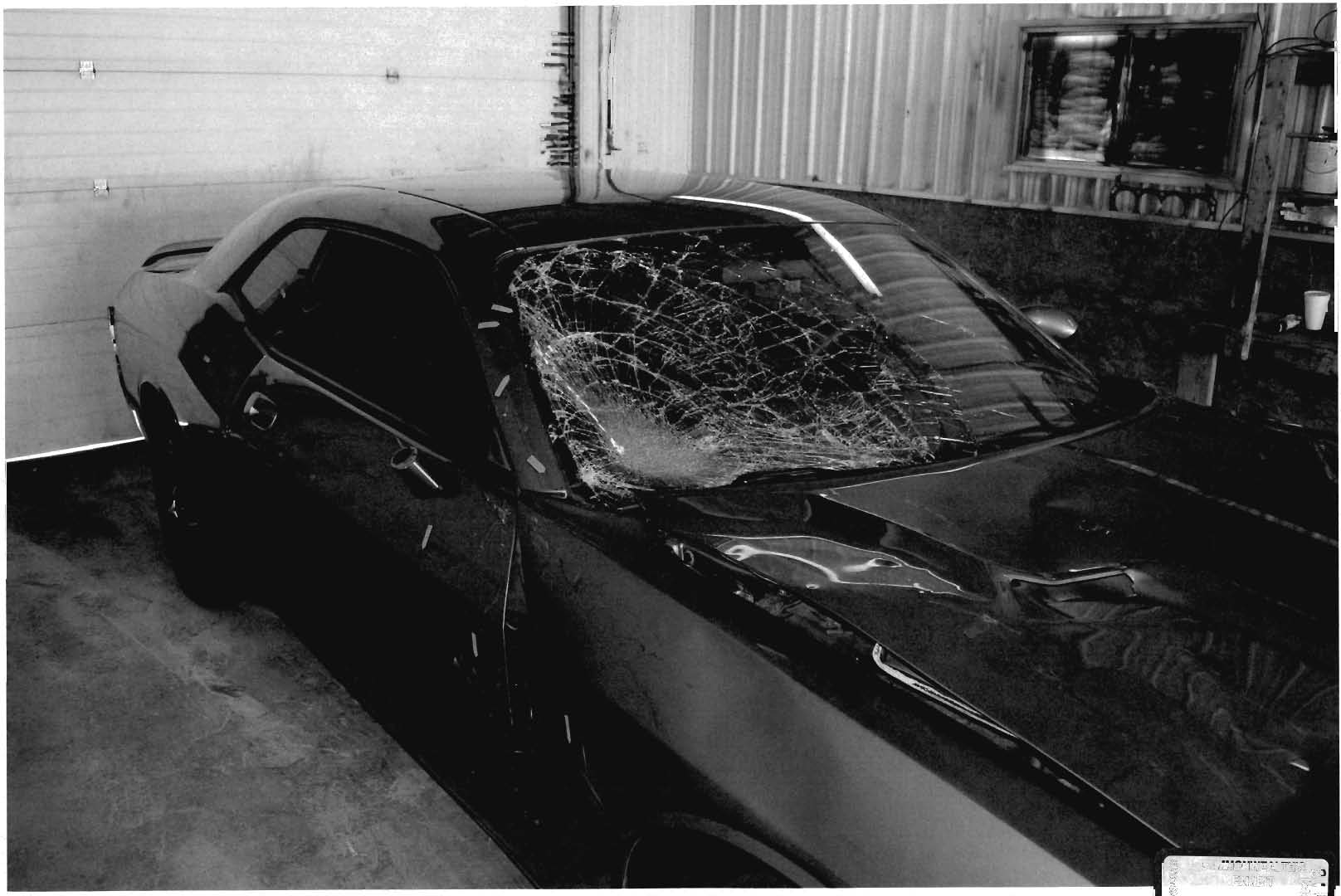


Unfortunately he joined up with 'v-jay' Adam Curry to do a podcast. That show is basically Alex Jones lite. For example laughing about the white supremacist terrorist killing of Heather Heyer, edge lording it didn't happen, "Crisis actors" etc.
https://en.wikipedia.org/wiki/Charlottesville_car_attack
Ugh.
I would post the link to the episode, but don't want to give them any traffic.